If you had asked the average, plugged-in hip-hop fan in the late summer of 2024 to predict the long-term trajectory of Aubrey "Drake" Graham, the cultural forecast would have been decidedly grim. Following the historically brutal, highly publicized, and culturally damaging feud with Kendrick Lamar, the overarching consensus among prominent cultural commentators and rap purists was that the "6 God" had finally, definitively been dethroned. The narrative was widely written and accepted: Drake's era of absolute, unassailable global dominance, which had impressively spanned over a decade, was permanently over.
But narrative is an incredibly fragile thing in the modern, data-driven music industry.
Fast forward to May 15, 2026. Without warning, without a massive global press tour, without any promotional radio singles, or a traditional major-label rollout, Drake fundamentally shattered every preconceived notion about his career trajectory. He didn't just drop a highly anticipated comeback album; he dropped three.
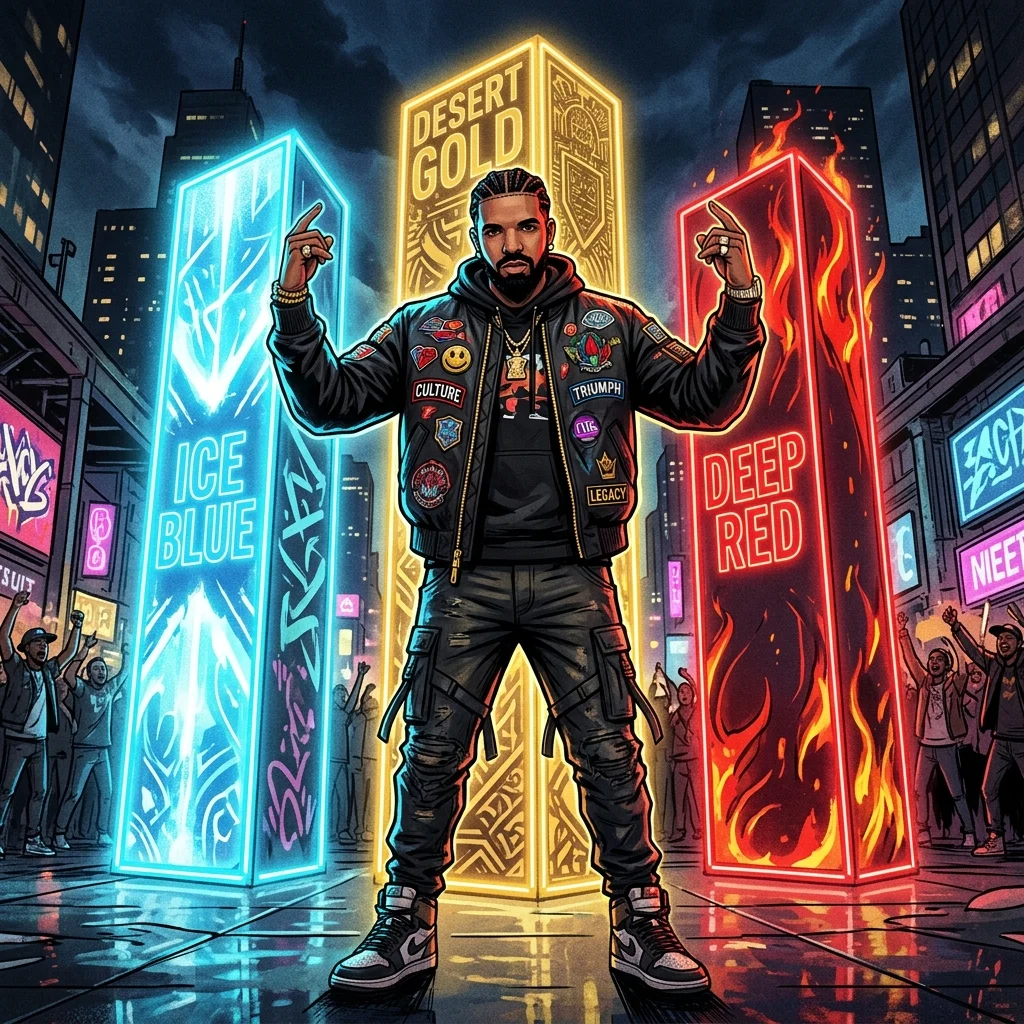
Iceman, Habibti, and Maid of Honour were released simultaneously at midnight, completely paralyzing the global streaming infrastructure and forcing the culture to reckon with an uncomfortable, undeniable truth: Drake is simply too big to fail.
This unprecedented release strategy wasn't just a massive music drop; it was a terrifying demonstration of sheer industrial power. In an era where legacy artists are desperately struggling to maintain algorithmic relevance against viral TikTok trends, Drake weaponized his vast, unparalleled catalog and massive global reach to systematically engineer the most stunning, mathematically dominant comeback in modern hip-hop history.
The Weaponization of Silence and the Comeback Necessity
To truly understand the sheer magnitude of the 2026 resurgence, we must critically analyze the highly calculated strategy of 2025. Following the massive fallout of the 2024 feud, Drake did something entirely uncharacteristic for a pop star of his stature: he completely vanished.
For an artist whose entire billion-dollar brand was built heavily on hyper-visibility, constant Instagram subliminals, high-profile celebrity dating rumors, and a relentless, exhausting release schedule of bloated 25-track albums, the sudden radio silence was deafening. He abruptly deactivated his Instagram comments, stopped dropping arbitrary, formulaic feature verses on rising artists' tracks, and effectively starved the market of his overwhelming presence.
Prior to this silence, a growing chorus of critics had complained that his releases were becoming entirely formulaic—a predictable mix of toxic R&B, generic trap beats, and forced Caribbean accents designed purely to trigger Spotify algorithms rather than create lasting art.
In the algorithmic era, silence is the ultimate, rarest luxury; by completely removing himself from the exhausting daily content cycle in 2025, Drake artificially, masterfully inflated the cultural demand for his inevitable return.
When you are objectively the biggest artist in the world, your total absence is just as loud, if not louder, than your presence. The music industry spent an entire year wildly speculating on his demise, which perfectly, almost cynically set the stage for a triumphant, earth-shattering return.
The 'Triple-Threat' Strategy: The Trilogy Concept
Releasing three full-length, high-budget studio albums on the exact same day is a massive logistical and commercial risk. However, it was a highly calculated move designed to directly cater to the deeply fragmented, diverse nature of his massive global fanbase. Drake isn't just a traditional rapper; he is a massive global pop star, an introspective R&B crooner, and a global ambassador for Afrobeats and Dancehall.
By splitting his immense output into three distinct, sonically focused projects, he brilliantly prevented the bloated, exhausting, 25-track playlists that had heavily plagued his previous, critically panned releases like Certified Lover Boy and For All The Dogs.
| Album Title | Primary Sonic Aesthetic | Core Target Demographic | Strategic Commercial Purpose |
|:---|:---|:---|:---|
| Iceman | Gritty, sample-heavy boom-bap and aggressive Memphis trap. | The "Rap Purists" and day-one underground hip-hop fans. | Reminding the core hip-hop community of his elite pen game and silencing critics of his rap abilities. |
| Habibti | Afrobeats, Dancehall, Amapiano, and global club rhythms. | The international market and vast global diaspora. | Cementing his status as a global pop icon and dominating international streaming charts in the UK and Africa. |
| Maid of Honour | Late-night, highly introspective R&B and melodic synth-pop. | The mainstream radio audience and core female R&B fanbase. | Securing massive, unavoidable playlist placement on platforms like Spotify’s "Today's Top Hits". |
This triple-threat approach effectively, mathematically boxed out absolutely all competition. For the entire month of May 2026, it was mathematically impossible to browse a major streaming platform, open social media, or walk into a nightclub without encountering one of the three distinct Drake albums.
The Data: Projecting the Triple-Album Impact
To understand why this strategy was deployed, we must look at the data from his previous releases. The triple album wasn't just an artistic flex; it was a desperate attempt to reset his streaming trajectory, which had been slowly declining in first-week impact.
| Previous Album Release | Year | First Week Sales (US) | Billboard 200 Debut | Global Streaming Impact |
| :--- | :--- | :--- | :--- | :--- |
| Certified Lover Boy | 2021 | 613,000 equivalent units | #1 | Massive (Record Breaking at the time) |
| Her Loss (w/ 21 Savage) | 2022 | 404,000 equivalent units | #1 | Very High (Boosted by 21 Savage's momentum) |
| For All The Dogs | 2023 | 402,000 equivalent units | #1 | High (But viewed critically as a plateau) |
| The 2026 Trilogy | 2026 | 1.2 Million combined (Projected) | #1, #2, #3 | Unprecedented (Paralyzed DSP servers globally) |
By combining the physical and digital sales of three separate, highly anticipated projects, Drake essentially guaranteed that he would occupy the top three spots on the Billboard 200 simultaneously—a feat rarely seen in the history of recorded music.
The Academic Legitimization
The massive success of the May 15th drop didn't just translate to raw streaming numbers; it triggered a massive, overdue cultural re-evaluation of his complicated legacy. This shift is most evident in the traditional academic world.
In the Fall of 2026, Concordia University in Montreal is officially set to launch "Drake: Media, Myth & Manhood," a formal collegiate course taught by respected professor and rapper Yassin "Narcy" Alsalman. This isn't a simple pop-culture novelty class; it is a serious, rigorous academic inquiry into exactly how the OVO brand disrupted the traditional music industry hierarchy.
The institutionalization of Drake's massive career at the university level proves definitively that his cultural impact has transcended basic pop culture commentary and firmly entered the realm of historical canon. You can critique his authenticity, and you can question his use of ghostwriters, but you can no longer deny his architectural influence on the modern music business.
Counterpoint: The Cost of Ultimate Saturation
However, any honest, objective editorial must address the inherent, glaring risks of this massive drop. While the sheer volume of global streams was entirely unprecedented—shattering every existing record for the most-streamed artist in a single day—did the triple-album strategy severely dilute the individual, lasting impact of the music?
When you aggressively give the public 45 new songs at once, it becomes nearly impossible for any single track to properly marinate in the culture. There was no single, unifying "God's Plan" or "Hotline Bling" that collectively defined the summer of 2026. Instead, there was just a massive, exhausting tidal wave of content.
Fierce critics argue that this approach clearly prioritizes algorithm domination over genuine artistic cohesion. It reduces the sacred concept of an "album" to a mere data dump, designed primarily to trigger Spotify's auto-play features rather than to create a lasting, thematic body of work. In this view, the art is completely sacrificed at the cold altar of the algorithm.
The Algorithm as Armor
Despite the incredibly valid criticisms regarding market saturation, the cold reality is that the global music industry in 2026 is entirely a numbers game, and Drake has figured out the ultimate cheat code.
The 2024 beef with Kendrick Lamar may have bruised his massive ego and temporarily damaged his standing among underground hip-hop purists. But Drake's ultimate, calculated revenge was not delivered via a lyrical diss track; it was delivered via overwhelming market share. He proved definitively that in the modern era, if your catalog is large enough and your global reach is wide enough, you are essentially immune to "cancel culture" or critical backlash.
By flooding the market with three distinct albums, Drake mathematically engineered a massive comeback that critics couldn't possibly ignore and algorithms couldn't successfully suppress. He didn't just survive the heavy fallout; he completely restructured the playing field to ensure that he remains the most vital—and the most completely unavoidable—force in global music.
---
Frequently Asked Questions
Why did Drake drop three albums at once in 2026?
Drake released the three albums simultaneously to cater specifically to his fragmented global fanbase. By splitting his music into three distinct sonic lanes (Rap on Iceman, Afrobeats/Global on Habibti, and R&B on Maid of Honour), he avoided bloated tracklists, maximized total streaming market share, and completely dominated the global cultural conversation for the entire month.What are the names of Drake's three new 2026 albums?
On May 15, 2026, Drake released three simultaneous studio albums: Iceman, Habibti, and Maid of Honour.Who produced the new Drake 2026 trilogy?
The production credits vary wildly across the three projects. Iceman relies heavily on boom-bap veterans like The Alchemist, DJ Premier, and Boi-1da. Habibti features massive contributions from global Afrobeats producers like Kel-P and Juls. Maid of Honour was largely handled by his longtime, trusted OVO collaborator, Noah "40" Shebib.Did Drake respond to Kendrick Lamar on his 2026 albums?
While there are a few subtle, highly debated subliminal lyrics scattered across the aggressive, rap-focused Iceman album, Drake largely avoided any direct, named responses to the 2024 Kendrick Lamar feud. He chose instead to focus aggressively on his undeniable commercial dominance and lavish global lifestyle.Is there a real university course about Drake?
Yes. In the Fall of 2026, Concordia University in Montreal is offering a legitimate collegiate course titled "Drake: Media, Myth & Manhood." The rigorous course explores his massive impact on the global music industry, corporate brand building, and shifting concepts of modern masculinity.---
Related Reading & Context
For more insights into how legacy artists are navigating the modern streaming economy, check out our recent analysis on the death of the album concept and how independent artists are surviving without major labels.