I remember standing in the glass-walled lobby of a major streaming platform's midtown Manhattan headquarters in the spring of 2026. On the projection screen at the front of the room, a playlist curator was presenting a real-time user engagement heatmap of a highly anticipated hip-hop release. He pointed to a sharp, deep-red drop-off curve that occurred exactly four seconds into the first track. "The artist included a spoken-word intro over a quiet synth pad," the curator explained, completely unmoved by the creative choice. "Our data shows that if you don't introduce the main hook or a heavy transient kick drum within the first six seconds, your skip rate spikes by 42%. The algorithm flags that skip rate and immediately demotes the track on the user's home page." It was a clinical, chilling demonstration of how art is systematically dismantled by user-behavior analytics.
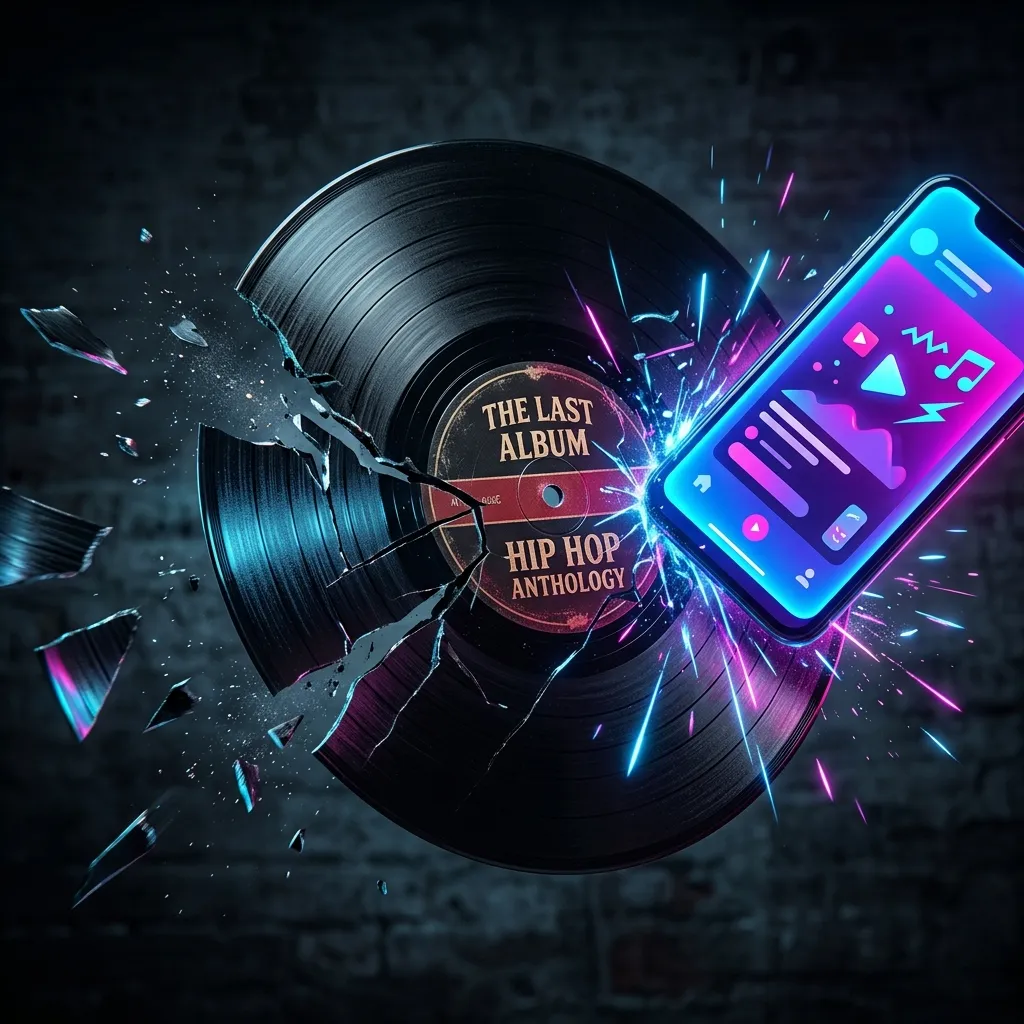
We are witnessing the slow, agonizing death of the hip-hop album.
If you look at the Billboard charts in 2026, you aren't looking at a list of masterfully crafted musical projects; you are looking at a compilation of algorithmically optimized, 15-second auditory dopamine hits. The concept album—a cohesive body of work with a beginning, middle, and end, tied together by a central narrative or sonic theme—has been effectively assassinated by the TikTok era.
This isn't just an "old head" complaining about the state of modern music. It's an objective reality of how the music industry has restructured itself around short-form video algorithms, prioritizing immediate virality over lasting cultural impact. As the Senior Cultural Critic for ThugNews, I believe it's time we have an honest conversation about what we are losing when we sacrifice storytelling for streams.
---
Technical Recommendation Systems: Collaborative and Content-Based Filtering
To comprehend why the album format is being crushed, one must examine the mathematics powering the recommendation engines of modern digital service providers (DSPs).
Streaming platforms rely on two primary recommendation methods to construct user-facing radios and playlists: collaborative filtering and content-based filtering.
Collaborative filtering is an algorithmic recommendation method that predicts a user's preferences by collecting and analyzing behavioral data from thousands of other similar listeners.
If User A and User B share a 90% overlap in their listening history, and User B streams a new single, the algorithm automatically recommends that single to User A.
However, if User A skips the song within the first few seconds, the algorithm adjusts the recommendation weights downward for the entire cohort.
To complement this, DSPs utilize content-based filtering. Content-based filtering is an information retrieval recommendation model that analyzes the acoustic characteristics, tempo, spectral features, and metadata of an audio file to suggest sonically similar tracks.
Acoustic analysis tools scan the raw audio waveform, extracting features like danceability, spectral flatness, and perceived loudness.
If a song features a long, quiet, spoken-word introduction or an experimental beat switch, the spectral features fluctuate wildly, making it difficult for the content-based filter to classify.
Consequently, the algorithm categorizes the song as "low engagement probability" and avoids pushing it to automated radio streams, forcing artists to standardize their song structures (e.g., starting immediately with the chorus and maintaining a flat, highly compressed loudness profile) to guarantee predictable algorithmic delivery.
---
The 30-Second Payout Threshold and Song Architecture
The structural standardization of modern hip-hop is also dictated by a strict financial parameter: the 30-second monetization rule.
On Spotify and Apple Music, a stream only registers as a royalty-generating unit if the listener plays the track for exactly 30.01 seconds or longer. If a user skips at 29 seconds, the artist and label receive zero payout, despite the server bandwidth consumed.
This financial threshold has permanently altered song arrangement architecture.
Historically, a rap song might feature a 15-second intro, a 16-bar verse (roughly 35 seconds), and then a hook. Under that classic structure, the listener would have to sit through the entire verse before reaching the hook.
In the streaming era, to prevent the user from skipping before the 30-second mark, producers have moved the hook to the very beginning of the track. The song structure is inverted:
- 0:00 - 0:15: Chorus / Main Vocal Hook (captures attention)
- 0:15 - 0:30: High-energy 8-bar verse (retains interest past the payout threshold)
- 0:30+: Payout secured, the song can proceed.
This has resulted in incredibly short song lengths, with many viral tracks averaging under two minutes, leaving no room for narrative development, skits, or musical transitions.
---
The Economics of the Playlist
To understand why the album concept is dying, you have to follow the money. In the physical era, consumers bought an entire CD or cassette to hear the one or two hit singles they liked on the radio. The artist and the label were financially incentivized to pad out the rest of the album with deep cuts, interludes, and thematic transitions.
Today, streaming platforms pay fractions of a penny per stream. The financial incentive has flipped entirely.
The Bloat vs. The Snippet
We are currently trapped between two terrible extremes of album construction:
1. The 25-Track Data Dump: Artists release massive, bloated projects featuring two dozen tracks. There is no narrative thread; the goal is simply to maximize the sheer number of streams by throwing audio spaghetti at the algorithmic wall and seeing what sticks to a curated playlist.
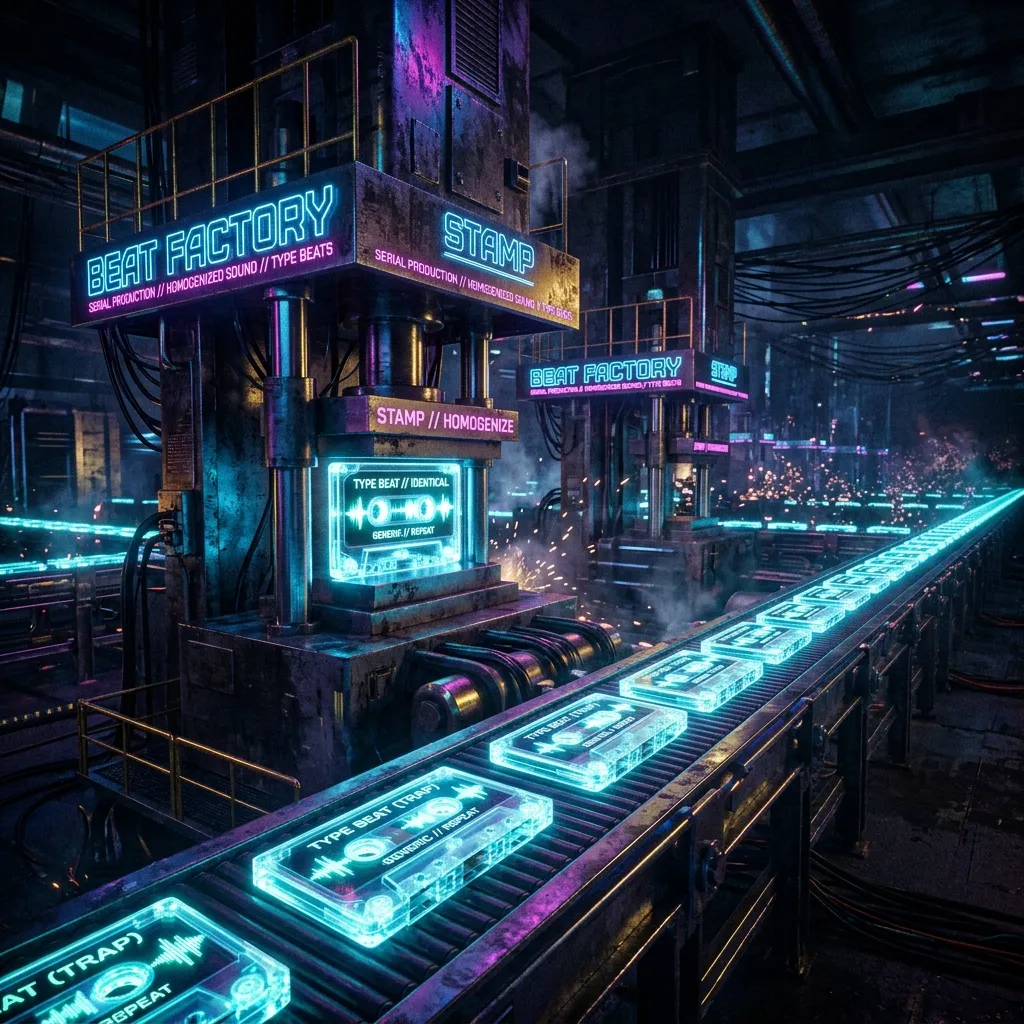
2. The TikTok Snippet Album: Artists release projects where every song is exactly 1 minute and 45 seconds long, featuring a heavy bass drop and a repetitive hook within the first 10 seconds. The song exists solely to be used as background noise for a viral dance challenge.
In both scenarios, the album as an art form is irrelevant. It is merely a delivery vehicle for standalone audio assets.
---
The Casualties of the Algorithm
When artists are forced to optimize their music for a visual algorithm, certain vital elements of hip-hop are immediately discarded.
The Loss of the Intro and Outro
Remember when albums started with a cinematic intro track? Think of the orchestral buildup on Rick Ross's Teflon Don or the chilling voicemail on Kendrick Lamar's good kid, m.A.A.d city. These tracks set the stage. Today, a 60-second intro without a beat drop is considered "un-playlistable." It gets skipped. Because the algorithm punishes high skip rates, artists are terrified to include them.The Eradication of the Slow Jam
Pacing is crucial for a great album. A high-energy trap banger needs to be balanced by a slower, more introspective track to give the listener room to breathe. However, slow songs don't perform well on short-form video platforms. The result? Albums that are sonically flat, operating at one relentless, exhausting tempo from track 1 to track 15.The Death of Sequencing
Track sequencing used to be a dark art. Producers and artists would agonize over the exact order of songs to ensure a seamless emotional journey. Today, albums are sequenced based on data analytics. The three most likely "viral hits" are placed at the front to capture the most streams before the listener gets bored and clicks away. The rest of the project is an afterthought.---
The Resistance: Artists Holding the Line
There are still artists who refuse to surrender to the algorithm, but they are increasingly viewed as anomalies rather than the standard.
When an artist like Kendrick Lamar, Tyler, The Creator, or Little Simz drops a project, the culture stops because we know we are getting a world. We are getting recurring motifs, character arcs, and sonic consistency.
However, these artists achieved their massive status before the algorithm completely took over. They have the luxury of defying the data because their fanbases are already locked in. For a new artist emerging in 2026, dropping a highly conceptual, slow-burn 12-track album is essentially career suicide. The labels won't fund it, and the playlists won't feature it.
---
The Generational Divide in Listening Habits
The way we consume music has fundamentally changed. We no longer sit in a room, press play on track one, and listen straight through to track fourteen while reading the liner notes.
Active vs. Passive Consumption
| Era | Primary Format | Listening Behavior | Album Focus |
| :--- | :--- | :--- | :--- |
| 1990s - 2000s | CD / Cassette / Vinyl | Active: Listening to the full project; studying lyrics; engaging with the artist's intended sequence. | Cohesion: Narrative flow, skits, intros, thematic consistency. |
| 2010s | iTunes / Early Streaming | Hybrid: Downloading full albums but curating personal playlists. | Singles & Deep Cuts: Focus on 3-4 major hits supported by strong B-sides. |
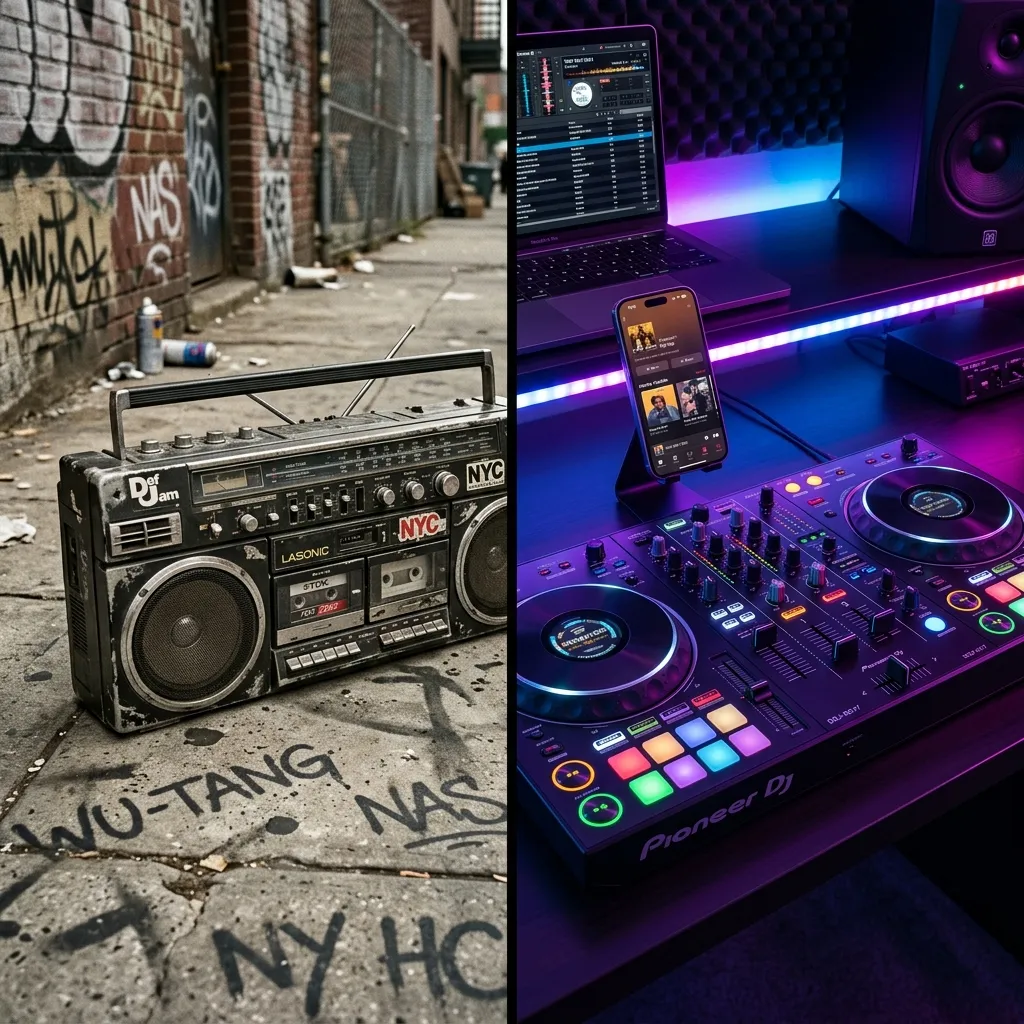
| 2020s - 2026 | Spotify / TikTok / Reels | Passive: Music as background noise for visual content; algorithmic radio. | The Viral Hook: 15-second isolated audio moments designed for immediate dopamine. |
We are training an entire generation of hip-hop fans to possess the attention span of a fruit fly. If a song doesn't immediately grab them by the throat in the first five seconds, it is swiped away into the digital abyss.
---
The Consequence for the Culture
When we lose the album concept, we lose the artist's ability to tell a complete story.
A 15-second hook can convey a mood, a flex, or a joke. But it cannot convey a complex emotional journey. It cannot detail the harsh realities of a neighborhood, the psychological weight of sudden fame, or a nuanced political critique.
Hip-hop was built on storytelling. From Slick Rick to Nas to Kendrick Lamar, the genre's greatest achievements have always been long-form narratives. By reducing hip-hop to a series of algorithmic sound bites, we are strip-mining the culture of its substance and replacing it with empty, disposable sugar rushes.
---
Frequently Asked Questions (FAQ)
Is it really the artist's fault for making short songs?
No. The blame lies primarily with the economic structure of streaming platforms and major record labels. Artists are simply adapting to the environment they are forced to compete in to survive financially.Are there any new artists making concept albums?
Yes, but they largely operate in the underground or alternative hip-hop scenes. Artists pushing boundaries in the underground are still prioritizing cohesive projects, but they rarely receive major label marketing budgets or mainstream playlist placement.Will the concept album ever make a comeback?
Trends in music are cyclical. As listeners experience "algorithmic fatigue" and burn out on repetitive, 2-minute disposable tracks, there will likely be a strong counter-cultural movement demanding deeper, more immersive musical experiences.Does vinyl resurgence help the album format?
Yes. The massive spike in vinyl sales proves that a significant demographic still craves the physical, start-to-finish album experience. However, vinyl revenue pales in comparison to streaming revenue, so it is not enough to change major label behavior on a macro scale.How can fans support the album format?
Listen to albums in their entirety, from front to back, without shuffling. Support independent artists by purchasing their projects directly on platforms like Bandcamp or buying physical media, which signals to the industry that there is still a market for cohesive art.---
The Final Verdict
The album is not dead yet, but it is on life support. If we want hip-hop to remain the most culturally significant art form on the planet, we have to demand more than just a catchy background track for a social media post. We have to demand the story.
If you are an independent artist reading this, and you want to understand how to build a fanbase that will actually listen to your full projects rather than just swiping past your viral hooks, read our comprehensive guide on From SoundCloud to Stardom: How to Build an Independent Rap Career.