For decades, the global sneaker market operated on a fairly predictable and centralized axis: major American and European sportswear brands dictated the trends, collaborated with high-profile Western musicians or athletes, and then systematically exported those trends to the rest of the world. If you were a dedicated sneakerhead or hypebeast in Tokyo, Seoul, or Shanghai in 2015, you were largely attempting to replicate the specific aesthetic generated in Los Angeles, Chicago, or New York.
By 2026, that dynamic has completely collapsed.
The center of gravity in global streetwear has forcefully shifted East. As we explored in our deep-dive into the K-Pop Vietnamese Fashion Pipeline, Asian consumers are no longer content with simply importing Western hype. They are actively producing, defining, and exporting their own localized, hyper-specific aesthetic. They have transitioned from being passive consumers of Western trends to active architects of global fashion.
This massive cultural shift has created a significant strategic crisis for traditional sportswear behemoths like Nike. Facing incredibly stiff competition from agile, deeply integrated domestic brands in China and South Korea, Nike is executing a radical pivot. Their latest, highly publicized move? The "Hijack Pop-up" in Shanghai, executed in collaboration with the notoriously elusive Chinese streetwear label, Esoteric Thing.
The Threat of Regional Competitors
To understand why Nike is investing tens of millions of dollars into collaborating with a relatively obscure, independent Chinese label, you have to look objectively at the market data.
Over the past three years, Nike's dominance in the Asian market—historically their most reliable engine for staggering quarterly growth—has significantly softened. The threat is not coming from traditional global rivals like Adidas or Puma; it is coming from within the domestic market itself.
Domestic brands like Li-Ning and Anta Sports have successfully shed their former reputations as "cheap knock-offs" and have aggressively elevated their design language. They understand the nuances of local youth culture far better than an executive board sitting in Beaverton, Oregon. They are agile, they tap directly into regional national pride (the Guochao movement), and they execute collaborations with local artists and esports teams at a terrifying speed.
To counter this, Nike can no longer rely on simply stamping an Air Jordan logo on a classic silhouette, flying an NBA star over for a meet-and-greet, and expecting massive lines outside of stores in Beijing. They need street-level credibility, and they need it fast. They need to prove they are embedded in the subculture.
Enter 'Esoteric Thing'
Esoteric Thing is not a mainstream brand. Founded in 2022 by a collective of anonymous industrial designers in Shenzhen, the label is known for its brutalist, deconstructed aesthetic, heavily leaning into themes of dystopian futurism and extreme technical utility. They don't do traditional marketing campaigns. They don't use celebrity influencers. They operate entirely through cryptic drops on WeChat and localized, word-of-mouth physical pop-ups.
They are the exact antithesis of the corporate, heavily sanitized Nike machine. And that is exactly why Nike chose them.
The "Hijack Pop-Up" Architecture
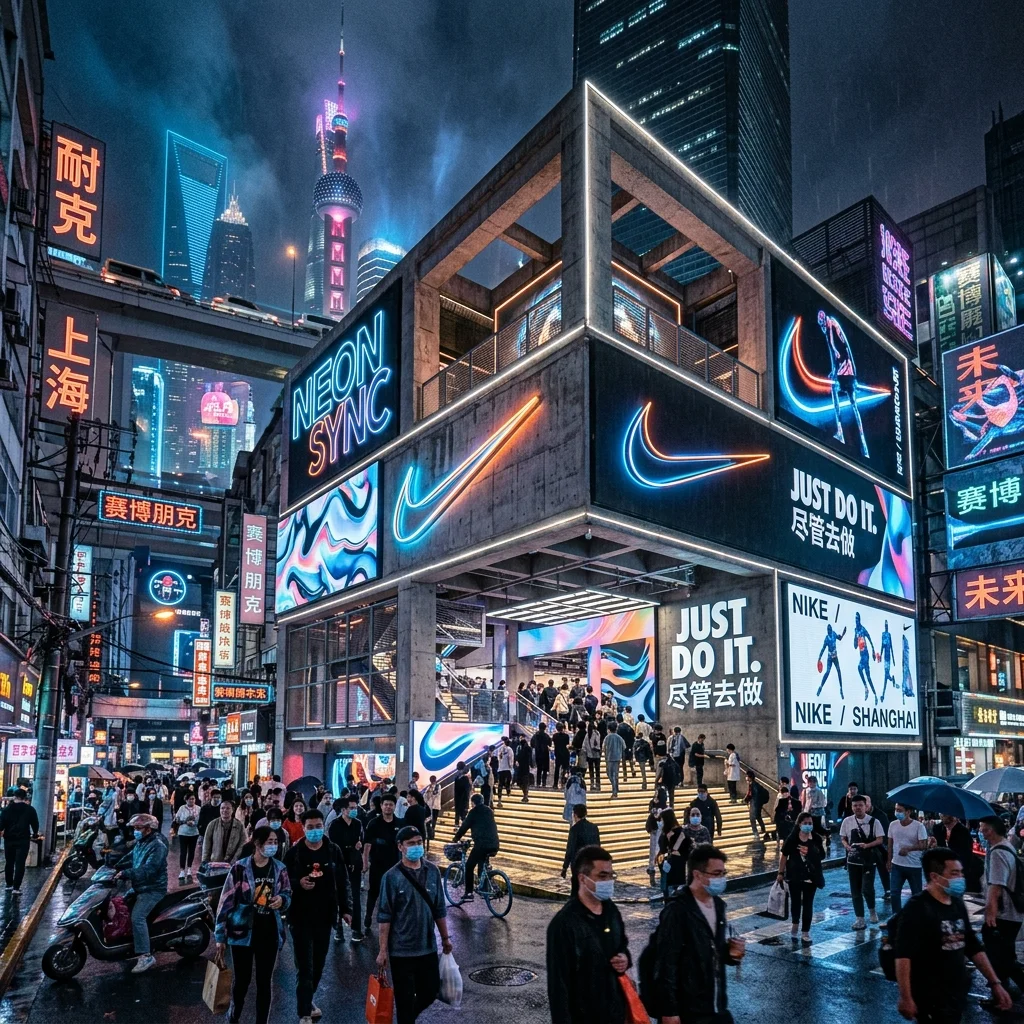
The collaboration, dubbed the "Hijack Pop-Up," was a masterclass in experiential retail. Rather than renting a traditional, pristine storefront in a high-end luxury mall, Nike and Esoteric Thing took over an abandoned, multi-story concrete parking garage deep within Shanghai's industrial district.
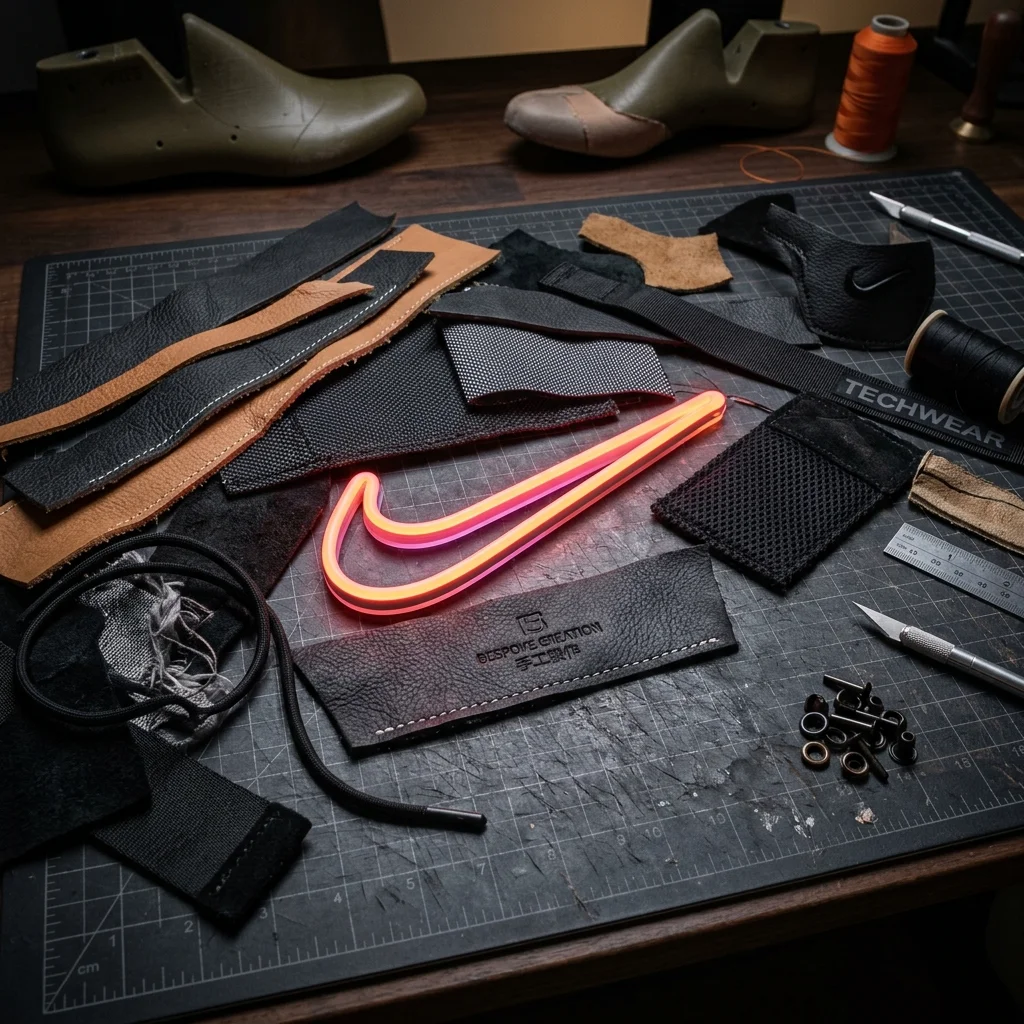
The aesthetic was jarring, aggressive, and highly cinematic. Glowing neon Swooshes illuminated the brutalist concrete, while massive digital screens played abstract, glitching footage of the manufacturing process. It felt less like a retail store and more like a secret underground bunker for sneakerheads.
But the true genius of the pop-up was the product itself. This was not a standard colorway swap. Esoteric Thing was given unprecedented access to deconstruct and completely rebuild the classic Nike Air Max silhouette.
They utilized ballistic mesh, exposed structural stitching, asymmetrical paneling, and oxidized midsoles. It looked less like a traditional performance sneaker and more like a piece of bespoke, cyberpunk industrial equipment tailored for a post-apocalyptic cityscape.
The Strategy of 'Reverse Exporting'
Nike's collaboration with Esoteric Thing is not just about selling shoes in China; it is a calculated attempt to execute a "reverse export" strategy.
Historically, as mentioned earlier, Nike would create a hyped shoe in America and export it globally. The new strategy involves identifying the most cutting-edge, obscure subcultures in the Asian market, collaborating with them locally to build regional hype, and then aggressively exporting that hyper-specific aesthetic back to the West.
This strategy acknowledges a fundamental shift in how global trend cycles operate in 2026. The most influential hypebeasts in Los Angeles, London, and Paris are no longer looking to traditional fashion houses for inspiration; they are looking toward the underground scenes in Tokyo, Seoul, and Shanghai. By embedding themselves with brands like Esoteric Thing, Nike ensures that they remain at the absolute vanguard of the culture, regardless of where that culture originates.
The Evolution of the Sneaker Collaboration
To truly appreciate the significance of this pivot, we need to trace the evolution of how major brands execute collaborations over the last two decades.
| Era | Collaboration Model | Primary Goal | Defining Example |
| :--- | :--- | :--- | :--- |
| 2000s | The Athlete Signature: Brands partner exclusively with generational athletes. | Performance credibility, mass-market volume, television visibility. | Air Jordan, LeBron James x Nike. |
| 2010s | The Celebrity/Designer: Brands partner with massive musicians or high-fashion luxury houses. | Exclusivity, bridging the gap between luxury and streetwear, global hype. | Kanye West x Adidas (Yeezy), Virgil Abloh x Nike (The Ten). |
| 2026 | The Regional Micro-Culture: Brands partner with hyper-niche, localized underground collectives. | Street-level authenticity, combating regional competitors, reverse-exporting trends. | Nike x Esoteric Thing, Adidas x Free The Youth (Ghana). |
The data shows a clear trajectory: from mass appeal, to high-fashion exclusivity, to hyper-localized authenticity. The modern consumer values local connection and scarcity over massive global reach.
The Risk of Corporate Co-option
While the "Hijack Pop-Up" was a massive, viral success—generating over 40 million impressions on TikTok and Weibo within 48 hours—it also highlights the inherent danger of this strategy.
When a multi-billion dollar corporation like Nike attempts to seamlessly integrate itself into an underground, anti-establishment subculture, there is always the massive risk of appearing incredibly inauthentic. If the collaboration feels forced, if the narrative is too polished, or if the product does not respectfully reflect the design language of the independent label, the core audience will immediately reject it as corporate co-option.
This is the razor's edge that Nike must walk. They desperately need the cultural capital that brands like Esoteric Thing possess, but they must acquire it without destroying the very authenticity that makes those brands valuable in the first place. The streetwear community is incredibly sensitive to "culture vultures," and a misstep here can severely damage a brand's reputation for years.
The Friction-Based Retail Experience
Another crucial element of the Esoteric Thing pop-up was its intentional inaccessibility. In traditional retail, the goal is omnipresence—making sure the product is available to anyone, anywhere, at any time with zero friction. The Hijack pop-up relied on the exact opposite: the architecture of scarcity and effort.
The physical design of the Shanghai activation was intentionally hostile to casual foot traffic. Unmarked from the main street, consumers had to navigate through digital breadcrumbs dropped on localized social platforms like Xiaohongshu (Little Red Book) to find the exact coordinates.
This friction is a deliberate marketing strategy. When a consumer has to work to find a retail space, the act of purchasing becomes a reward rather than a simple transaction. The scarcity isn't just about limited inventory; it’s about limited access to the physical space itself. For Gen Z consumers who define themselves by their ability to curate niche experiences, this model is vastly more appealing than walking into a brightly lit mall flagship.
Digital Verification vs. Scalping
Furthermore, the integration of technology within the pop-up blurred the lines between digital and physical commerce. Limited-edition pieces were tied to specific geographic NFT drops and NFC tags embedded in the garments, ensuring that the apparel couldn't simply be counterfeited or flipped by bots on secondary markets without proof of physical attendance.
This hyper-localized approach effectively solved one of the biggest problems plaguing global sneaker releases in 2026: the alienation of the actual local community by global resellers. By demanding physical presence and digital verification, Nike and Esoteric Thing built a moat against the hyper-financialization of streetwear. They returned the focus to the local consumer who actually intends to wear the garments, rather than the anonymous digital reseller looking to turn a quick profit.
The Blueprint for Global Streetwear
The Nike x Esoteric Thing collaboration is not a one-off experiment; it is the definitive blueprint for how massive sportswear brands will operate for the remainder of the decade.
The era of the monolithic, one-size-fits-all global sneaker release is officially dead. To survive the incredibly fragmented, highly localized landscape of 2026 streetwear, brands must completely decentralize their design processes. They must empower local creatives, embrace hyper-niche subcultures, and accept that the most influential trends are no longer born exclusively in American boardrooms.
They are born in the abandoned concrete parking garages of Shanghai.
---