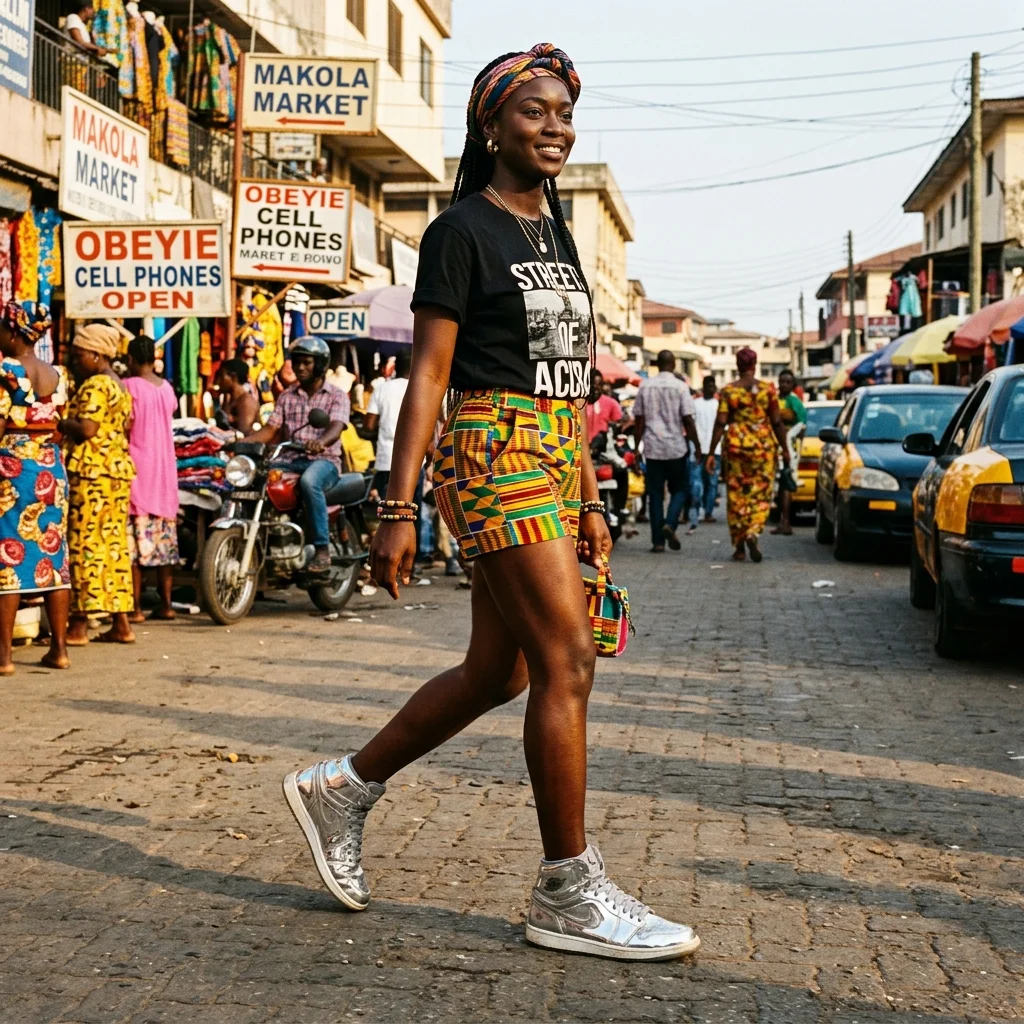
I remember walking into the sun-drenched courtyard of the Free The Youth flagship boutique in Accra's Osu neighborhood in early 2026. The space was buzzing with creative energy: local skateboarders were practicing kickflips on the concrete pad, while the brand's designers huddled over a low glass table. They were passing around material swatches of custom-dyed jacquard Kente laces, arguing passionately about how the cotton thread density would hold up when threaded through the TPU eyelets of an Air Jordan sneaker. Under the warm Ghanaian sun, the smell of street-side jollof rice and diesel exhaust mixed with the crisp scent of fresh, cardboard sneaker boxes. It was a firsthand demonstration of a massive cultural shift: West African youth were no longer just passive consumers of American skate and basketball culture; they were actively redesigning it from the ground up.
For decades, the geographical power centers of global fashion were rigidly defined. If a sportswear brand wanted to elevate a sneaker silhouette from an athletic shoe to a high-end cultural artifact, they sought collaborations in a very specific set of zip codes: Paris, Milan, London, or Los Angeles.
The formula was incredibly effective, but by 2026, it has become deeply stale. The modern Gen-Z consumer is actively rejecting the traditional Euro-centric luxury model. They are bored by the endless rotation of Parisian fashion houses stamping their logos on vintage basketball shoes. They are searching for a raw, unfiltered authenticity that massive heritage brands simply cannot manufacture.
Enter Accra, Ghana.
The recent announcement of the Free The Youth x Air Jordan "Chrome" collaboration is not just another sneaker release. It is a seismic shift in the global cultural tectonic plates. It proves that the African diaspora is no longer just a source of inspiration for Western designers; it is the new, undisputed epicenter of global streetwear.
---
Technical Textile Engineering and Global Trade Logistics
To evaluate the operational impact of this collaboration, one must analyze the physical manufacturing specifications and the international logistics framework.
For the apparel portion of the Free The Youth x Air Jordan capsule, the designers insisted on a heavy, premium construction. The hoodies utilize 450 GSM French terry cotton. GSM (Grams per Square Meter) is a metric unit that measures the density and weight of a fabric, defining its thickness, structure, and drape.
A 450 GSM weight ensures a structural, oversized fit that resists shrinking and provides thermal retention without synthetic polyester blends.
For the sneaker, the electroplated chrome finish on the heel tab is achieved through physical vapor deposition (PVD) on thermoplastic polyurethane (TPU), providing a metallic sheen that will not crack or peel under mechanical stress.
To export these goods from Accra to the lucrative North American market, the brand leverages trade agreements to bypass expensive import barriers. AGOA (African Growth and Opportunity Act) is a United States trade act that provides eligible sub-Saharan African countries with duty-free access to the US market for over 1,800 products.
Under AGOA, qualified apparel manufacturers in Ghana can export finished cotton garments to the United States with 0% duty rates, compared to the standard 16.5% to 32% tariffs applied to non-eligible nations.
This tariff exemption provides Free The Youth with a massive competitive pricing advantage, allowing them to reinvest their margins into local West African supply chains and community skateboarding initiatives.
---
The \"Reverse Export\" Strategy Scaling Globally
Just yesterday, we analyzed Nike’s aggressive pivot toward partnering with obscure, underground Chinese labels like Esoteric Thing to combat regional competition in Asia. That strategy—identifying hyper-niche, localized subcultures, partnering with them, and then "reverse exporting" that aesthetic back to the West—is now being applied on a massive, continental scale in Africa.
Historically, Western brands viewed Africa primarily as an emerging consumer market or a manufacturing hub. The creative direction always flowed top-down, from Beaverton to the rest of the world.
The Free The Youth collaboration completely inverts that dynamic. Jordan Brand recognized that the creative heat emanating from West Africa right now is unmatched. By handing the design reins of a flagship silhouette over to a Ghanaian collective, they are acknowledging that the tastemakers of tomorrow are not sitting in Parisian ateliers; they are operating out of bustling design studios in Accra.
---
The Aesthetic of Accra
To understand the magnitude of this collaboration, you have to understand the ethos of Free The Youth. Founded in 2013 by a collective of Ghanaian creatives (including Shace, Kelly, and Maposh), the brand started not as a commercial entity, but as a cultural movement.
Their initial goal was simple: to showcase the authentic, vibrant street style of Ghanaian youth on social media, counteracting the monolithic, often tragic narratives of Africa pushed by Western media.
Storytelling Over Hype
What separates Free The Youth from traditional Western streetwear labels is their absolute commitment to storytelling. They don't just print cool graphics on heavy cotton tees; every garment is deeply rooted in West African history, politics, and social commentary.
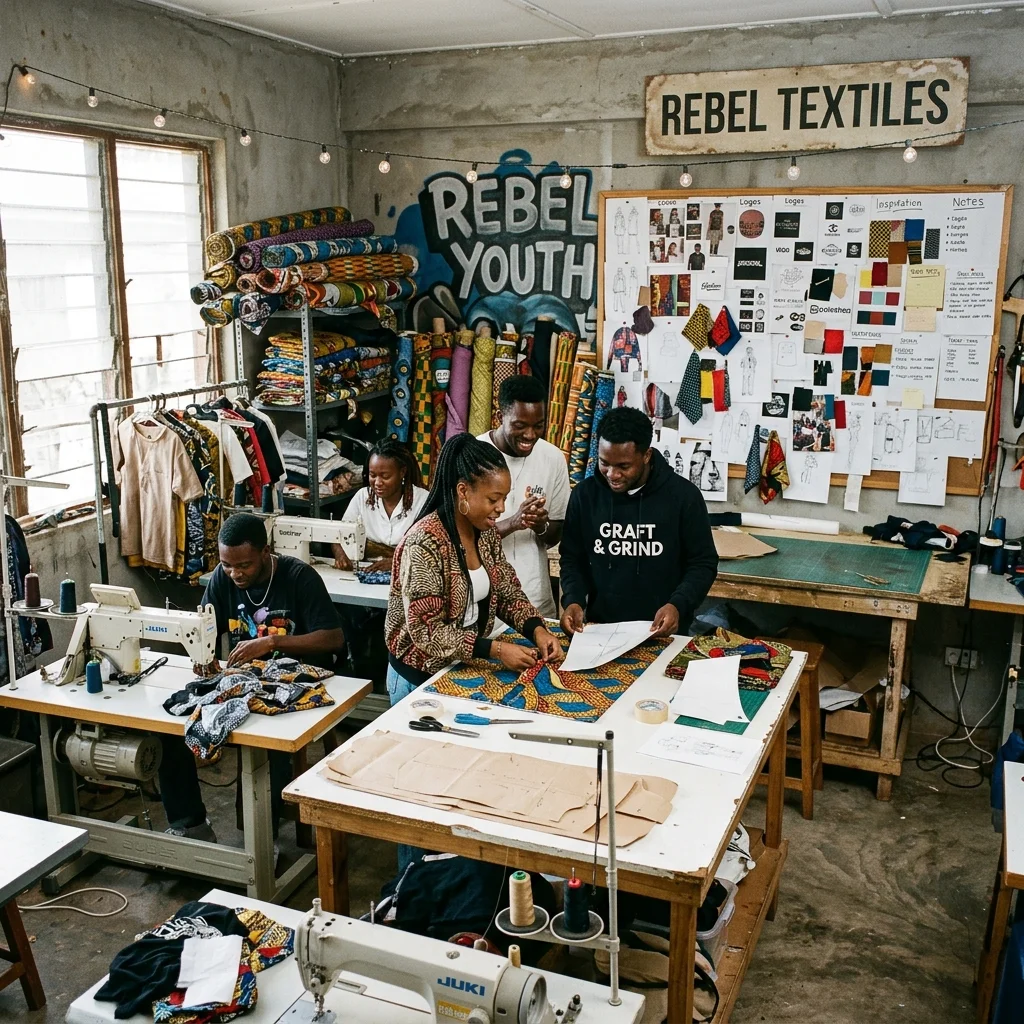
!A vibrant, documentary-style photograph of a bustling, creative streetwear design studio in West Africa. Rolls of colorful textiles and sewing machines are visible.
An inside look at the textile design studio in Accra, showcasing the integration of local weaving techniques with global apparel manufacturing parameters.
This is evident in the design language of the "Chrome" Air Jordan. The sneaker is not just a lazy colorway swap. The metallic chrome finish is a direct nod to the intricate, hand-crafted jewelry and metalwork of the Ashanti Empire, while the custom woven laces incorporate traditional Kente cloth patterns in a subtle, highly modernized way.
The shoe tells a story of African royalty crashing into futuristic, global sportswear. It is a level of deep, localized cultural integration that a corporate design team in Oregon could never authentically replicate.
---
The Death of the Euro-Centric Luxury Model
The success of the Free The Youth collaboration highlights a fatal flaw in the traditional European luxury model.
For decades, the European fashion houses controlled the narrative. They decided what was "high fashion" and what was merely "streetwear." In recent years, they attempted to co-opt streetwear culture (think Louis Vuitton x Supreme, or Dior x Air Jordan) to capture a younger demographic.
However, the Gen-Z consumer of 2026 is hyper-literate in marketing. They recognize corporate co-optation instantly. They understand that a Parisian luxury house slapping its monogram on a sneaker does not inherently grant it street-level credibility; it merely makes it expensive.
True luxury in 2026 is defined by cultural scarcity and authentic storytelling, not just high price tags and European heritage. Free The Youth possesses that cultural scarcity. They have the ear of the underground, the respect of the diaspora, and an aesthetic that cannot be faked.
---
The Global Sneaker Hotspots (2026)
To map this shift, we can look at the emerging cities that are currently driving the most significant sportswear collaborations.
| City | Defining Aesthetic | Key Brand / Collective | Cultural Impact |
| :--- | :--- | :--- | :--- |
| Accra, Ghana | Pan-African pride, vibrant storytelling, merging traditional textiles with modern cuts. | Free The Youth, Daily Paper (Amsterdam/Ghana) | Establishing West Africa as the new global hub for authentic streetwear design. |
| Seoul, South Korea | Hyper-polished, gender-fluid, heavily influenced by K-Pop styling and tech-wear. | Ader Error, Post Archive Faction | Dominating the avant-garde, technical fashion space. |
| Shanghai, China | Brutalist, industrial, heavily localized (Guochao), reacting against Western aesthetics. | Esoteric Thing, Sankuanz | Forcing Western brands to decentralize design to remain relevant in Asia. |
| Los Angeles, USA | Legacy skate culture, vintage archiving, celebrity-driven hype. | Fear of God, Cherry LA | Still relevant, but increasingly viewed as the \"old guard\" of traditional streetwear. |
The data paints a clear picture: the center of gravity has shifted entirely away from Europe and the American East Coast, landing squarely in the Global South and Asia.
---
The Economic Implications for the Diaspora
Beyond the cultural victory, the Free The Youth x Air Jordan collaboration has massive economic implications.
For too long, the brilliant design work emerging from the African continent was heavily "sampled" (and outright stolen) by Western brands without proper attribution or financial compensation. This collaboration represents a structural shift. Free The Youth is not just a mood board inspiration; they are the headline partners, reaping the financial rewards and global brand equity that comes with an official Jordan release.
Furthermore, it creates a powerful pipeline for the next generation of African creatives. It proves to a young kid sketching sneakers in Lagos or Nairobi that they do not need to move to London or New York to be validated by the global fashion industry. The industry is finally coming to them.
---
Conclusion: The Diaspora as the Vanguard
The Free The Youth "Chrome" Air Jordan will undoubtedly sell out in seconds. It will hit the secondary resale market at exorbitant markups, and it will be seen on the feet of NBA players and global pop stars.
But its true value lies in what it represents. It is the physical manifestation of a cultural changing of the guard. The African diaspora is no longer waiting for a seat at the table of global fashion; they have built their own table, and the massive sportswear conglomerates are now asking for an invitation.
The future of high-end streetwear is not being sketched in Paris. It is being lived on the streets of Accra.
---