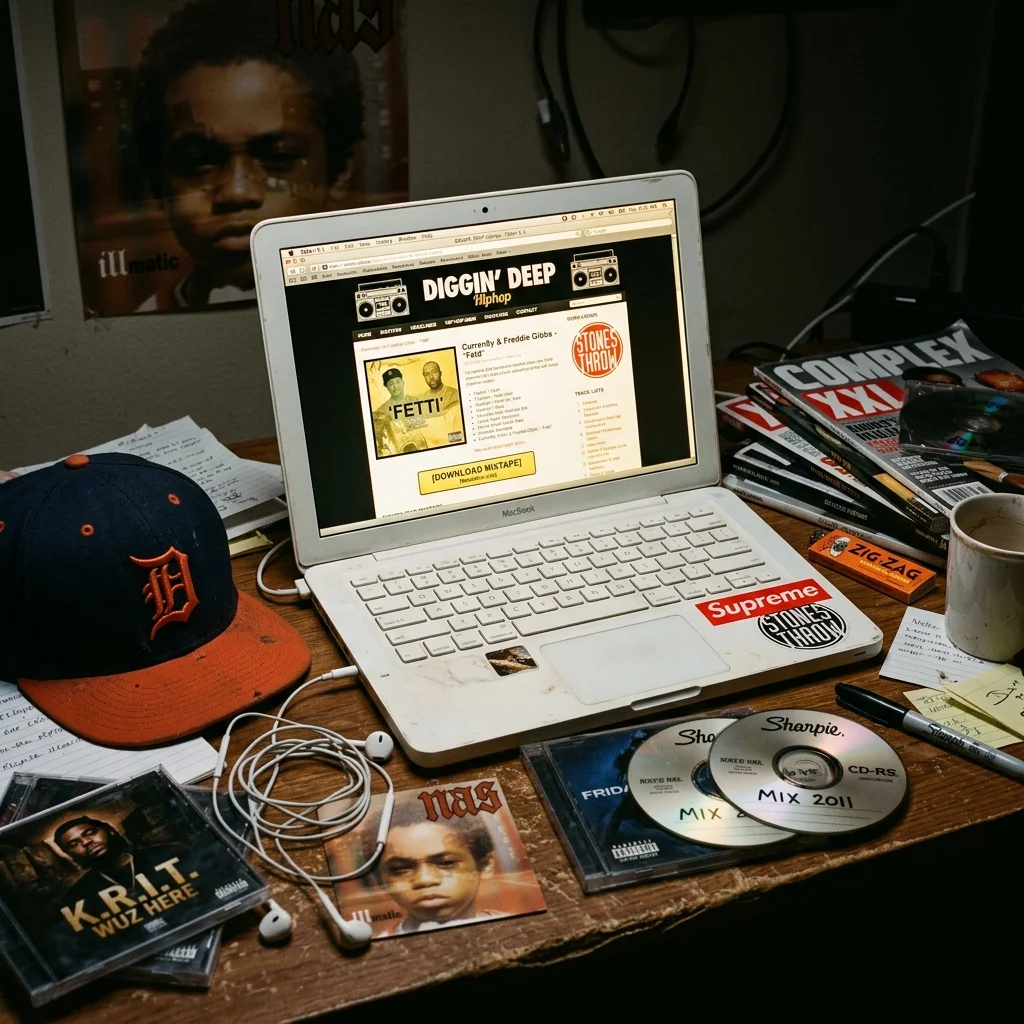
I remember sitting in my college dorm room at 2:00 AM in the summer of 2010, staring at the flashing green download bar on DatPiff. My DSL internet connection was crawling, taking nearly forty minutes to download a 120MB zip file containing Big Sean's Finally Famous Vol. 3. When the download finally completed, I unzipped the folder, drag-and-dropped the MP3 files into iTunes, and synced them to my click-wheel iPod Classic. The audio compression was terrible, and the tags were a mess, but the energy of the music was undeniable. This was the Blog Era in its purest form—a decentralized, wild-west ecosystem that bypassed the traditional gates of the music industry.
Before the algorithmic dominance of Spotify and Apple Music, and long before a viral TikTok dance could propel a 15-second snippet to the top of the Billboard Hot 100, the hip-hop industry was governed by a decentralized network of tastemaking WordPress sites: NahRight, 2DopeBoyz, Illroots, and Fake Shore Drive. If you wanted to make it in hip-hop, you didn't need a music video; you needed a MediaFire download link and a cosign from a blogger.
This year marks the 15th anniversary of Big Sean's debut studio album, Finally Famous (released in 2011). While the album itself is a defining piece of 2010s pop-rap, its true historical significance lies in what it represented. Finally Famous was not just a commercial breakthrough for a young Detroit artist; it was the ultimate climax—and the inevitable death knell—of the Blog Era.
---
What Was the "Blog Era"?
To understand the significance of Big Sean's debut, we have to look at the landscape he emerged from. The late 2000s were a period of massive transition for the music industry. Physical CD sales were collapsing due to digital piracy, and iTunes downloads were not yet sufficient to bridge the financial gap. Major labels were terrified, paralyzed, and bleeding cash.
Nature abhors a vacuum, and the internet filled it. Young artists began bypassing the traditional A&R system entirely. They recorded full-length projects in their bedrooms, uploaded them to free hosting sites like DatPiff or Zippyshare, and emailed the links directly to bloggers.
The mixtape economy was a decentralized distribution model where hip-hop artists released full-length projects for free online to build regional buzz and negotiate major label contracts. This era democratized hip-hop, leveling the playing field and allowing independent artists like J. Cole, Kendrick Lamar, Wale, Kid Cudi, Mac Miller, and Big Sean to build massive, dedicated fanbases completely independently. They didn't need radio play; they just needed to keep the internet fed.
---
Lyrical Innovations: The "Supa Dupa Flow" and Hashtag Rap
Beyond the business and distribution models, the Blog Era birthed a major stylistic shift in lyricism, driven directly by Big Sean, Drake, and Lil Wayne. The most prominent linguistic innovation of this period was the "Supa Dupa Flow," which later became widely known in the industry as "hashtag rap."
The "Supa Dupa Flow" is a lyrical delivery technique where the rapper uses a pause followed by a single-word punchline that functions as a metaphor, entirely omitting the traditional comparative words like "like" or "as." For example, rather than rapping "I'm running this game like a track star," Sean would rap "I'm running this game... track star."
This structural omission created a punchy, rapid-fire cadence that was highly memorable and easily digestible for internet audiences. It became a global meme in the early 2010s, with fans dissecting the cleverness of these compressed metaphors.
While Drake famously used the flow on tracks like "Forever" ("Life is a beach... chair-to-face"), he openly credited Big Sean with pioneering the style in the underground mixtape circuit. The hashtag rap structure allowed Sean to inject a playful, conversational wit into his music, establishing a lighthearted brand that contrasted sharply with the aggressive, street-oriented trap that dominated mainstream radio at the time.
---
Musicological Deep-Dive: No I.D.'s Production Style
The transition from mixtape to studio album required a massive sonic upgrade. On Finally Famous, executive producer No I.D. (Ernest Wilson) was tasked with refining Sean's raw mixtape energy into a commercial product without losing his core identity.
No I.D.'s production style on the lead single "My Last" is a masterclass in clean, mid-tempo R&B-rap crossover. The track is built around a lush, pitch-shifted sample of New Edition's 1988 classic "Can You Stand the Rain." Rather than looping the sample directly, No I.D. chopped the electric piano chords and layered them with a live bass guitar to give the low-end a warm, organic feel.
The drums on the track avoid the harsh, aggressive transient spikes of standard trap beats. Instead, No I.D. utilized a soft, acoustic-sounding snare and programmed a syncopated hi-hat pattern that leaves plenty of mid-range space for Big Sean's lighthearted, conversational vocal delivery. This clean mix philosophy was crucial for securing pop radio crossover.
---
Technical Analysis: "Dance (A$$)" and Side-Chain Compression
The commercial highlight of the album was the club-ready hit "Dance (A$$)." Produced by Da Internz, the track is built around an iconic sample of Kraftwerk's 1981 electronic track "Numbers" (which also served as the foundation for Afrika Bambaataa's "Planet Rock").
From a technical audio perspective, the track's mix utilizes aggressive side-chain compression to manage the massive low-end frequencies. The main bassline is a heavy, sustained 808 sub-bass note. To prevent the kick drum from clashing with the 808 and creating a muddy mix, the engineers routed the kick drum to the side-chain input of a compressor loaded on the bass channel. Side-chain compression is an audio mixing technique where the volume of one signal is dynamically lowered by the trigger of another signal.
Every time the kick drum hits, the 808 bass momentarily ducks in volume by 3dB to 4dB, allowing the transient punch of the kick drum to cut through the mix clearly. This technical choice gave the track its signature pumping effect, making it a staple for club subwoofers and car audio systems.
---
The Mixtape Hustle vs. The Major Label Debut
Big Sean was the undisputed king of the mixtape hustle. After famously rapping for Kanye West outside of a Detroit radio station in 2005, he signed to G.O.O.D. Music, but languished in developmental limbo for years.
Instead of waiting for a commercial release date, Sean took his career into his own hands. He released the Finally Famous mixtape trilogy (Vol. 1, 2, and 3) between 2007 and 2010. These tapes were legendary within the blogosphere. They established his signature sound: clever, hashtag-heavy punchlines, a charismatic, laid-back flow, and a deeply relatable underdog narrative.
More importantly, the mixtapes established Sean as the ambassador of Detroit hip-hop for a new generation. He wasn't relying on the gritty, boom-bap aesthetic of the 90s; he was making vibrant, aspirational music about wanting to make it out.
When Def Jam and G.O.O.D. Music finally gave him the green light to release his official studio debut in 2011 (also titled Finally Famous), the pressure was astronomical. He had to transition from an "internet rapper" beloved by niche bloggers to a mainstream pop star capable of selling physical units at retail stores.
---
The Commercialization of Internet Rap
To illustrate how drastically Big Sean altered the blueprint, we can look at a comparison between his most successful mixtape and his debut studio album.
| Metric | Finally Famous Vol. 3 (Mixtape - 2010) | Finally Famous (Studio Album - 2011) |
| :--- | :--- | :--- |
| Distribution | Free Download (DatPiff, Blogs) | Paid (Physical Retail, iTunes) |
| Primary Production | Local Detroit producers, uncleared samples. | No I.D., Kanye West, The Neptunes |
| Features | Underground peers (Asher Roth, Curren$y). | Massive pop stars (Chris Brown, John Legend, Nicki Minaj). |
| Aesthetic Goal | Prove lyrical ability and build cult following. | Achieve mainstream radio dominance and chart placement. |
Finally Famous (the album) was the definitive proof of concept for the major label system. It proved that the cult audience built on a WordPress blog could actually be monetized and converted into paying customers.
---
Conclusion: The Bridge to Streaming
The massive commercial success of Finally Famous—alongside J. Cole's Cole World: The Sideline Story and Drake's Thank Me Later—effectively killed the pure Blog Era.
Once the major labels realized that the internet was not just a promotional tool, but the entire marketplace, they swooped in. The era of the "free mixtape" ended because labels realized they were leaving millions of dollars on the table. Why give away an incredible 15-track project on DatPiff for free when you could upload it to the newly emerging streaming platforms (Spotify launched in the US in 2011) and monetize every single play? As we explored in our review of why major record labels are becoming obsolete, the industry's centralization was an inevitable consequence of this digital gold rush.
Big Sean was the bridge. He mastered the decentralized, chaotic hustle of the blogs, and then successfully translated that momentum into a highly polished, major-label blockbuster.
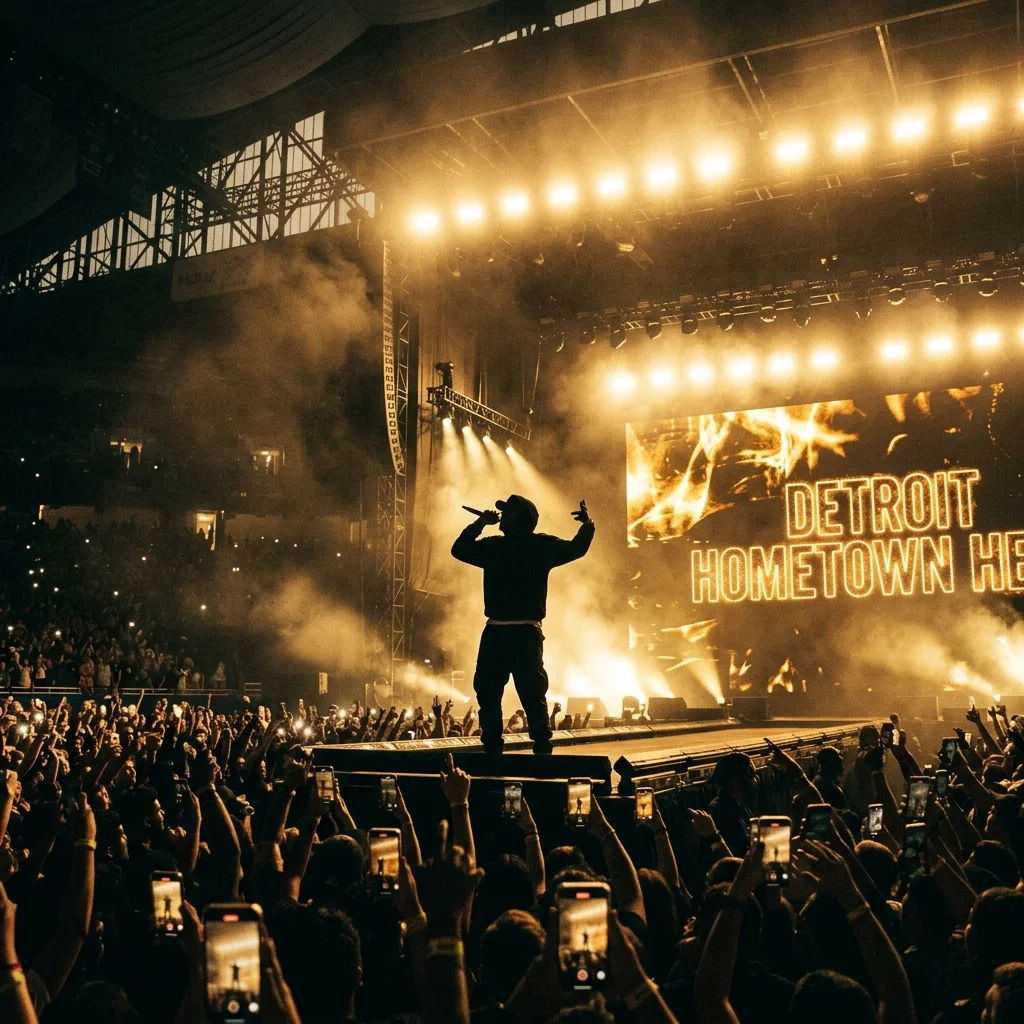
Fifteen years later, Finally Famous stands as a time capsule. It sounds like the optimism of 2011—a moment when a kid from Detroit could upload a song to the internet, catch the attention of a blogger, and eventually end up on stage with Kanye West, completely changing the trajectory of the music industry in the process.
---