
Walking past the digital billboard screens in Seoul’s bustling Gangnam Station this morning, I watched the headlines rotate rapidly: EDAM Entertainment and HighZium Studio had both issued statements confirming that IU and Lee Jong Suk have officially ended their relationship. For a couple that once seemed like the ultimate fairy-tale romance—evolving from co-hosts on SBS Inkigayo in 2012 to a confirmed relationship in late 2022—the news sent shockwaves through the global Hallyu community.
While agency representatives described the split as a mutual decision to remain close colleagues due to their demanding schedules, the announcement shines a glaring spotlight on a much larger reality: the sheer, unsustainable weight of public dating in the K-pop industry. For top-tier stars like Lee Ji-eun (IU) and Lee Jong Suk, dating is not just a personal matter; it is a complex corporate negotiation continuously monitored by millions of fans, sponsors, and media agencies.
The Public Cost of K-Pop Relationships
Unlike Western pop culture, where celebrity relationships are treated as valuable PR assets that drive engagement and reality television plotlines, relationships in the K-pop industry carry a severe financial and social risk.
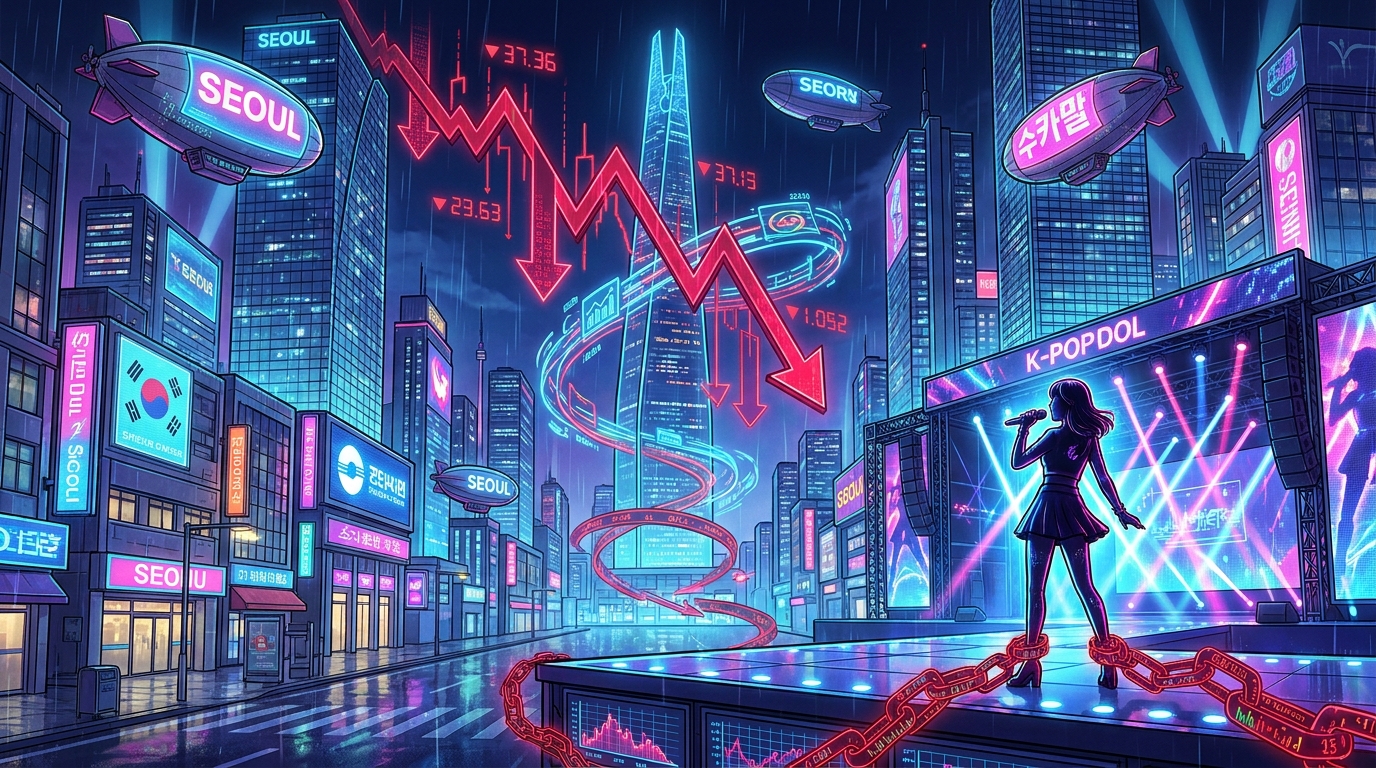
To understand why this is the case, one must examine the metrics that dictate celebrity marketability. The entire Korean entertainment industry is built upon a foundation of parasocial attachment, where fans are encouraged to invest deeply in the emotional availability of their favorite artists. When an artist enters a public relationship, this perceived availability is shattered, often resulting in immediate boycotts, falling stock value for parent companies, and the termination of lucrative brand endorsements.
Parasocial monetization is an economic model where an artist’s personal life and emotional accessibility are commodified as the primary driver of merchandise and music sales.
Because of these extreme risks, public relationships are exceptionally rare among top-tier stars, and those that do go public are subjected to an intense level of media scrutiny that few couples can survive long-term.
| Couple | Year Public | Public Duration | Primary Agency Stance | Public Sentiment Index |
|---|---|---|---|---|
| IU & Lee Jong Suk | 2022 | ~3.5 Years | Mutual respect, quiet support | Exceptionally high, general public approval |
| Karina (aespa) & Lee Jae-wook | 2024 | 5 Weeks | Apologetic, defensive post-backlash | Low, heavy fan protest |
| Jisoo (Blackpink) & Ahn Bo-hyun | 2023 | 2 Months | Brief acknowledgment, rapid exit | Moderate, neutral reaction |
| Taeyeon (SNSD) & Baekhyun (EXO) | 2014 | 1 Year | Defensive, silent post-reveal | Very low, extreme fandom division |
The “Dispatch” Effect and Agency Crisis Management
For years, the South Korean media outlet Dispatch has held a virtual monopoly on exposing celebrity relationships, typically releasing exclusive paparazzi photos on New Year’s Day.
When IU and Lee Jong Suk were revealed by Dispatch in December 2022, their agencies had to pivot instantly from denial to damage control. Fortunately for them, both artists were seasoned veterans in their 30s with established, independent careers, which cushioned the blow. However, the media coverage did not stop there. Every interview, press conference, and awards speech for the next three years became a minefield where journalists demanded updates on their partner, effectively overshadowing their professional achievements.
Media saturation is the point at which an artist’s personal narrative completely eclipses their creative output in public discourse.
This constant centering of their relationship created an environment where every career move was scrutinized through the lens of their partner. When Lee Jong Suk was promoting his latest drama or IU was preparing for her world tour, the narrative inevitably focused on their relationship status. This constant background noise slowly wears down even the most stable partnerships, creating an artificial barrier between the artists and their work.
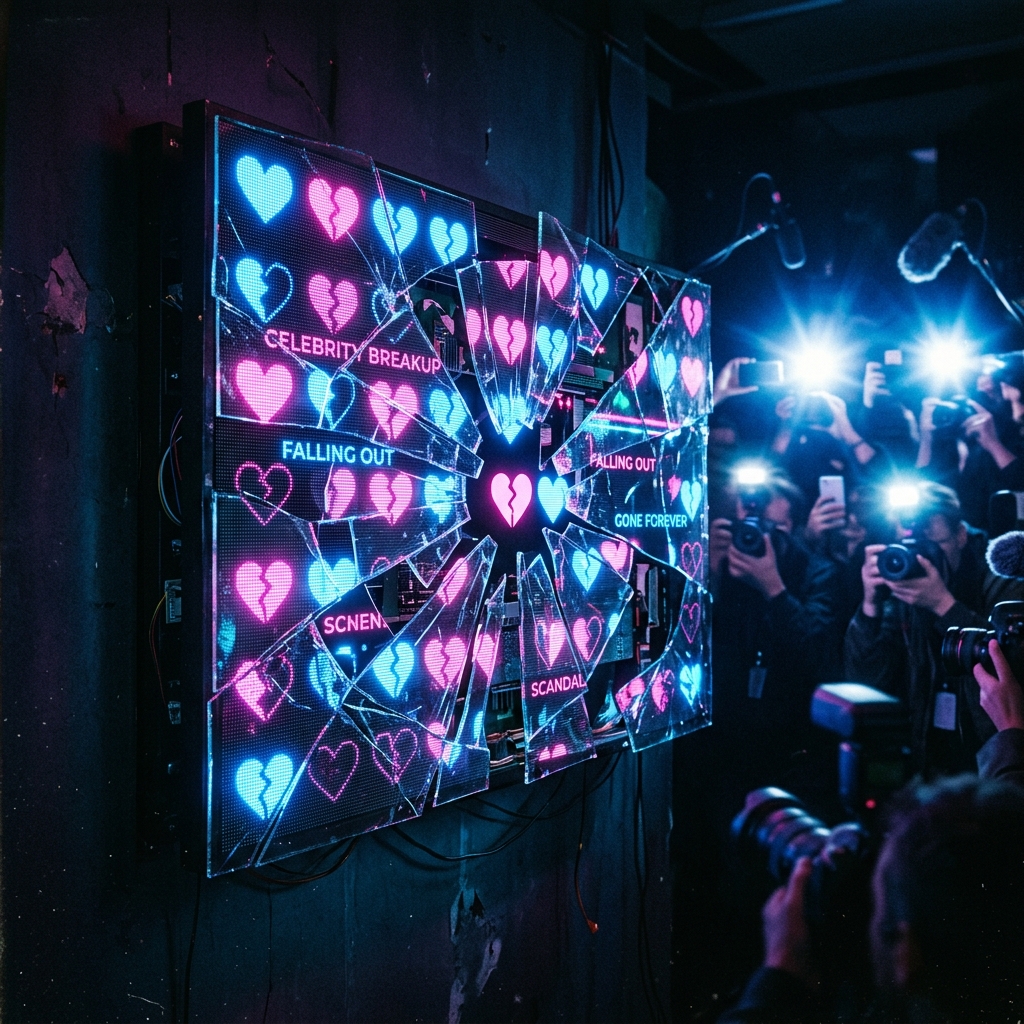
The Evolution of Fan Acceptance in 2026
While older generations of K-pop fans reacted with outright hostility to dating news, the landscape in 2026 has become slightly more nuanced.
Fandoms are now deeply divided. The general public and older domestic fans tend to support mature couples, viewing dating as a normal part of adult life. However, a highly vocal segment of core, high-spending fans—the ones who buy albums in bulk and fund digital streaming campaigns—still view dating as a betrayal of the idol-fan contract.
This contract, while unwritten, dictates that in exchange for the fan’s financial and emotional devotion, the idol must maintain the illusion of singlehood. The moment that illusion is broken, these fans shift their resources elsewhere. For agencies, this is a direct threat to their bottom line. It is why agencies like SM Entertainment, YG Entertainment, and HYBE still enforce strict dating bans or advise their artists to keep their personal lives entirely hidden behind non-disclosure agreements and private clubs.
Counterpoint: Can K-Pop Ever Overcome the Dating Stigma?
Many international commentators argue that the K-pop industry must normalize dating if it wishes to sustain its global expansion. They argue that younger international fans do not share the same parasocial expectations as domestic audiences and are often happy to see their favorite artists in healthy relationships.
While this is true in part, it ignores the financial reality of Hallyu economics. International streams pay significantly less than domestic physical sales and local fan meetings, meaning the core domestic fan base still wields massive financial leverage over agencies. Until the industry shifts away from its reliance on physical album sales and parasocial marketing, the stigma surrounding public dating will remain a structural feature of the K-pop landscape, rather than a temporary phase.
The breakup of IU and Lee Jong Suk is a quiet reminder that even the most celebrated, mature relationships in the Korean entertainment industry struggle under the weight of the public gaze. As both artists return to their respective crafts, the industry will continue to debate whether true privacy is ever achievable for those who live under the spotlight.
Frequently Asked Questions
Why did IU and Lee Jong Suk break up?
According to official statements from their respective agencies, EDAM Entertainment and HighZium Studio, IU and Lee Jong Suk decided to end their relationship mutually due to their busy professional schedules. They have agreed to remain supportive colleagues and friends.
How long did IU and Lee Jong Suk date?
IU and Lee Jong Suk officially confirmed their relationship in December 2022, after Dispatch published photos of them spending Christmas together in Japan. They dated publicly for approximately three and a half years before announcing their split in July 2026.
Are K-pop idols allowed to date publicly in 2026?
While some agencies have relaxed their official dating bans for older, established artists, public dating is still highly discouraged in the K-pop industry in 2026. The financial risk of fan boycotts and lost endorsement contracts means most idols choose to keep their relationships completely private.
Related Reading & Context
Understanding the economics of the Hallyu wave requires looking at how visual style and music overlap. Check out our deep-dive analysis on the Sonic Shift: Why K-Pop Sounds Like Atlanta Trap to see how Western hip-hop production is reshaping the Korean music landscape, or explore the business side in our guide to the End of the 360 Deal and the Rise of Independent Distribution in 2026.