For the last three decades, the foundational economic engine of sneaker culture has been friction. The industry operates on the fundamental psychological principle that making a product incredibly difficult to obtain exponentially increases its cultural value. We camped outside of boutiques in the freezing rain. We set twelve different alarms to battle bots on the SNKRS app. We paid exorbitant premiums on the secondary market. We accepted the friction because the friction was the culture.
But in 2026, a massive structural shift is actively dismantling that friction.
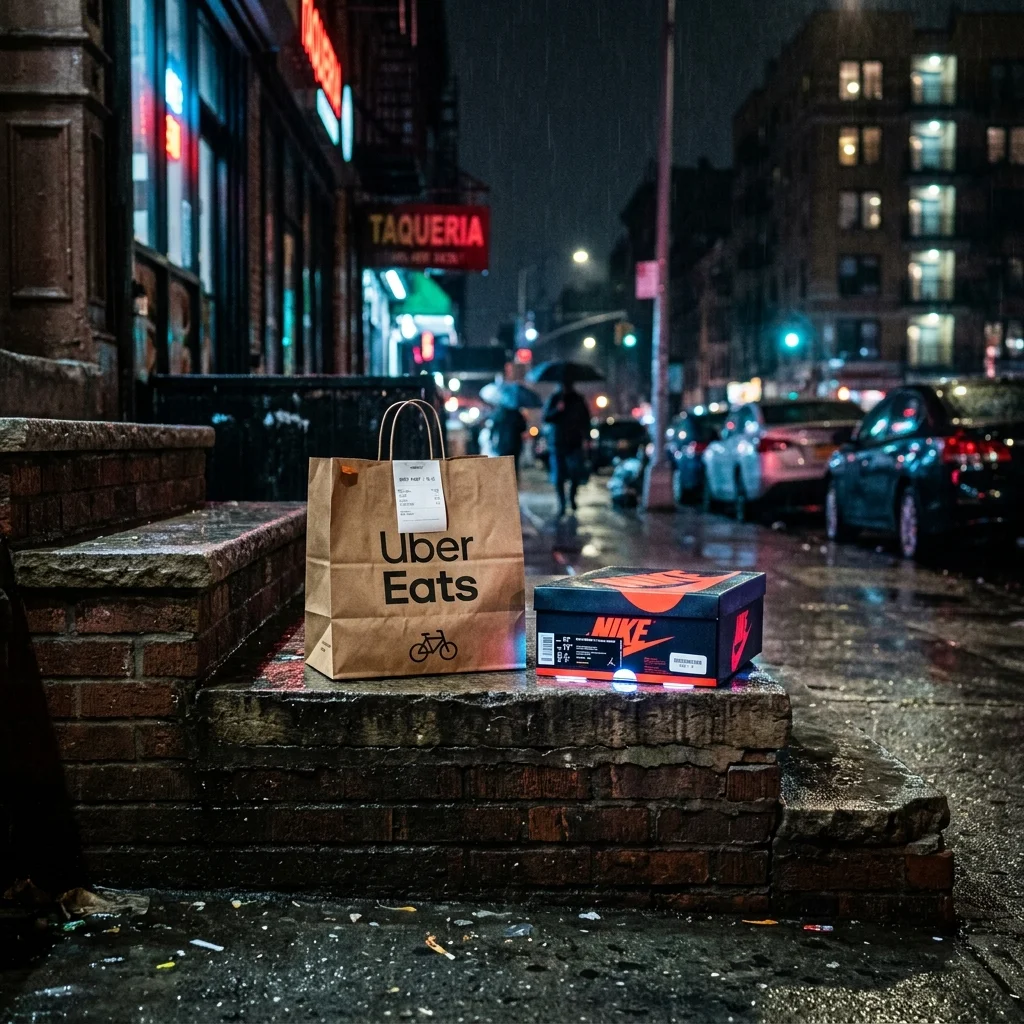
The recent, highly publicized partnership between Hibbett Sports and Uber Eats represents the absolute collision of two seemingly incompatible economic models: the "instant gratification" delivery economy and the "scarcity-based" hype economy. You can now order a pair of retro Air Jordans with the same casual immediacy as ordering a spicy tuna roll, and have them delivered to your front door in under 45 minutes.
Does this unprecedented accessibility kill the foundational "hype" that sustains sneaker culture, or is it the desperate life raft that traditional brick-and-mortar retail needs to survive the digital age?
The Mechanics of the Partnership
To understand the cultural implications, we must first look at the logistics of the deal.
Hibbett Sports, historically a mall-based retailer heavily concentrated in the American South and Midwest, has effectively turned its 1,100+ physical storefronts into hyper-localized micro-fulfillment centers. By integrating directly into the Uber Eats courier network, they have bypassed the traditional e-commerce supply chain (which relies on massive, centralized warehouses and days of transit time via FedEx or UPS).
When a consumer opens the Uber Eats app, they are presented with the live, geo-fenced inventory of the Hibbett store closest to their location. If a size 10.5 Nike Dunk Low is sitting in the stockroom of the local mall, a courier is dispatched, and the shoe is delivered with the consumer's afternoon coffee.
The Death of the "Wait"
This logistical shift fundamentally alters the dopamine cycle of the sneaker purchase.
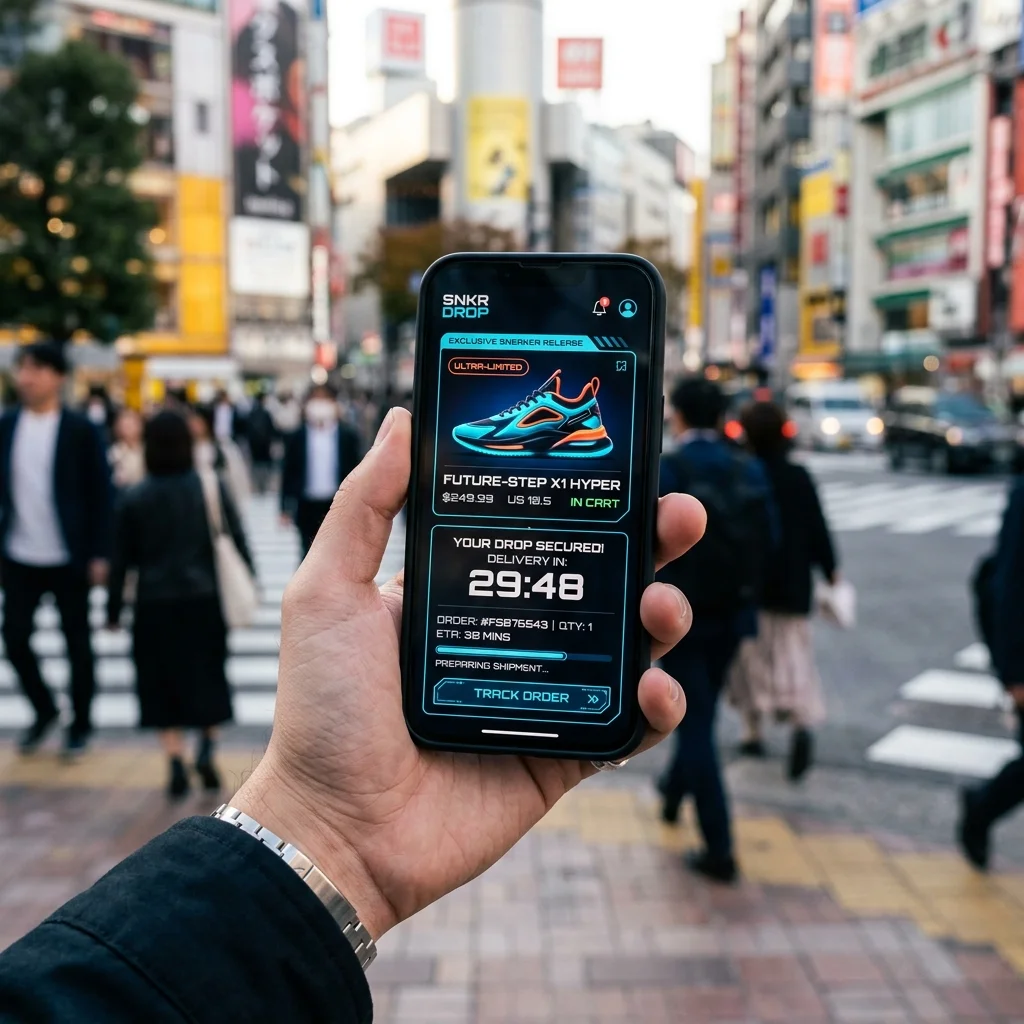
Traditionally, e-commerce sneaker purchasing involved a prolonged period of anticipation. You secured the drop, received the confirmation email, and then waited anywhere from three to ten days for the physical product to arrive. That waiting period was a crucial component of the psychological reward system.
By compressing the delivery window to under an hour, Hibbett and Uber Eats are treating high-end sportswear as a highly perishable impulse buy. It is the ultimate manifestation of the 2026 consumer expectation: "I want it, and I want it now."
Does Instant Accessibility Kill "Hype"?
The immediate concern among purists and industry analysts is that the Uber Eats model fundamentally destroys the concept of "hype."
Hype requires exclusivity, and exclusivity requires a barrier to entry. If you can acquire a highly sought-after sneaker while sitting on your couch in your sweatpants, does the sneaker lose its cultural cachet?
To answer this, we must look at how the definition of hype has fractured in the post-monoculture era.
1. Tier 1: The Untouchable Grails. (e.g., Travis Scott collaborations, ultra-limited regional drops). These will never be available on Uber Eats. Brands will fiercely protect the friction surrounding these releases to maintain their halo effect.
2. Tier 2: The General Release (GR) Hype. (e.g., standard retro Jordans, classic Nike Dunks, New Balance 550s). This is where the Uber Eats model thrives. These are shoes that possess cultural relevance but are produced in massive quantities.
For Tier 2 releases, the friction of the SNKRS app or the physical line outside a Foot Locker is no longer viewed as a badge of honor by Gen Z consumers; it is viewed as an archaic annoyance. The modern consumer does not want to fight a bot for a general release shoe. They want the aesthetic, and they want it immediately.
The Economics of Localized Fulfillment
From a purely business perspective, this partnership is a masterstroke for traditional brick-and-mortar retail, a sector that many analysts declared dead a decade ago.
The Achilles heel of massive e-commerce giants has always been the "last-mile" delivery problem. Shipping a single pair of sneakers from a warehouse in Memphis, Tennessee, to a consumer in Portland, Oregon, is incredibly expensive and environmentally taxing.
| Fulfillment Model | Average Transit Time | Last-Mile Cost (Est.) | Infrastructure Requirement |
| :--- | :--- | :--- | :--- |
| Traditional E-Commerce | 3-7 Days | High | Massive Centralized Warehouses |
| BOPIS (Buy Online, Pick Up) | 2-4 Hours | Zero (Customer travels) | Extensive Retail Footprint |
| On-Demand (Uber Eats) | < 1 Hour | Moderate (Courier fee) | Retail Footprint + Gig Network |
By leveraging their existing physical footprint, Hibbett has solved the last-mile problem. Their stores are already embedded in the communities where their customers live. By outsourcing the actual delivery to the gig economy (Uber Eats), they can offer Amazon-Prime-beating speeds without investing billions of dollars into proprietary logistics networks.
This model essentially turns physical retail stores into the most efficient distribution nodes on the planet.
The Threat to the Resale Market
Perhaps the most fascinating secondary effect of on-demand sneaker delivery is its impact on the secondary resale market (platforms like StockX and GOAT).
The resale market has historically thrived on geographic arbitrage and immediate availability. If a shoe sold out in your city, you paid a premium to a reseller to get it shipped to you from across the country. Furthermore, if you needed a shoe tonight for a specific event, you were forced to visit a local consignment shop and pay a massive markup.
The Hibbett x Uber Eats partnership severely undercuts this model. If a consumer can check the live inventory of every retailer in a 10-mile radius and have the product delivered to their door in 45 minutes for retail price, the local consignment shop loses its primary value proposition: immediate gratification.
While ultra-rare "Grails" will always remain the domain of the secondary market, the high-volume, quick-flip "General Release" resale market is facing an existential threat from on-demand retail logistics.
The Gig Economy Collision
We cannot discuss this partnership without acknowledging the socio-economic realities of the gig economy.
The seamless integration of sneaker delivery relies entirely on a vast network of independent contractors driving their personal vehicles for relatively low wages. There is a stark, almost dystopian contrast between the high-end, luxury-adjacent marketing of modern sportswear and the reality of a gig worker rushing through traffic to deliver a $220 pair of sneakers alongside a cold burrito.
As this model scales, retailers will have to grapple with the brand-safety implications of handing their premium products over to a decentralized, often unregulated courier network. Instances of package theft, damaged boxes (which severely impact the value of a sneaker), and poor customer interactions are inevitable when you remove the dedicated retail employee from the final step of the transaction.
Conclusion: The New Baseline of Retail
The Hibbett x Uber Eats partnership is not a gimmick; it is the new baseline expectation for retail in 2026.
Just as the music industry had to accept that consumers would no longer drive to a record store when streaming offered instant access, the sneaker industry must accept that the modern consumer will not tolerate artificial friction for mass-produced products.
Does it kill the traditional culture of the "camp out" and the physical sneaker hunt? Yes. But that culture was already on life support, slowly suffocated by bots and digital raffles. On-demand delivery is simply the final nail in the coffin of the old model, and the birth of a hyper-efficient, violently immediate new era of sneaker commerce.
---