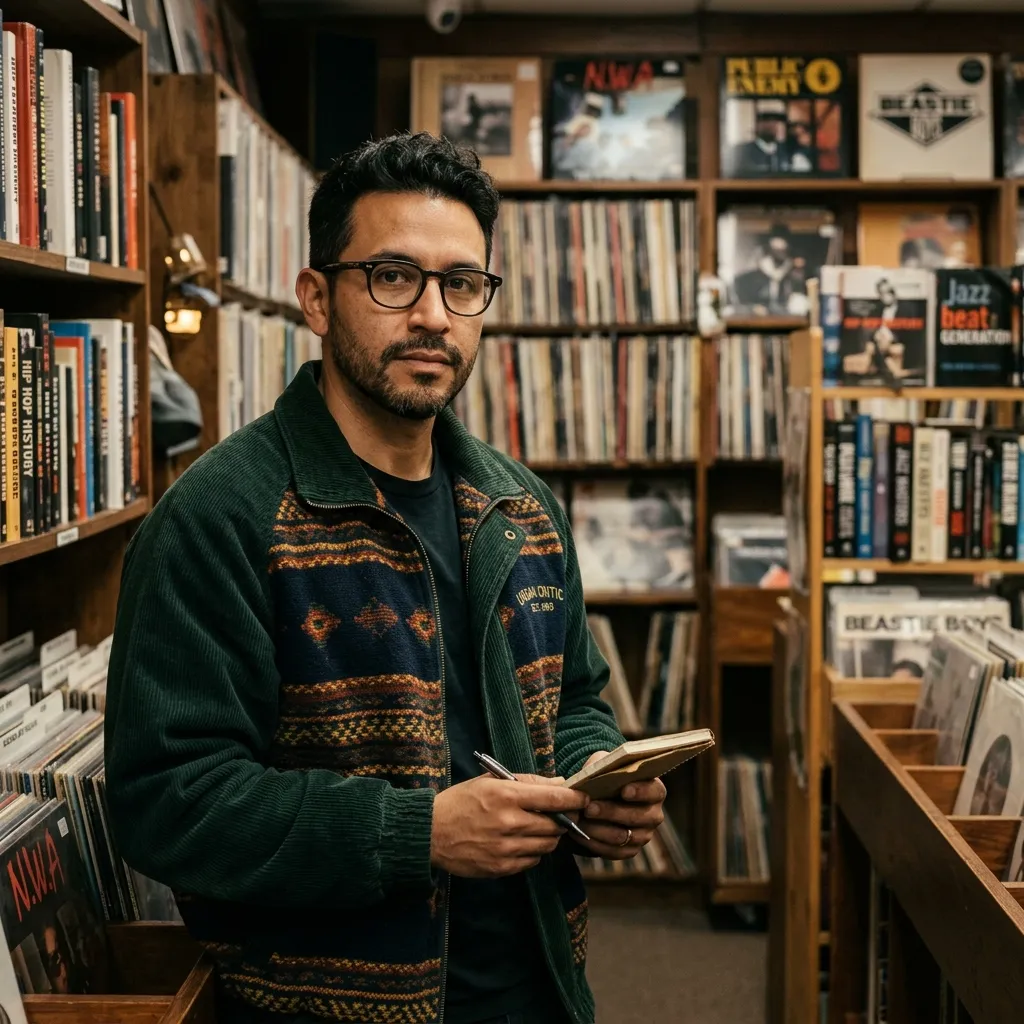
There was a time when the most powerful voice in hip-hop did not belong to a rapper, a label executive, or a music journalist. The most powerful voice belonged to the DJ. In the late 90s and early 2000s, the mixtape circuit was the beating heart of the culture. If you wanted to break a record in New York, you needed DJ Clue to scream his name over the intro. If you wanted to establish dominance in the South, you needed a Gangsta Grillz co-sign from DJ Drama.
These DJs were not just playing songs in a specific order. They were cultural gatekeepers, tastemakers, and aggressive hype men who provided a vital context that elevated the music. They controlled the pacing, the exclusive transitions, and the street-level energy of a release.
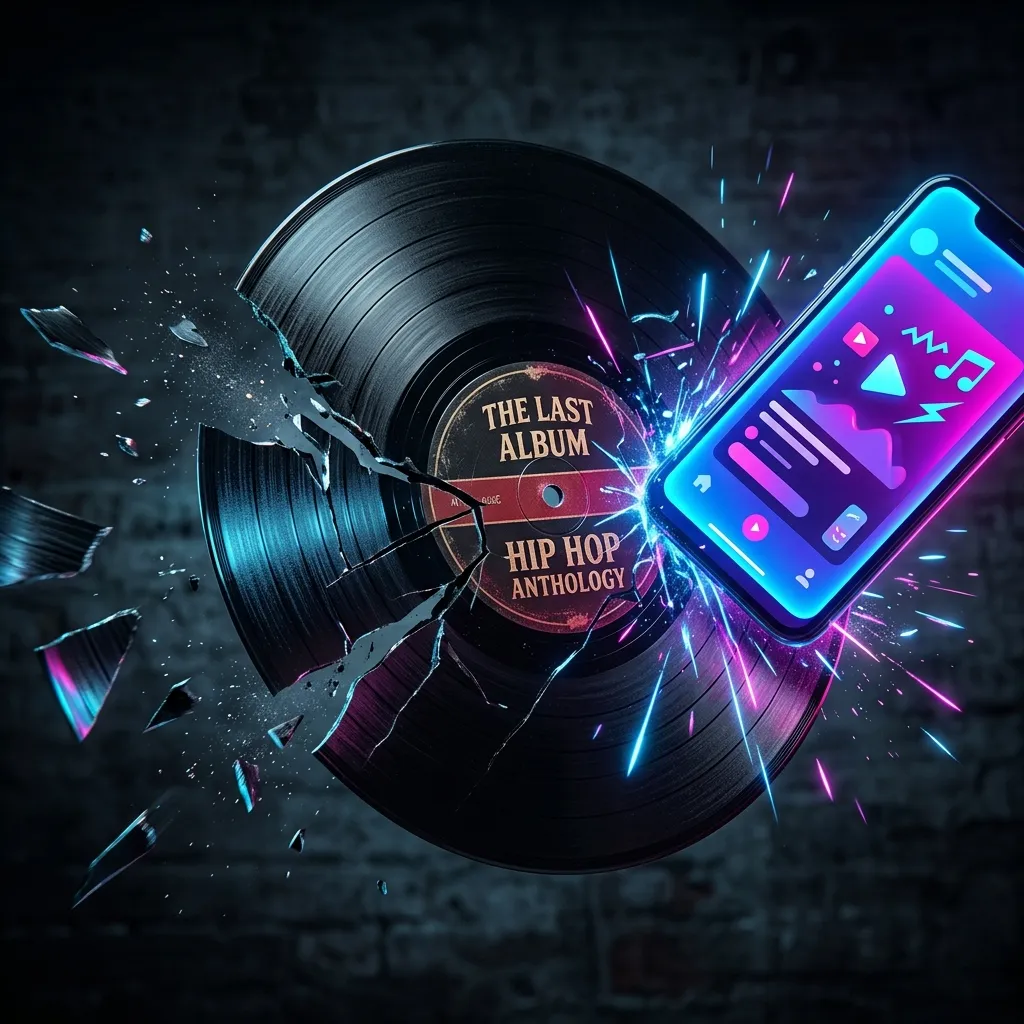
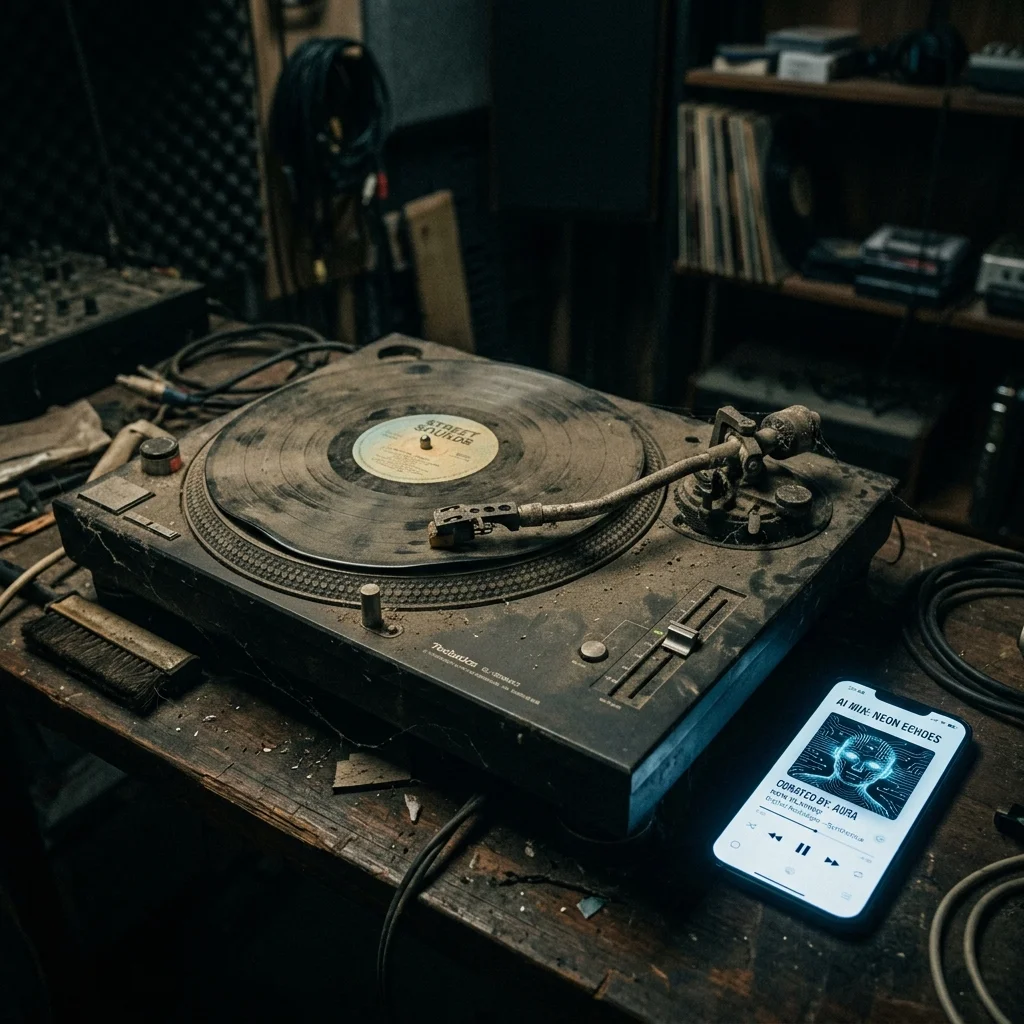
Fast forward to 2026. The mixtape is dead, replaced by the sterile, infinitely scrolling void of the Spotify RapCaviar playlist. The DJ has been entirely erased from the consumption experience, replaced by an invisible algorithm that dictates what we listen to next. The erasure of the DJ in favor of Spotify Autoplay is not just a technological shift; it is the systemic destruction of human curation in hip-hop culture.
The Golden Era of the Mixtape Host
To understand what we have lost, we must remember what we had. A classic mixtape was a chaotic, aggressive, and highly exclusive listening experience.
When you bought a bootleg CD on a street corner or downloaded a DatPiff zip file, you were not just getting 15 MP3 files. You were getting an orchestrated event. The DJ’s ad-libs, the heavy airhorn sound effects, the exclusive freestyles, and the aggressive track sequencing created a cohesive, immersive world.
DJs like Kay Slay, Green Lantern, and Funkmaster Flex were brands unto themselves. They didn’t wait for algorithms to tell them what was popular; they dictated what was popular. They broke underground artists by sandwiching their obscure street anthems between massive commercial hits from Jay-Z and Nas. This human element of curation—the sheer, biased force of a DJ believing in a record so much that they forced you to listen to it—is something a machine can never replicate.
If you look back at the Top Influential Hip-Hop Albums of the early 2000s, many of those artists built their foundation entirely on the backs of regional mixtape DJs. Without DJ Screw, the Houston sound never achieves national prominence. Without DJ Drama, the Atlanta trap explosion is delayed by half a decade.
The Rise of the Algorithm
The shift began slowly with the transition from physical media to digital streaming, but the fatal blow was dealt by the introduction of algorithmic “Autoplay” and heavily curated editorial playlists.
Platforms like Spotify, Apple Music, and Amazon Music realized that their core business model required keeping users on the app for as long as possible. To achieve this, they needed to eliminate the friction of choice. Instead of a user having to actively seek out a DJ’s new mix, the platform would simply serve them an endless, mathematically optimized stream of audio.
As we explored in our deep dive into Why Hip-Hop Dominates Spotify, the algorithm rewards volume and retention. It does not care about cultural context. It cares about whether you skip a song within the first 30 seconds.
This metric-driven approach birthed the era of the “Vibe Playlist.” Today, millions of listeners rely on playlists titled “Chill Rap,” “Workout Hype,” or the monolithic “RapCaviar” (which has long been criticized for its pay-to-play mechanics by major labels). These playlists are curated partially by editorial staff, but largely by machine learning models that analyze acoustic data, tempo, and user listening history.
The Cost of Sterile Curation
The problem with algorithmic curation is its inherent sterility. An algorithm is designed to play it safe. It groups songs together based on sonic similarities, creating a frictionless, passive listening experience that fades into the background.
When an algorithm curates your music, you are no longer a participant in the culture; you are a passive consumer of background noise. The algorithm will never surprise you with a harsh, jarring transition that forces you to pay attention. It will never interrupt a track to scream exclusive ad-libs. It will never break a completely unknown, abrasive underground artist because its primary directive is to avoid skips.
This sterile curation has directly influenced how modern rap is produced. Artists now specifically engineer their tracks to appease the algorithm. As discussed in our piece on how Type Beats are Ruining Production, producers are intentionally stripping away long intros, complex beat switches, and aggressive vocal samples because those elements trigger algorithmic skip-rates. We have traded the chaotic genius of the mixtape for the smooth, unoffensive perfection of the playlist.
The Illusion of Discovery
Proponents of the streaming era argue that platforms like Spotify provide unprecedented tools for music discovery. Features like “Release Radar” and “Discover Weekly” theoretically expose listeners to artists they would never have found in the mixtape era.
This is an illusion. The algorithm does not introduce you to new sounds; it feeds you variations of what you already consume. If you listen exclusively to melodic Atlanta trap, the algorithm will ensure you never hear gritty, boom-bap New York underground rap. It creates an echo chamber, isolating subgenres and preventing the kind of cross-pollination that mixtape DJs used to force upon their listeners.
Furthermore, the power has shifted from independent cultural gatekeepers to massive tech corporations. A DJ was accountable to the streets; if a DJ pushed garbage, they lost their credibility. Spotify is accountable only to its shareholders. The placement of a song on a major playlist is now dictated by major label negotiations and data analytics, entirely bypassing the organic street-level validation that used to govern hip-hop. This corporate homogenization of the genre is exactly why many argue that the Major Record Labels are Obsolete when it comes to breaking true counter-culture art.
Can the Human Element Return?
Is the DJ permanently dead? Not entirely, but their role has fundamentally shifted.
In 2026, we are seeing a slight pushback against algorithmic fatigue. Platforms like NTS Radio, localized underground collectives, and independent Twitch streamers are attempting to reclaim the mantle of the human tastemaker. As noted in our analysis of the Streamer as the New A&R, internet personalities like Kai Cenat and Adin Ross have inadvertently adopted the role of the 2000s mixtape host, breaking records by playing them live for massive, engaged audiences.
However, these are isolated incidents rather than structural shifts. The vast majority of global music consumption is still dictated by lines of code sitting on a server farm.
Conclusion: We Traded Soul for Convenience
The erasure of the DJ is a tragedy of convenience. We gained the ability to carry fifty million songs in our pockets and the luxury of never having to manually select the next track. But in exchange, we surrendered the soul of the curation process.
We traded the aggressive, opinionated, and culturally vital voice of the mixtape host for the silent, mathematically optimized precision of the algorithm. Hip-hop was built on human energy, error, and bias. By allowing machines to dictate our listening habits, we have fundamentally sanitized the culture, proving once again that technological efficiency rarely equates to artistic progress.
FAQs
What was a mixtape DJ?
In the 90s and 2000s, a mixtape DJ (like DJ Clue or DJ Drama) was a curator who compiled, mixed, and hosted exclusive underground tracks, freestyles, and street anthems on physical CDs or digital downloads.
Why did mixtapes decline in popularity?
The rise of digital streaming platforms (Spotify, Apple Music) and strict copyright crackdowns on uncleared samples and beats made the traditional, unauthorized mixtape distribution model legally and financially unviable.
How do Spotify algorithms curate music?
Algorithms analyze a combination of user listening history, skip rates, acoustic similarities (tempo, key), and global listening trends to automatically generate endless streams of “similar” music.
Can an algorithm break a new artist?
Yes, algorithms can trigger viral success by placing a track in an algorithmic playlist like Discover Weekly, but this often leads to fleeting “one-hit wonder” success rather than building a dedicated, organic fanbase.
Keep Reading
If you are interested in the economic reality behind streaming numbers, read our piece on the End of the 360 Deal. For a look at how artificial intelligence is infiltrating the creative process itself, check out our guide to the Future of Hip-Hop AI.