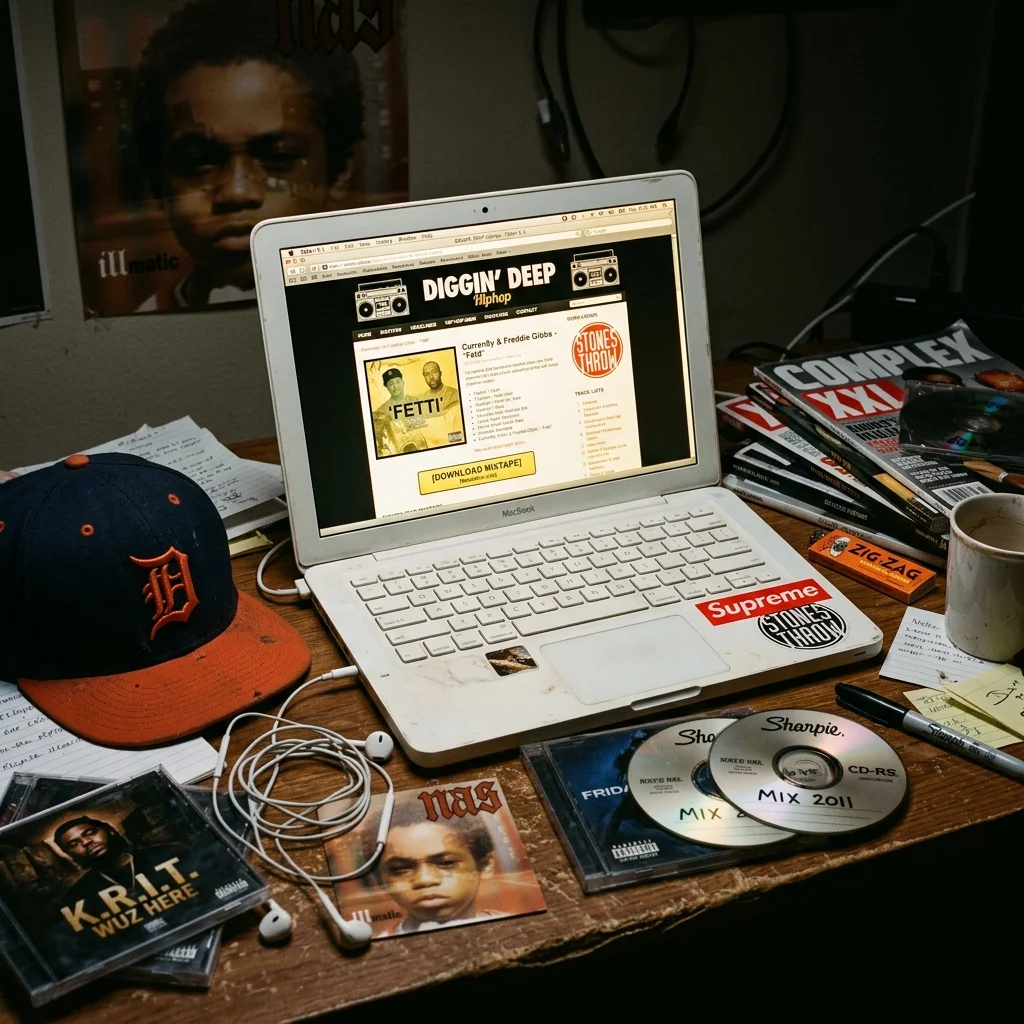

I remember the first time I loaded Bonnie Tyler's "Total Eclipse of the Heart" into an Akai MPC 2000XL in 2004. I had found a dusty vinyl copy of her 1983 album Faster Than the Speed of Night in a local thrift store dollar-bin. Lowering the turntable stylus onto the vinyl, I isolated the vocal intro where she sings "Turn around..." and sampled it into the MPC's memory. By pitch-shifting the sample up by five semitones and doubling the tempo, the melancholy ballad was instantly transformed into a hyper-energetic, chipmunk-vocal soul loop. It was a firsthand lesson in the transformative power of sampling, showing how a classic rock power ballad could speak directly to the street-level grit of hip-hop.
Yesterday, July 8, 2026, the music world lost a true titan. Bonnie Tyler, the iconic Welsh singer whose raspy, powerhouse vocals defined an entire era of 1980s pop-rock, passed away unexpectedly at a hospital in Portugal at the age of 75. Following emergency intestinal surgery in May, her health had been a subject of intense concern, but the suddenness of her passing still sent shockwaves across the globe.
As the news broke, every major publication immediately rushed to publish standard, paint-by-numbers obituaries. They rightfully praised her astonishing vocal range, her global superstardom, and her defining collaborations with the late, great producer Jim Steinman. They eulogized her as a legend of adult contemporary radio.
But at ThugNews, we look at musical legacy through a different lens. While Bonnie Tyler will forever be remembered by the mainstream as the queen of the 1980s power ballad, her impact extends far beyond the confines of classic rock radio. We must examine her profound, highly unexpected, and deeply woven connection to hip-hop production and the foundational culture of sampling.
---
The Architect of the "Damaged" Vocal Aesthetic
Before we can dissect how her music was chopped, looped, and flipped by hip-hop producers, we have to understand the specific sonic texture of Bonnie Tyler's voice.
In 1976, early in her career, Tyler underwent surgery to remove vocal nodules. Following the procedure, she famously defied her doctor's orders to remain completely silent during the recovery period. The resulting vocal trauma permanently altered her singing voice, gifting her with a distinct, husky, aggressively raspy tone. Initially, she believed her career was over. Instead, that "damaged" aesthetic became her ultimate superpower.
This specific texture—the raw, emotive, slightly broken quality of her voice—inadvertently laid the groundwork for an entire aesthetic that modern R&B and alternative hip-hop artists would spend decades trying to emulate. When you listen to the deliberate vocal distortion and emotional rawness of modern artists like 070 Shake, the late XXXTentacion, or even the heavily saturated, distorted vocal chain used by Travis Scott, you are hearing the descendants of Tyler’s accidental innovation. Hip-hop, at its core, values authenticity over perfection. Tyler’s voice was the very definition of authentic imperfection. It conveyed a depth of pain and longing that a pristine, classically trained pop vocal simply could not achieve.
---
Technical Sampling Analysis: Pitch-Shifting and Time-Stretching
In hip-hop production, flipping a sample requires managing both the tempo (BPM) and the musical key of the source material. "Total Eclipse of the Heart" is originally written in the key of F minor at a slow, dramatic tempo of 69 BPM.
To adapt this ballad for modern trap beats (which typically hover between 130 and 150 BPM), producers rely on specialized digital audio workstation (DAW) tools. Time-stretching is an audio processing method that changes the speed of an audio sample without altering its pitch.
To create a high-tempo flip of Tyler’s vocal, a producer might speed up the audio by 100% using a time-stretching algorithm like zplane's élastique Pro. This maintains her original F minor key while matching the 138 BPM tempo of the trap drums. Conversely, to create a "chipmunk soul" effect, a producer might disable time-stretching and pitch-shift the sample up by +5 semitones. This raises her voice to a higher pitch and naturally speeds up the tempo, resulting in a bright, soaring vocal line that floats above a booming 808 bassline. Pitch-shifting is an audio editing process that alters the musical key of a recording without changing its tempo or duration. By understanding these technical parameters, producers are able to repurpose rock ballads for the street.
---
The Sampling Legacy of "Total Eclipse of the Heart"
Tyler’s magnum opus is undeniably "Total Eclipse of the Heart." Released in 1983, the song was a global phenomenon, selling over 13 million copies and establishing itself as a cultural monolith. Produced by Jim Steinman, the track is a masterclass in gothic, operatic maximalism. It is entirely over-the-top, deeply theatrical, and completely devoid of subtlety.
And that is exactly why hip-hop producers absolutely loved it.
In hip-hop production, especially during the golden era of sampling in the late 1990s and early 2000s, producers were constantly hunting for "the break"—a section of a record that possessed massive emotional weight or a unique sonic texture. "Total Eclipse of the Heart" was a goldmine. The song is built on dramatic piano stabs, sweeping orchestral movements, and Tyler’s piercing, isolated vocal runs.
Producers realized that if you stripped away the 1980s pop gloss, the underlying stems of the track were incredibly dark and cinematic. They were the perfect foundation for aggressive, deeply emotional hip-hop beats.
Notable Bonnie Tyler Interpolations and Samples
Over the decades, Tyler's catalog has been quietly plundered by some of the most influential figures in hip-hop and R&B. Here is a breakdown of how her most famous tracks have been utilized within the culture:
| Artist | Song / Year | Sampled Track | Cultural Impact / Usage |
| :--- | :--- | :--- | :--- |
| Nicki Minaj | "Catch Me" (2010) | "Total Eclipse of the Heart" | Minaj heavily interpolated the melodic structure of the chorus for this deep cut on her massive Pink Friday album, transforming a rock ballad into a futuristic pop-rap anthem. |
| Lil Uzi Vert | Various Unreleased Leaks (2017-2019) | "Holding Out for a Hero" | The hyper-energetic, high-BPM synth structure of Tyler's 1984 hit perfectly aligned with the emerging "rage" and hyperpop-adjacent rap subgenres popularized by Uzi and Playboi Carti. |
| Jedi Mind Tricks | "The Deer Hunter" (2000) | "It's a Heartache" | Underground hip-hop utilized the gritty, acoustic textures of her 1977 country-rock crossover hit to create dark, boom-bap atmospheres. |
| Various UK Drill Producers | 2021-Present | "Total Eclipse of the Heart" (Choir Vocals) | The haunting, isolated choir vocals from the intro of "Total Eclipse" have been heavily pitch-shifted and utilized in numerous dark, aggressive UK Drill beats, proving the sample's incredible versatility. |
---
Jim Steinman and the Rise of Hip-Hop Maximalism
We cannot discuss Bonnie Tyler's impact on hip-hop without discussing her primary collaborator, the late producer Jim Steinman. Steinman was the architect of the "Wagnerian rock" sound—a style defined by overwhelming orchestration, dramatic tempo shifts, and an almost absurd level of emotional grandeur.
While Steinman was primarily known for his work with Tyler and Meat Loaf, his production philosophy deeply influenced the trajectory of hip-hop beat-making. In the early 2000s, hip-hop production began to shift away from minimalist, jazz-loop boom-bap toward massive, stadium-shaking orchestration.
When Kanye West released My Beautiful Dark Twisted Fantasy in 2010—an album widely considered the zenith of hip-hop maximalism, featuring massive choirs, sweeping strings, and dramatic, operatic song structures—he was executing the exact same sonic philosophy that Steinman and Tyler perfected in 1983.
The DNA of a song like Kanye's "All of the Lights" or Travis Scott's "SICKO MODE" can be directly traced back to the sprawling, theatrical ambition of "Total Eclipse of the Heart." They share a fundamental belief that more is always more, and that pop music should feel like a multi-act, cinematic event.
---
The Enduring Appeal of the 80s Flip
In 2026, the art of the sample has evolved dramatically. With the rise of AI in hip-hop production and instant, perfect stem separation, producers no longer have to struggle with muddy audio files. They can cleanly extract Tyler's isolated vocals or Steinman's isolated piano runs with a single click.
This technological advancement has sparked a massive resurgence in 1980s pop sampling. Producers are actively seeking out the massive, reverb-drenched drum sounds and soaring synths that defined the era, flipping them into hyper-modern trap and rage beats.
Bonnie Tyler's catalog remains a foundational text for this movement. Her music possessed a raw, unpolished, deeply human emotion that simply cannot be replicated by modern generative AI. When a producer samples "Total Eclipse," they aren't just sampling a melody; they are sampling a specific, highly charged emotional frequency. They are capturing the exact moment a broken voice managed to convey the absolute highest stakes of human longing.
As we mourn the passing of Bonnie Tyler, we must recognize that her legacy is not confined to classic rock radio stations or 1980s nostalgia playlists. She was an unwitting pioneer. Her raspy, damaged vocals gave permission to a generation of artists to be beautifully imperfect, and the gothic maximalism of her greatest hits provided the raw materials for some of the most innovative production in hip-hop history.
The queen of the power ballad may be gone, but as long as there is an MPC, an SP-404, or a digital audio workstation in a producer's bedroom, her voice will continue to echo, loop, and inspire across the decades.
---