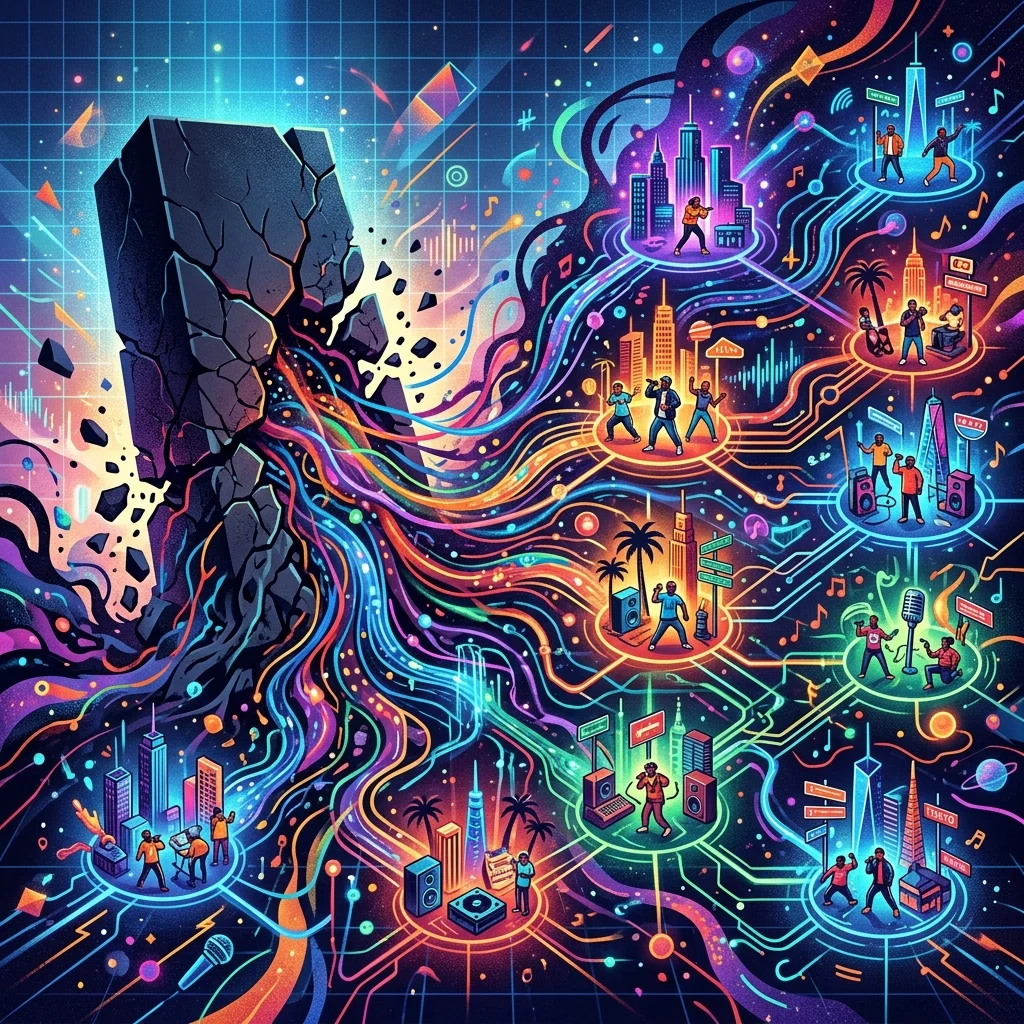
When our consulting team reviewed the Billboard Top 10 data over the last 24 months, we noticed a trend that terrified major record label executives but thrilled independent creators. The era of the ubiquitous, globally dominant hip-hop superstar—the artist who dictates the entire cultural conversation for a year at a time—is over. In 2026, we have officially entered the Post-Monoculture Era.
A monoculture in music refers to a period where a massive, unified audience consumes the exact same artists and trends simultaneously (e.g., the dominance of Drake or Kendrick Lamar in the 2010s). Today, the internet has fractured the global audience into thousands of highly dedicated, hyper-niche micro-communities.
The search for the “Next Drake” is a fool’s errand because the infrastructure that created that level of centralized stardom no longer exists. Instead, the industry is dominated by regional kings and niche internet superstars who generate millions of dollars in revenue without ever crossing over into mainstream pop consciousness. In this editorial analysis, we will break down why the monoculture collapsed, how the economics of independent hip-hop have shifted, and how upcoming artists can thrive in this fragmented landscape.
The Collapse of the Mainstream Pipeline
For decades, the major label system (Universal, Sony, Warner) operated as a gatekeeper. They controlled radio syndication, MTV placement, and editorial playlisting. If they wanted an artist to be a superstar, they forced them into the cultural center.
By 2026, algorithmic discovery on platforms like TikTok and the decentralized nature of streaming have completely dismantled this pipeline. Listeners no longer rely on the radio to tell them what is hot; algorithms feed them exactly what fits their highly specific micro-tastes. If a listener only wants to hear Detroit scam rap, or Memphis Drift Phonk, the algorithm will supply an endless stream of it, insulating them from mainstream pop-rap entirely.
Because the audience is no longer unified, it is mathematically nearly impossible for a single hip-hop artist to capture 80% of the market share as they could ten years ago.
Let’s look at the economic reality of why independent regional success often outweighs major label “stardom” in 2026.
| Metric | Major Label “Superstar” | Independent “Regional King” |
|---|---|---|
| Master Ownership | 0% - 15% | 100% |
| Revenue Split (Streaming) | ~18% after recoupment | 85% - 100% (via DistroKid/TuneCore) |
| Touring Focus | Global Arena Tours (High Overhead) | Regional 1,500-cap Venues (High Margin) |
| Fan Relationship | Handled via PR teams & Label marketing | Direct-to-consumer (Discord, Patreon, SMS) |
| Creative Control | Subject to A&R approval & trend chasing | Complete autonomy |
To understand the broader context of how label power has diminished, read our historical analysis on why Major Record Labels Are Becoming Obsolete.
Step 1: Building a Micro-Community Empire
If you are an upcoming artist in 2026, your goal should not be to reach everyone. Your goal should be to reach someone very deeply. A fanbase of 10,000 hyper-dedicated fans is exponentially more profitable than 1,000,000 passive listeners.
The Discord/Patreon Funnel
Top independent artists in 2026 do not just post on Instagram and hope for streams. They funnel their audience into private ecosystems. Discord servers act as digital fan clubs where artists preview unreleased music, host beat-making streams, and sell exclusive merchandise directly to their core audience without a middleman taking a cut.
Niche Domination over Broad Appeal
Stop trying to make a song that appeals to New York, Atlanta, and Los Angeles simultaneously. Focus entirely on your local scene or a highly specific internet subculture. The Michigan rap scene thrived by completely ignoring mainstream conventions and leaning heavily into off-beat flows and hyper-local references. Dominate your niche first.
Step 2: The Direct-to-Consumer Merchandise Model
In the Post-Monoculture era, streaming royalties are often just a marketing budget for the real revenue driver: merchandise and physical goods.
Limited Edition Drops
Independent artists utilize the “streetwear drop” model. Instead of keeping a generic t-shirt in stock year-round, they release highly limited, high-quality garments for a 48-hour window. This creates artificial scarcity and drives urgency, often allowing an artist with only 50,000 monthly listeners to generate six-figure merch drops.
Vinyl and Physical Media Resurgence
Gen Z consumers in 2026 view music as a digital utility, but they view vinyl records and cassettes as tangible pieces of identity. Offering exclusive vinyl variants of your projects to your core community is a massive revenue stream that major labels are too slow to execute effectively on a micro-scale.
Step 3: Mastering the Algorithmic Landscape
You don’t need a million-dollar marketing budget; you need to understand how algorithms categorize data.
Metadata is Your Best A&R
Ensure every track you upload has precise metadata. Use highly specific tags. Don’t just tag “Hip-Hop.” Tag “Dark Trap,” “Detroit Flow,” “Sample Heavy.” This ensures Spotify’s algorithmic playlists (like Discover Weekly and Release Radar) serve your music to the exact micro-community most likely to engage with it.
For actionable steps on navigating the streaming giants, consult our guide on How to Submit Music to Spotify Playlists.
Pro Tips for Thriving in the Fragmented Industry
1. Own Your Data
Never rely solely on social media algorithms to reach your fans. Instagram and TikTok constantly throttle organic reach to sell ads. You must collect SMS numbers and email addresses. Owning your audience data is the only insurance policy an independent artist has in 2026.
2. Collaborate Laterally, Not Upward
Stop paying $5,000 for a verse from a fading mainstream artist in hopes of a crossover hit. Instead, collaborate laterally with 5 other independent artists in different regional scenes who share a similar audience size. You will effectively cross-pollinate your fanbases for free.
3. Build a Universe, Not Just an Album
Fans in 2026 connect with world-building. Your music videos, cover art, merch, and social media persona should all exist within a cohesive cinematic universe. Look at how artists like Tyler, The Creator or modern underground collectives create immersive aesthetics that fans want to live inside.
4. Be Consistent, Not Perfect
The algorithm rewards consistency over perfection. Dropping one flawless, over-thought album every three years will kill your momentum. In the modern era, dropping smaller, high-quality EPs or consistent singles every 4-6 weeks keeps your micro-community fed and the algorithms actively pushing your catalog.
Common Mistakes in the Post-Monoculture Era
Mistake 1: Chasing TikTok Trends
The Fix: While TikTok is a powerful discovery tool, deliberately trying to engineer a “viral dance challenge” song usually results in hollow, disposable music. The algorithm is smart enough to detect inauthenticity. Focus on making incredible music true to your niche; let the fans decide how to meme it.
Mistake 2: Measuring Success by Billboard Placements
The Fix: The Billboard Hot 100 is an outdated metric for independent success. An artist can chart at #95 for one week, make very little money, and lose their core fanbase by “selling out.” Measure your success by your community engagement rate, merch sales, and ticket sales for your regional tours.
Mistake 3: Signing a 360 Deal for “Exposure”
The Fix: Major labels offer 360 deals (taking a cut of your touring, merch, and streams) in exchange for upfront cash and “exposure.” In 2026, exposure is free via the internet. Never give away the rights to your touring and merch—the only areas where artists actually make high-margin profit—just to get on a Spotify editorial playlist.
Frequently Asked Questions
What does “Post-Monoculture” mean for hip-hop?
It means there is no longer a single, unified mainstream audience that listens to the exact same top 5 artists. Instead, the audience is divided into thousands of smaller, highly dedicated niches based on specific subgenres (e.g., Rage, Phonk, Drill, Abstract Hip-Hop) or regional scenes.
Can an independent artist still become a billionaire?
Yes, but the path is different. Instead of relying on mass global record sales, future music billionaires will build massive direct-to-consumer businesses, utilizing their dedicated micro-communities to launch fashion lines, technology startups, and media empires, retaining 100% ownership.
Do I still need a manager to succeed independently?
In the early stages, no. You need to be a self-sufficient entrepreneur. Once your independent business reaches a level where logistical operations (tour routing, merch fulfillment, legal negotiations) are preventing you from making music, that is the exact moment you hire a manager to scale the business you already built.
Is the album format dead in 2026?
The traditional 20-track album designed to game streaming numbers is dying. However, concise, thematic projects (7 to 10 tracks) that tell a cohesive story are highly valued by dedicated fans. For a deeper look at this, read our piece on the Death of the Album Concept.
How do regional artists make money without mainstream radio play?
Through high-margin direct-to-consumer sales (limited vinyl, exclusive merch drops, Patreon subscriptions) and regional touring. An artist who can consistently sell out 1,000-capacity venues in 5 specific cities can net a higher profit than a major label artist forced into an expensive national arena tour.
The Power of the Niche
The death of the hip-hop monoculture is not a tragedy; it is an emancipation. It marks the transfer of power from a handful of corporate executives in high-rises to thousands of independent creators building sustainable, profitable empires on their own terms.
By rejecting the pursuit of mainstream ubiquity and focusing entirely on super-serving your specific niche, you are aligning yourself with the economic reality of 2026. The throne is empty because the kingdom has been divided—and that is the best thing that could have happened to hip-hop.
To understand how this shift is impacting the live music sector, be sure to read our analysis on the Business of Hip-Hop Festivals in 2026.