If you carefully analyze the stage outfits, music video styling, and airport fashion of the biggest fourth and fifth-generation K-pop groups in 2026, you will notice a striking, undeniable trend. The most innovative, aggressive, and culturally resonant garments aren’t being pulled from the archives of established European luxury houses like Balenciaga or Celine.
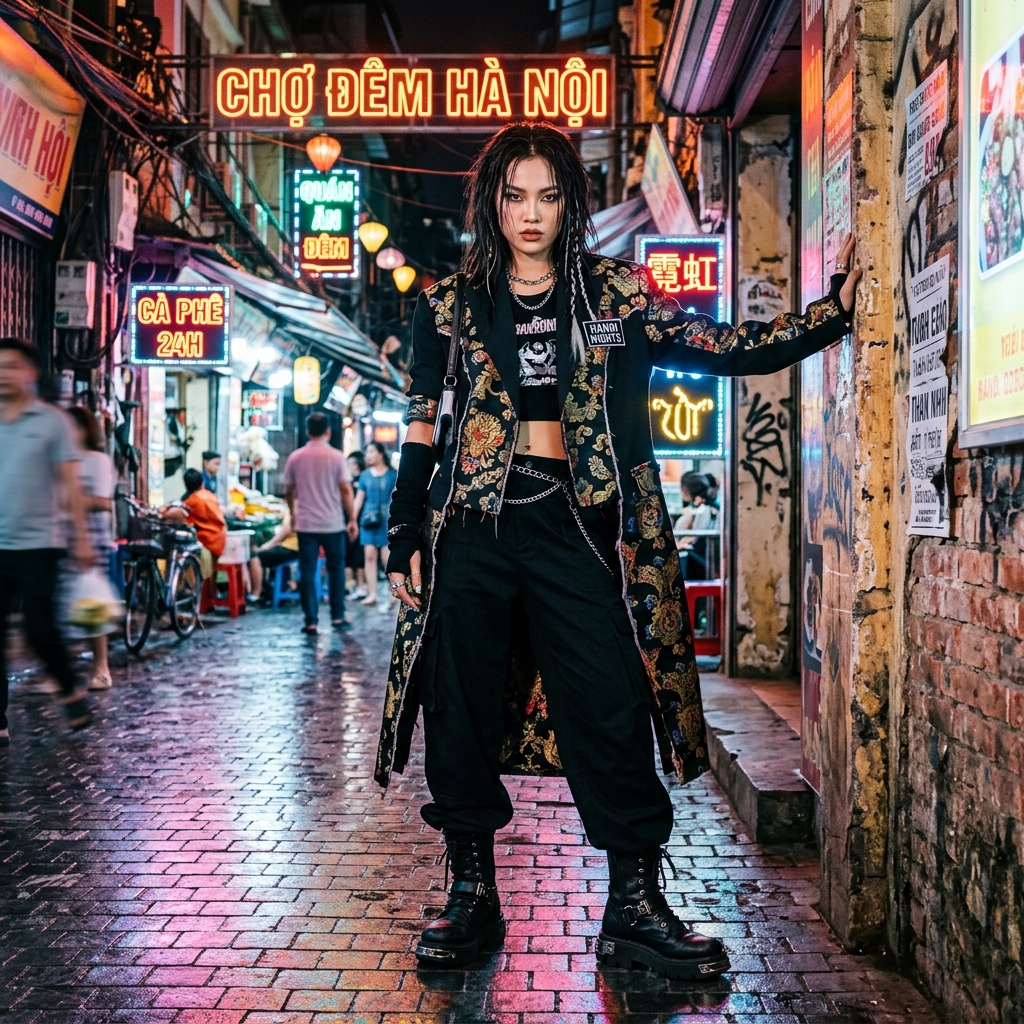
Instead, the dominant force in modern K-pop styling is originating from a completely different cultural hub: the rapidly expanding, fiercely independent streetwear scene in Vietnam.
From the sharp, avant-garde tailoring of Fanci Club to the subversive, cyberpunk-adjacent utilitarianism of Biti’s Hunter collaborations and La Lune, Vietnamese designers have essentially taken over the mood boards of every major entertainment company in Seoul. This is not a fleeting micro-trend or a token diversity initiative. It is a fundamental shift in the global fashion supply chain, driven by a perfect storm of economic realities, aesthetic innovation, and the specific demands of K-pop performance culture.
The Aesthetic Shift: From High-Teen to Cyber-Grunge
To understand why Vietnamese brands have become so indispensable to K-pop stylists, we must first look at how the dominant aesthetic of the genre has evolved over the past five years.
In the late 2010s and early 2020s, K-pop was heavily dominated by the “High-Teen” aesthetic (think pristine plaid skirts, luxury cardigans, and a hyper-polished, affluent prep-school vibe) and the straightforward, logo-heavy flex of European high fashion. However, as the global market became saturated and groups needed to differentiate themselves to survive the brutal K-pop idol economy and trainee debt cycle, the visual language shifted dramatically.
The current 2026 landscape is defined by concepts that require a much sharper edge: dark academia, cyberpunk, Y2K grunge revival, and a distinct, almost militant utilitarianism.
Vietnamese designers were already mastering this exact aesthetic intersection years before it became the global standard. Brands emerging from Hanoi and Ho Chi Minh City were uniquely blending the functional, weather-resistant requirements of local street culture with deeply subversive, highly tailored silhouettes.
When a K-pop group needs an outfit that looks like it belongs in a dystopian sci-fi blockbuster but still allows for rigorous, high-impact choreography, a stiff European couture gown is completely useless. They need the hyper-flexible, heavily deconstructed, and aggressive garments that Vietnamese ateliers specialize in producing.
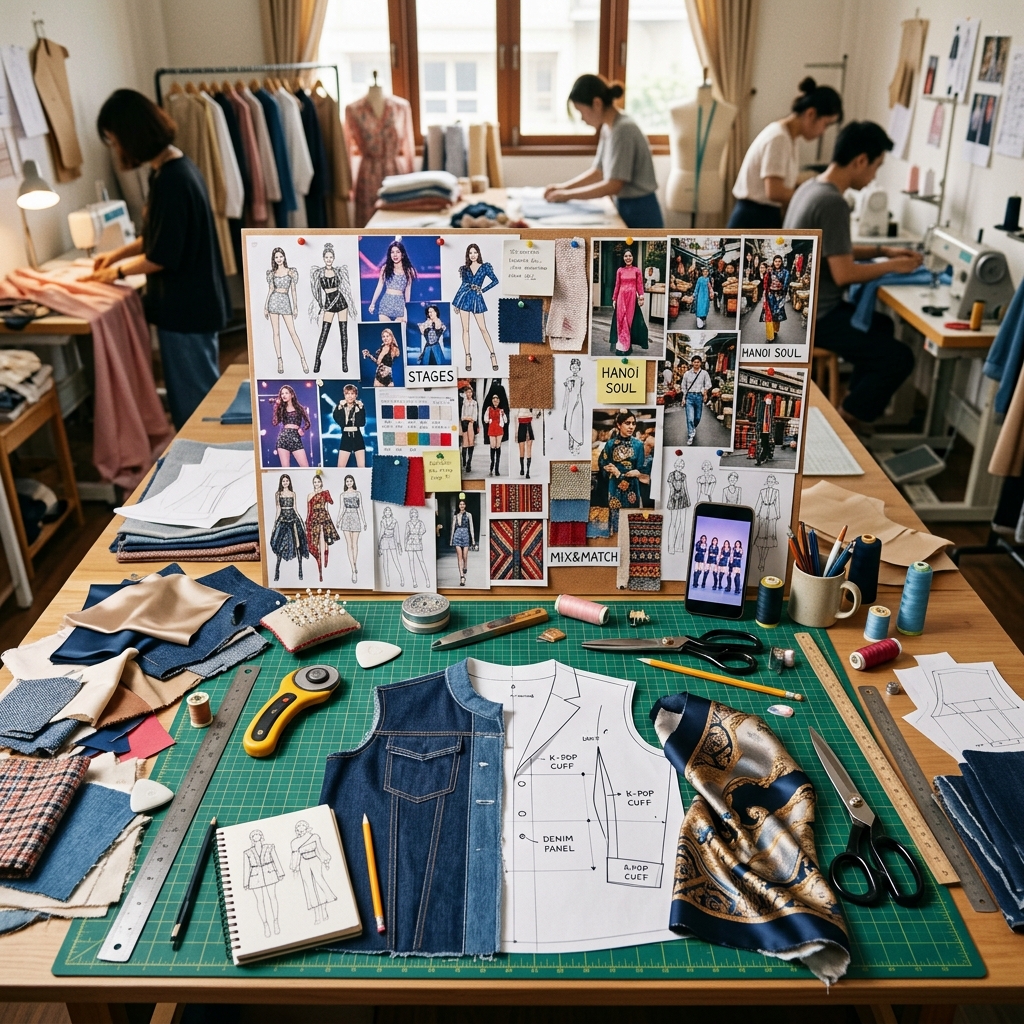
The Economic Reality of the K-Pop Styling Machine
Beyond the perfect aesthetic alignment, the K-pop/Vietnam fashion pipeline is heavily driven by hard economic realities.
The visual consumption rate of a modern K-pop group is absolutely staggering. A single “comeback” (the release of a new album) requires dozens of distinct, highly coordinated outfits. There are multiple concept photo shoots, music video filming, four to six weeks of daily televised music show performances (each requiring a brand new, bespoke look for all group members), dance practice videos, and TikTok challenges.
Styling a seven-member group in pure European luxury for an entire promotional cycle is financially ruinous, even for the “Big 4” entertainment companies (HYBE, SM, JYP, YG). Furthermore, major luxury brands often refuse to let stylists radically alter or deconstruct their garments.
Why K-Pop Stylists Prefer Independent Vietnamese Brands
Vietnamese independent brands solve almost all of these logistical and financial nightmares simultaneously:
- Agility and Customization: Vietnamese ateliers are incredibly agile. A K-pop stylist can direct-message a designer in Ho Chi Minh City on Instagram on a Tuesday, request a custom modification of a corset (adding stretch panels for dancing or altering the hemline to meet broadcasting standards), and have the bespoke garment shipped to Seoul by Friday.
- Cost-to-Visual-Impact Ratio: The pricing of Vietnamese designer streetwear is substantially lower than established Western luxury brands, yet the visual impact, quality of construction, and detailing are often vastly superior on camera. Stylists can stretch their budgets exponentially further without sacrificing the high-fashion aesthetic.
- Willingness to Deconstruct: Unlike legacy fashion houses that strictly protect the integrity of their silhouettes, emerging Vietnamese brands are often thrilled to see their pieces cut, dyed, layered, and radically re-contextualized by K-pop stylists. This allows the stylist to actually style, rather than just dress.
Key Players: Vietnamese Brands Dominating Seoul
The pipeline is vast, but several key Vietnamese brands have established themselves as absolute staples in the K-pop styling arsenal.
| Vietnamese Brand | Signature Aesthetic | Notable K-Pop Clients (2025-2026) | Why Stylists Love Them |
|---|---|---|---|
| Fanci Club | Y2K revival, subversive mesh, extreme corsetry, deconstructed ruffles. | NewJeans, BLACKPINK, aespa, LE SSERAFIM | Perfect for the “dark fairy” and Y2K concepts; provides high visual drama while allowing extreme mobility for choreography. |
| La Lune | Cyberpunk, avant-garde 3D textures, militant utilitarianism. | Stray Kids, ATEEZ, XG | The absolute go-to for aggressive, dystopian boy-group concepts and highly complex music video visuals. |
| Kido Studio | Hyper-modern, asymmetrical tailoring, gender-fluid silhouettes. | TXT, ENHYPEN, IVE | Offers a sophisticated, slightly uncanny edge to traditional suit and uniform concepts. |
| LIDER | Elevated, functional streetwear, heavy denim manipulation. | NCT, RIIZE, SEVENTEEN | Provides the core foundation for “casual” dance practice looks and airport fashion that still feels highly curated. |
When you examine this K-pop economic blueprint, the symbiosis is incredibly clear. The K-pop industry receives high-quality, bespoke, aesthetically perfect garments at a fraction of the cost of European luxury, and the Vietnamese brands receive the most powerful, globally visible marketing platform in the history of the internet.
The Cultural Implications: Breaking the Western Monopoly
The rise of the Vietnamese fashion pipeline represents a much larger, profoundly important shift in the global cultural hierarchy.
For the entirety of the 20th century, the global fashion industry was completely monopolized by the West (specifically Paris, Milan, London, and New York). Asian pop culture icons were expected to view wearing Western luxury brands as the ultimate sign of arrival and legitimacy.
What we are witnessing in 2026 is a deliberate, highly successful decentralization of that power. As we explored in the sonic shift of K-pop integrating Atlanta Trap, K-pop is no longer trying to emulate the West; it is establishing its own global standards by synthesizing diverse, non-Western influences.
When a member of BLACKPINK or NewJeans chooses to wear an independent designer from Hanoi over a legacy house from Paris on a massive global stage, they are violently disrupting the old gatekeepers. They are proving that innovation, quality, and cultural relevance are no longer geographically restricted to the traditional fashion capitals.
Furthermore, this pipeline is fostering a massive sense of intra-Asian creative solidarity. The cross-pollination of Korean entertainment capital and Vietnamese design ingenuity is creating a self-sustaining cultural ecosystem that completely bypasses Western validation.
The Future of the Pipeline
As we move deeper into 2026, the K-pop x Vietnamese fashion pipeline shows absolutely no signs of slowing down. In fact, it is becoming formalized.
We are beginning to see direct, official collaborations between major Korean entertainment agencies and Vietnamese fashion conglomerates. Rather than just pulling pieces for music videos, K-pop agencies are quietly investing seed capital into emerging Vietnamese ateliers, ensuring they have exclusive, priority access to the best design talent in Southeast Asia.
The next evolution of the K-pop fan-to-consumer economy will likely involve these exclusive capsule collections being mass-produced and sold directly to global fanbases, cutting out traditional fashion retail entirely.
Ultimately, the dominance of Vietnamese streetwear in K-pop proves a fundamental truth about modern pop culture: the most exciting, paradigm-shifting art always happens at the margins, far away from the established centers of power. The runway is no longer in Paris; it is in the neon-lit alleyways of Hanoi and the grueling dance practice rooms of Seoul.
Frequently Asked Questions
Why are K-pop idols wearing Vietnamese fashion brands?
K-pop stylists increasingly favor Vietnamese fashion brands because they offer a perfect blend of high-fashion, avant-garde aesthetics (like cyberpunk and Y2K grunge) and extreme mobility required for choreography. Additionally, Vietnamese ateliers are highly agile, allowing for rapid customization at a lower cost than European luxury houses.
What Vietnamese clothing brands do K-pop idols wear?
Some of the most prominent Vietnamese brands worn by K-pop idols include Fanci Club (known for subversive corsetry and Y2K mesh), La Lune (famous for cyberpunk and utilitarian aesthetics), Kido Studio, and LIDER. These brands are frequently worn by massive groups like BLACKPINK, NewJeans, Stray Kids, and aespa.
How is K-pop styling different from regular fashion?
K-pop styling is incredibly demanding. It requires dozens of unique, highly coordinated outfits for a single promotional cycle (music videos, stage performances, concept photos). The clothing must be visually striking on camera but fundamentally functional, allowing the artist to execute rigorous, high-impact choreography without wardrobe malfunctions.
Is European luxury fashion losing influence in K-pop?
While major K-pop idols are still frequently named global ambassadors for European luxury houses (like Chanel or Dior) for red carpet events and ad campaigns, their actual performance and stage styling has heavily shifted toward independent, emerging designers from regions like Vietnam, who offer more creative flexibility and culturally relevant aesthetics.