When Sony Pictures Animation announced K-Pop Demon Hunters in the early 2020s, industry veterans were skeptical. For decades, Hollywood’s attempts to integrate global music phenomenons into narrative cinema were notoriously clumsy. The standard playbook involved either licensing a few recognizable tracks to play quietly in the background or parodically exaggerating the culture for comedic relief. The West, historically, failed to understand the visceral intensity of the K-Pop industry.
Then came June 20, 2025.
K-Pop Demon Hunters dropped on Netflix and immediately broke the algorithm. It wasn’t just a movie; it was a cultural singularity. The animated urban fantasy film, directed by Maggie Kang and Chris Appelhans, didn’t just tell a story about “Huntrix,” a fictional K-pop girl group living a double life as supernatural demon hunters. It built a massive, multi-tiered economic engine that blurred the lines between fictional cinema and real-world music marketing.
As we look back a year later, with a highly anticipated sequel officially greenlit for a 2029 release, it is clear that K-Pop Demon Hunters fundamentally rewrote the blueprint for how multimedia franchises are built in the modern era. This is an analysis of how Sony and Netflix cracked the code of global stan culture.
The Fictional Group as a Real Brand
The genius of K-Pop Demon Hunters was its refusal to treat its central musical acts—the girl group Huntrix and their demonic boy band rivals, the Saja Boys—as mere plot devices. Instead, Sony Pictures Animation launched them as legitimate, functioning musical brands in the real world.
Months before the film even hit Netflix, a coordinated, real-world marketing campaign began. Teaser trailers weren’t cut like movie trailers; they were cut like K-Pop debut teasers. Fictional “concept photos” of the animated characters were distributed across social media. Official lightsticks were designed and sold before a single frame of the movie was screened.
This approach tapped directly into the K-Pop Fan to Consumer Pipeline. In the K-Pop ecosystem, the “parasocial relationship” is the primary commodity. Fans are trained to invest heavily in the lore, personalities, and aesthetics of a group long before they ever step onto a stage. By treating Huntrix and the Saja Boys exactly like real-world idol groups managed by massive entertainment conglomerates, Sony bypassed traditional movie marketing and tapped directly into the frenzied dedication of stan culture.
When the movie finally premiered, fans weren’t just watching characters on a screen; they were supporting their “biases.” The emotional investment was identical to watching a real-life group achieve a major milestone, a phenomenon previously reserved for acts like BLACKPINK or NewJeans.
The Visual Identity: A Collision of Aesthetics
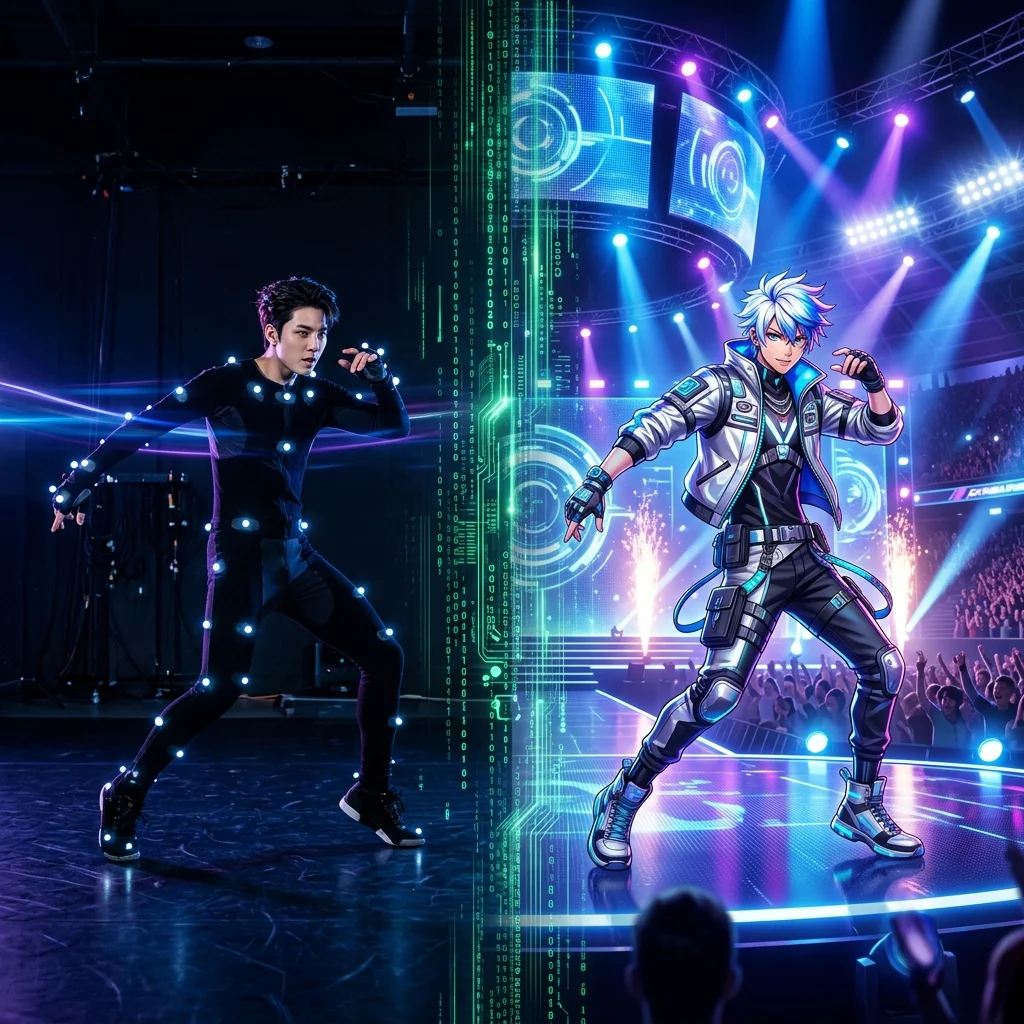
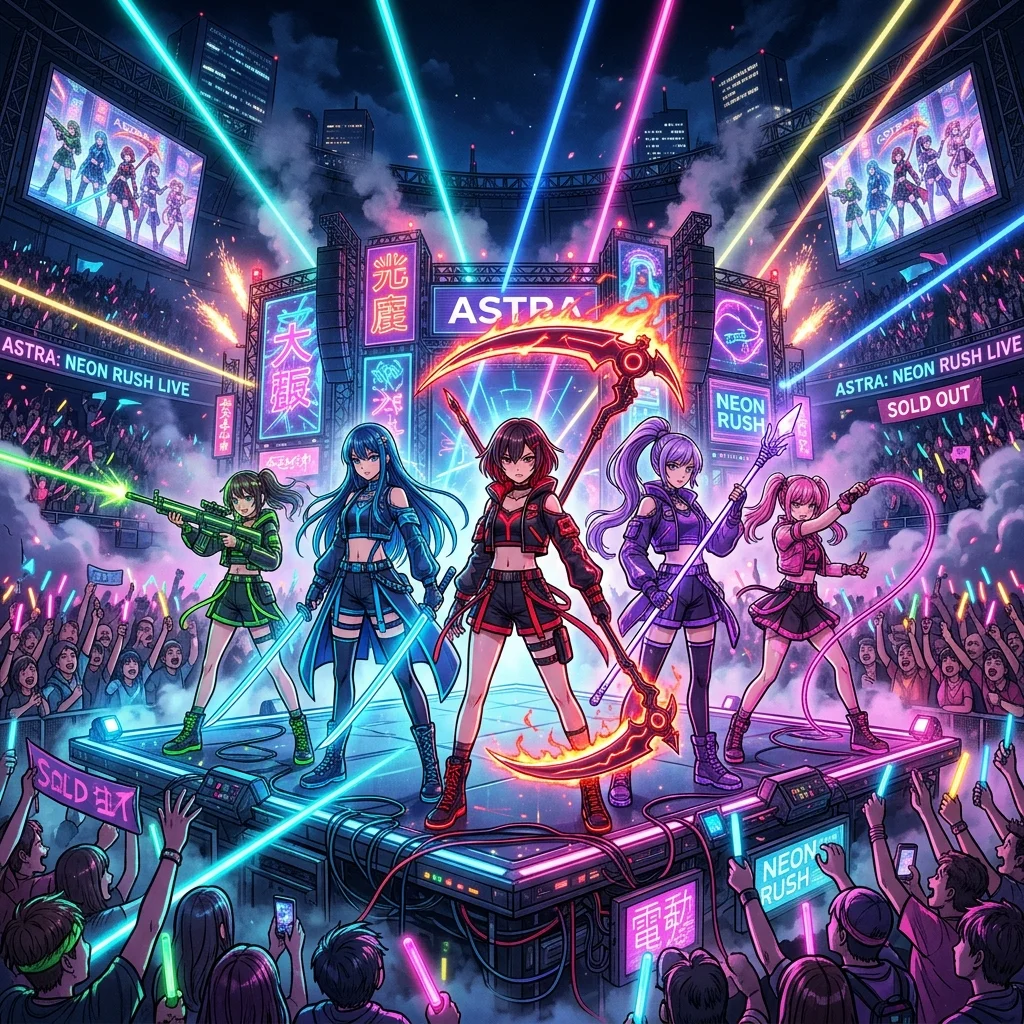
Visually, K-Pop Demon Hunters was a masterpiece of organized chaos. The film had to balance the high-octane, neon-drenched kinetic energy of modern action anime with the meticulous, hyper-produced aesthetic of a multimillion-dollar K-Pop music video.
Sony Pictures Animation, fresh off the groundbreaking success of the Spider-Verse franchise, utilized a revolutionary rendering technique that blended 2D illustrative linework with 3D CGI models. The result was a film that felt like a living, breathing concert.
The lighting design in the film deserves specific academic praise. Real-world K-Pop concerts rely heavily on aggressive LED stage production, synchronized lightsticks, and complex laser choreography to create a sensory overload. The directors meticulously recreated this environment. The climactic battle sequences—which ingeniously took place during massive stadium performances—used actual concert lighting plots to illuminate the action.
This level of visual authenticity signaled to the core audience that the filmmakers weren’t just capitalizing on a trend; they actively understood and respected the medium. As we’ve discussed in our analysis of how Anime Replaced Scarface in Hip-Hop Visual Identity, when you authentically blend high-end animation with a deeply established musical subculture, the results are explosive.
The Soundtrack Economy
Perhaps the most significant innovation of K-Pop Demon Hunters was its approach to the original soundtrack (OST).
Historically, movie soundtracks are secondary revenue streams—often just instrumental scores or a collection of licensed tracks that play during the credits. The soundtrack for K-Pop Demon Hunters was designed from the ground up to be a chart-topping K-Pop release.
Featuring an all-star voice cast that included Arden Cho, Ahn Hyo-seop, and Yunjin Kim, the soundtrack was produced by real-world K-Pop hitmakers who understood the exact sonic requirements of the genre. The songs weren’t watered-down pop meant to appease a Western audience; they were aggressive, complex tracks featuring the heavy 808s, chaotic beat switches, and rapid-fire rapping that define the Sonic Shift between K-Pop and Atlanta Trap.
When the album dropped on Spotify and Apple Music alongside the film’s release, it didn’t chart in the “Soundtracks” category. It charted in the global Top 40. The songs “Neon Rush” and “Saja’s Wrath” went wildly viral on TikTok, spawning thousands of user-generated dance challenges.
By treating the OST as a primary release rather than a supplementary product, Netflix created a closed-loop economic engine. The viral TikTok dances drove streams to Spotify. The Spotify streams generated interest in the “artists.” The interest in the artists drove subscriptions to Netflix to watch the movie. It was a masterclass in modern digital vertical integration, echoing the strategies we’ve seen from Hip-Hop Business Empires.
Hollywood’s New Playbook
The success of K-Pop Demon Hunters represents a massive shift in how Hollywood views international musical movements. For years, Western media treated K-Pop as a fleeting, localized fad. The sheer financial dominance of this Netflix release proved definitively that the culture is a permanent, foundational pillar of global entertainment.
Hollywood is currently scrambling to replicate this success. Major studios have realized that the traditional “four-quadrant” blockbuster model is dying. To survive the modern box office (or streaming wars), a film must cater to highly engaged, deeply passionate micro-communities.
The K-Pop fandom is perhaps the most organized and financially liquid micro-community on the planet. They are accustomed to buying multiple versions of the same album, organizing global streaming parties, and defending their favorite artists with militant dedication. By creating a film that perfectly catered to the specific aesthetics, lore-building, and musical tastes of this community, Sony effectively weaponized stan culture for a movie release.
This strategy is not without its risks. As we noted in our piece on K-Pop Appreciation vs. Appropriation, the line between authentically celebrating a culture and cynically exploiting it for profit is razor-thin. K-Pop Demon Hunters succeeded primarily because it was spearheaded by creatives (Kang and Appelhans) who possessed a genuine, deep-rooted love for the culture. If other studios attempt to reverse-engineer this success using focus groups and cynical marketing metrics, they will immediately be rejected by a fanbase that can smell inauthenticity from a mile away.
Looking Forward: The 2029 Sequel
With a sequel officially slated for 2029, the franchise has an opportunity to push the boundaries of multimedia integration even further.
Industry analysts predict that the gap between the fictional world of Huntrix and the real world will continue to shrink. We could see Huntrix “perform” as holograms at real-world music festivals, similar to the virtual success of acts like Hatsune Miku or K/DA (the virtual League of Legends pop group). We could see actual physical albums released with randomized photocard inserts of the animated characters, tapping directly into the lucrative Superfan Economy.
Whatever form the sequel takes, K-Pop Demon Hunters has already cemented its legacy. It proved that when you stop treating music as a background element and start treating it as the primary narrative engine, you don’t just create a movie. You create a movement.
It is a stark reminder to the legacy entertainment industry: The old rules of marketing are dead. In 2026, if you want to build a billion-dollar franchise, you don’t look to comic books or classic literature. You look to the charts.
FAQs
When did K-Pop Demon Hunters release?
K-Pop Demon Hunters was officially released globally on Netflix on June 20, 2025.
Which animation studio produced the movie?
The movie was produced by Sony Pictures Animation, the same studio responsible for the critically acclaimed Spider-Man: Into the Spider-Verse franchise, and was co-directed by Maggie Kang and Chris Appelhans.
Who are the main fictional groups in the film?
The film centers around “Huntrix,” a massive K-Pop girl group whose members lead double lives as demon hunters, and their rivals, the “Saja Boys,” a boy band who are secretly actual demons.
Did they release real music for the movie?
Yes. The original soundtrack was produced by legitimate industry hitmakers and treated as a massive, real-world album release, with several tracks going viral on platforms like TikTok and charting heavily on Spotify.
Will there be a sequel?
Following its massive viewership success on Netflix, a sequel to K-Pop Demon Hunters is reportedly in active development, with an expected release window of 2029.
Keep Reading
To understand the intricate financial models that power both the film and music industries, read our deep dive into the End of the 360 Deal. If you want to see how other cultural icons are dominating the modern era, check out our analysis of the Travis Kelce Streetwear Empire.