
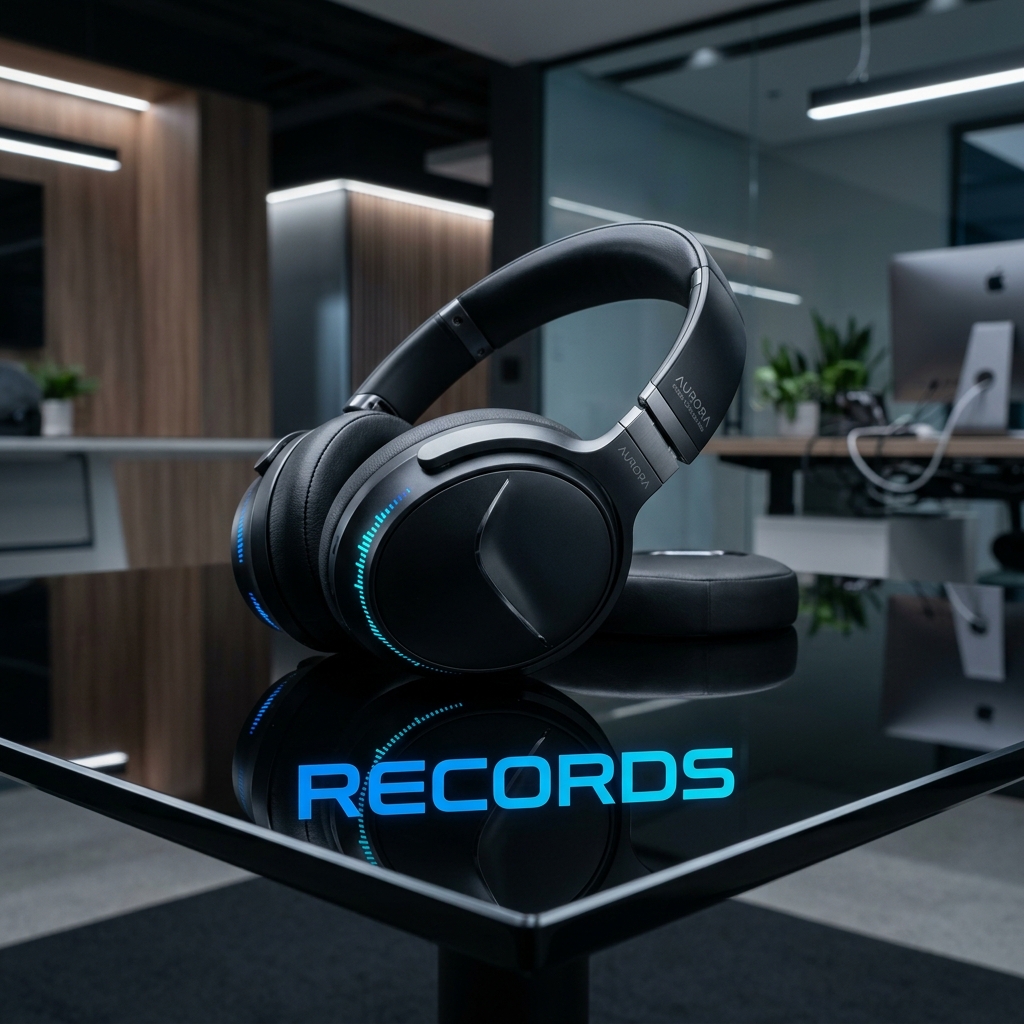
The barrier between Silicon Valley technology and the traditional music industry has been eroding for the better part of two decades. First, tech companies digitized the distribution of music (iTunes). Then, they monopolized the consumption of music (Spotify, Apple Music). Now, in 2026, they are coming for the creation and ownership of the music itself.
The recent announcement that audio hardware giant Bose is launching its own proprietary record label—Bose Records—is not just a quirky marketing stunt. It represents the ultimate conclusion of the Silicon Valley playbook: absolute vertical integration.
When the company that manufactures the physical headphones also owns the intellectual property rights to the songs pumping through them, the dynamic of the music industry changes forever.
The Silicon Valley Playbook in Music
To understand why a company famous for noise-canceling headphones for business travelers wants to get into the notoriously messy and high-risk business of artist A&R, we have to look at the margins.
Manufacturing physical hardware is incredibly difficult, capital-intensive, and subject to brutal global supply chain vulnerabilities. Selling a pair of $350 headphones yields a one-time profit margin. However, owning intellectual property (IP)—like the master recording of a hit song—yields recurring, practically infinite revenue with virtually zero overhead once the song is recorded.
The tech industry has known this for years. It is why Apple launched Apple TV+; they didn’t just want to sell you the iPad, they wanted to own the shows you watched on the iPad. Bose is simply applying this logic to audio. They want to transition from a hardware company to a media conglomerate. They want ecosystem lock-in.
If an artist is signed to Bose Records, Bose doesn’t just make money when you stream the song; they make money selling the hardware required to listen to the song optimally.
The Spatial Audio Advantage
The primary technical angle Bose is leveraging to attract talent is their proprietary advancements in spatial audio.
As the music industry continues its push away from traditional stereo mixing toward immersive, 3D audio formats (like Dolby Atmos), the hardware required to accurately reproduce those mixes becomes paramount.
Vertical Integration in the Studio
This is where Bose’s vertical integration becomes a massive advantage. If an artist signs with Bose Records, they aren’t just getting an advance and a marketing budget; they are gaining access to Bose’s cutting-edge acoustic engineering labs.

Bose audio engineers will work directly with the artist’s producers to master the tracks specifically for Bose hardware algorithms. The resulting mix will theoretically sound objectively better on a pair of Bose QuietComfort headphones than on any competitor’s device.
This creates a fascinating, albeit slightly dystopian, walled garden for audio. Will we see a future where certain albums are explicitly designed to be unlistenable on AirPods? Will “Bose Exclusives” become the new standard in the streaming wars?
What This Means for Independent Artists
For an independent artist, a contract offer from a tech giant like Bose presents a complex dilemma.
The Benefits:
- Massive Marketing Budgets: Traditional record labels are struggling with shrinking marketing budgets in the streaming era. Bose, a multi-billion dollar tech conglomerate, has virtually unlimited capital to deploy for an artist they believe in.
- Tech Integration: Imagine your new single being pre-loaded onto every new Bose speaker sold globally, or being the default demonstration track at every Best Buy listening station. The sheer scale of physical hardware distribution offers unparalleled exposure.
- Acoustic Excellence: The promise of having your music mastered by some of the most sophisticated audio engineers on the planet is incredibly alluring to sonically ambitious artists.
The Risks:
- Becoming a Tech Demo: The biggest fear is that the artist’s creative vision will become secondary to the corporate objective. A tech company might push an artist to create highly atmospheric, complex mixes simply because it shows off their new spatial audio technology, regardless of whether it serves the actual song. The artist risks becoming a glorified technical demonstration.
- Lack of Traditional A&R: Tech executives are not traditional music executives (as discussed in our retrospective on Clive Davis). They view artists through the lens of user acquisition and engagement metrics. They may lack the nuanced understanding of cultural momentum and street-level authenticity required to build a lasting legacy.
The Hardware/Media Convergence
Bose is not the first tech company to attempt this, but they are arguably the first pure hardware company to fully commit to owning the masters.
| Company | Core Business | Music Industry Intervention | Goal |
|---|---|---|---|
| Apple | Hardware / Software | iTunes (Distribution) -> Apple Music (Streaming) -> Apple Music Live (Content) | Ecosystem dominance and recurring subscription revenue. |
| Amazon | Retail / Cloud | Amazon Music (Streaming) -> Twitch (Live Performance) | Bundling value into the Prime subscription. |
| Red Bull | Beverage | Red Bull Records (Label) -> Red Bull Music Academy (Culture) | Brand association with youth culture and extreme sports. |
| Bose (2026) | Audio Hardware | Bose Records (Label & Master Ownership) | Vertical integration of IP and acoustic hardware. |
The data shows a clear trend: the companies that control the distribution and the hardware are inevitably moving toward controlling the creation.
Conclusion: The Tech Takeover of A&R
The launch of Bose Records forces us to ask uncomfortable questions about the future of music curation. Will the A&R reps of the future be cultural tastemakers scouring underground clubs in London and Atlanta, or will they be data scientists and acoustic engineers in Silicon Valley looking for waveforms that perfectly match their new headphone drivers?
If Bose succeeds, expect every major hardware manufacturer—from Sony to Sennheiser—to launch their own boutique labels. The music industry of the 2030s may not be defined by the rivalry between Universal and Warner, but by the rivalry between Apple and Bose.
The hardware has officially become the label.
Frequently Asked Questions
Why is Bose launching a record label?
Bose is launching a record label (Bose Records) to transition from a purely hardware-focused manufacturing company into a media and IP-owning conglomerate. By owning the master recordings, they secure recurring revenue and can perfectly integrate the music with their proprietary spatial audio hardware.
What is vertical integration in the music industry?
Vertical integration occurs when a single company controls multiple stages of the supply chain. In Bose’s case, they manufacture the headphones (hardware), distribute the audio, and now, by owning the record label, they own the music (software/IP) itself.
How does this affect spatial audio?
Artists signed to Bose Records will have their music engineered and mastered by Bose acoustic engineers specifically to sound optimal on Bose hardware, leveraging their proprietary spatial audio algorithms to create a unique listening ecosystem.
Have other tech companies started record labels?
While companies like Apple and Amazon dominate music streaming and distribution, creating a traditional record label focused on signing artists and owning master recordings is a relatively new frontier for pure audio hardware companies like Bose.