On the morning of July 4th, 2026, without a single press release or billboard teaser, Beyoncé uploaded a track to streaming services that permanently altered the relationship between internet leaks and legacy artists. The song, titled “MORNING DEW (DONK),” arrived with a nostalgic lyric video directed by frequent collaborator Cliff Watts and a simple caption: a 60-day countdown.
That countdown leads directly to September 4, 2026—Beyoncé’s 45th birthday, and exactly two decades since the release of her sophomore masterpiece, B’Day.
To the casual listener, “Morning Dew” sounds like a vibrant, horn-heavy continuation of her classic mid-2000s era. But to the chronically online sector of the BeyHive, this release is a masterful chess move. The song is not actually new. It is a fully mastered, reclaimed version of a leaked 2013 demo that went massively viral on TikTok in 2023.
By officially releasing “Morning Dew (Donk)” as the lead single for the upcoming B’Day 20 reissue, Beyoncé has executed a brilliant industry maneuver. She has successfully bridged the gap between modern TikTok virality and archival legacy marketing, proving once again that she maintains absolute, uncompromising control over her own narrative and musical vault.
The Anatomy of a Leak: The History of “Donk”
To understand the weight of this release, we have to look back at the chaotic ecosystem of unreleased music. The original concept for the track was conceived during the initial writing camps for the 2006 B’Day album, an era defined by aggressive funk instrumentation, live brass, and relentless vocal energy.
However, the song was shelved. It wasn’t until 2013, during the highly secretive recording sessions for her self-titled visual album (Beyoncé), that she resurrected the concept. Working alongside super-producers Pharrell Williams, The-Dream, and Darius Dixon, she recorded a rough vocal demo under the working title “Donk.”
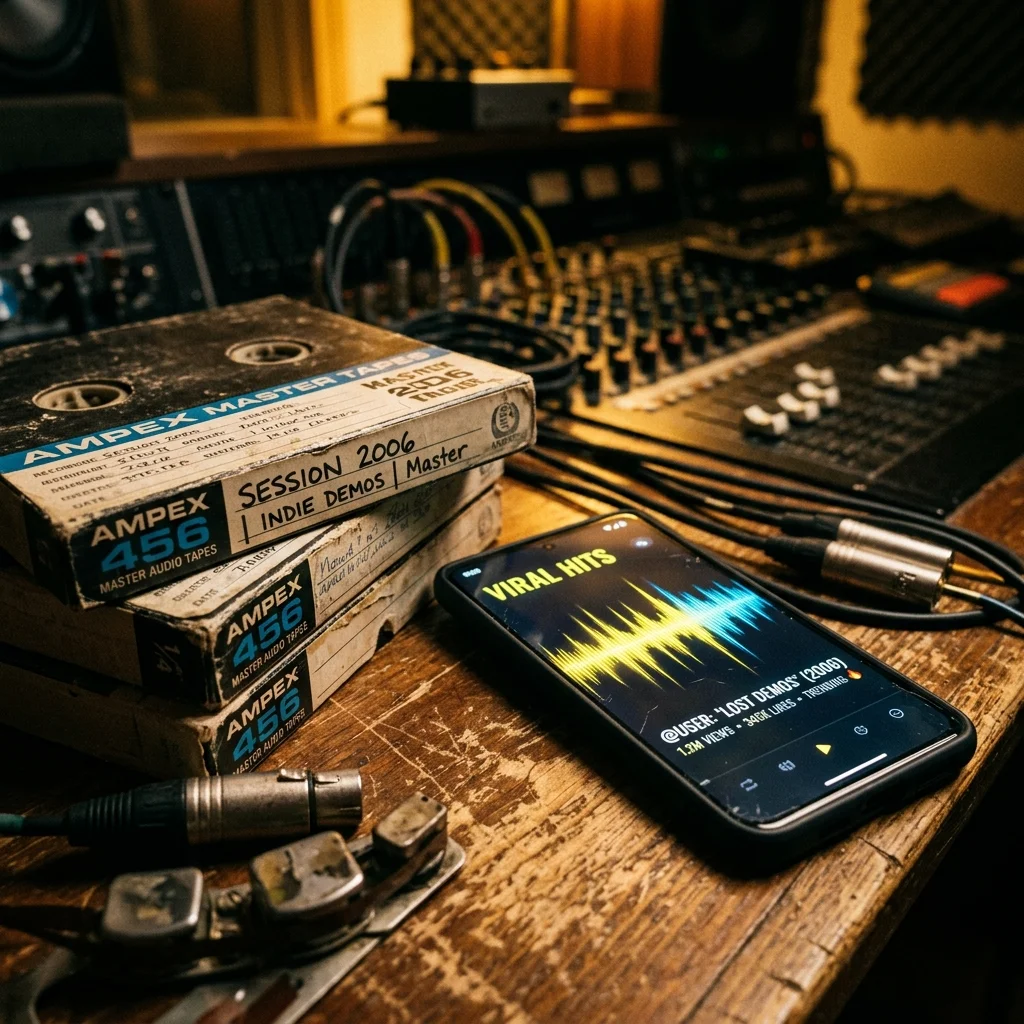
For a decade, the track sat on a hard drive. Then, in late 2023, a low-quality snippet of “Donk” mysteriously surfaced online. Within days, it had become an inescapable sound on TikTok. Millions of users created dance challenges to the infectious, Pharrell-produced bounce, completely unaware of the song’s complicated history.
Era Comparison: B’Day vs. B’Day 20
| Metric | Original B’Day Era (2006) | B’Day 20 Era (2026) |
|---|---|---|
| Release Strategy | Traditional Radio & MTV push | Surprise Drop, Direct-to-Consumer |
| Visual Aesthetic | High-fashion glamour, 1960s soul | Archival reclamation, internet self-awareness |
| Lead Single Function | Chart dominance (“Déjà Vu”) | Fan service, narrative control (“Morning Dew”) |
| Industry Environment | Peak CD sales, iTunes emergence | Streaming saturation, Superfan Economy |
While most major artists issue immediate copyright strikes to scrub leaked material from the internet, Beyoncé’s camp remained completely silent during the 2023 virality. We now know why. Instead of fighting the internet, she monitored the data, recognized the massive organic demand, and held the track in her back pocket until the exact moment it would serve her larger legacy.
The Visual Recontextualization
The visual component of “Morning Dew” is just as strategic as the audio. The track did not arrive with a high-budget, multi-million-dollar music video. Instead, it was accompanied by a meticulously edited lyric video featuring repurposed, archival footage directed by Cliff Watts.
Watts is a crucial figure in Beyoncé’s visual history; he famously photographed her iconic 2007 Sports Illustrated Swimsuit Issue cover, a shoot that took place during the height of the original B’Day era.
By utilizing Watts’ unseen footage from that exact timeframe, Beyoncé visually anchors a song recorded in 2013, leaked in 2023, and released in 2026 directly back to the summer of 2006. It is a stunning feat of non-linear storytelling. She is telling her audience that the energy of B’Day—the fierce independence, the live instrumentation, the unapologetic joy—never actually left; it was just sitting in the vault, waiting for the right morning to dew.
Mastering the Superfan Economy
The release of “Morning Dew” is a textbook example of how to dominate the 2026 Superfan Economy. In the modern music business, algorithmic streaming numbers are secondary to the purchasing power of a highly mobilized, dedicated fanbase.
The announcement of the B’Day 20 reissue, spearheaded by this single, immediately crashed her official webstore. Fans are not just rushing to stream the song; they are rushing to pre-order limited-edition 180-gram colored vinyl variants, cassette tapes, and retro-themed merchandise bundles.
By giving the fans an official, high-fidelity version of a song they had been begging for since the 2023 TikTok leak, Beyoncé transformed passive internet engagement into tangible, high-margin commerce. She rewarded their obsession with her unreleased catalog, effectively training her audience to understand that even her throwaway demos are worth premium physical investments.
The Tension: Archival Celebration vs. New Art
While the response to “Morning Dew” has been overwhelmingly positive, the release does highlight a growing tension in the music industry. As we approach the late 2020s, the market is becoming incredibly saturated with anniversary reissues, remastered editions, and vault tracks.
Some critics argue that the industry’s reliance on nostalgia is stifling the growth of new artists. When a legacy act like Beyoncé can dominate the global cultural conversation simply by mastering a 13-year-old demo, it raises questions about the space available for emerging talent. Just as we analyzed the struggle for new talent in our breakdown of why major record labels are becoming obsolete, the dominance of the “vault” can feel oppressive.
However, defenders of the B’Day 20 rollout point out that Beyoncé is one of the few artists who has earned the right to this level of archival celebration. She has spent nearly three decades pushing the boundaries of pop music forward; looking backward for a 60-day window is a well-deserved victory lap, not a creative crutch.
Conclusion: A Masterclass in Legacy Control
“Morning Dew (Donk)” is more than just a great summer R&B track; it is a masterclass in intellectual property management. Beyoncé took a piece of art that was stolen from her (the leak), allowed the internet to do the free marketing (the TikTok virality), and then reclaimed it at the exact moment it would maximize the cultural impact of her 20th-anniversary celebration.
As the 60-day countdown ticks closer to September 4th, the industry will be watching closely. If the B’Day 20 rollout continues with this level of strategic brilliance, it will set a new blueprint for how legacy artists interact with their own history in the streaming era. The morning dew has settled, and the reign of B’Day is beginning all over again.
FAQs
What is the significance of “Morning Dew (Donk)”?
“Morning Dew (Donk)” is a surprise single released by Beyoncé in July 2026. It serves as the lead promotional track for the 20th-anniversary reissue of her 2006 album B’Day, and kicks off a 60-day countdown to her 45th birthday.
Was the song originally recorded for the B’Day album?
The concept originated during the B’Day era, but the vocals for the demo were actually recorded during the 2013 sessions for her self-titled album alongside producers Pharrell Williams and The-Dream.
Why is the song sometimes called “Donk”?
“Donk” was the original working title of the demo that leaked in 2023. The leaked snippet went viral on TikTok under that name, prompting fans to refer to it as “Donk” before the official title “Morning Dew” was revealed in 2026.
Who directed the lyric video for “Morning Dew”?
The lyric video features archival, previously unseen footage directed by Cliff Watts. Watts is a significant figure in Beyoncé’s visual history, having photographed her iconic 2007 Sports Illustrated Swimsuit cover during the original B’Day era.
Keep Reading
If you want to understand how modern artists are navigating the complexities of the music industry and taking control of their own narratives, read our analysis on The End of the 360 Deal and our breakdown of why regional hip-hop is dominating the charts.