While FIFA executives spent tens of millions of dollars trying to manufacture a viral global anthem for the 2026 World Cup, the actual sound of the tournament was being saved in the trenches by local stadium DJs. The contrast couldn’t have been sharper: corporate suits attempting to algorithmically generate “urban appeal,” versus regional beatmakers fighting to keep the culture authentic inside the massive concrete bowls of North America.
When you strip away the high-gloss broadcast television commercials and look at what the fans were actually hearing inside the stadiums, you uncover a fascinating proxy war. It was a battle between the gentrification of global pop-rap and the gritty, hyper-local roots of hip-hop production.
And for one summer in 2026, the local producers won.
The Problem with “Game Time”
To understand why local producers had to step up, you have to look at what FIFA was shoving down everyone’s throats. The official anthem, “Game Time,” performed by Future and Tyla, was a masterclass in demographic pandering. It was a track engineered in a boardroom to hit four different global streaming markets simultaneously. It lacked soul. It lacked grit. It was the musical equivalent of a plain, unseasoned chicken breast.
Soccer, like hip-hop, is tribal. It is deeply connected to geography, neighborhoods, and regional pride. A fan from Atlanta does not consume the game—or the music surrounding it—the same way a fan from the Bronx or a fan from Mexico City does.
FIFA’s attempt to create a “one-size-fits-all” hip-hop anthem completely ignored the fundamental rule of the genre: authenticity cannot be outsourced to a pop producer.
The Disconnect Between Broadcast and Stadium
The disconnect was immediately obvious during the first week of the tournament. While “Game Time” was racking up millions of views on YouTube and playing during every television ad break, the reaction inside the actual stadiums was completely flat.
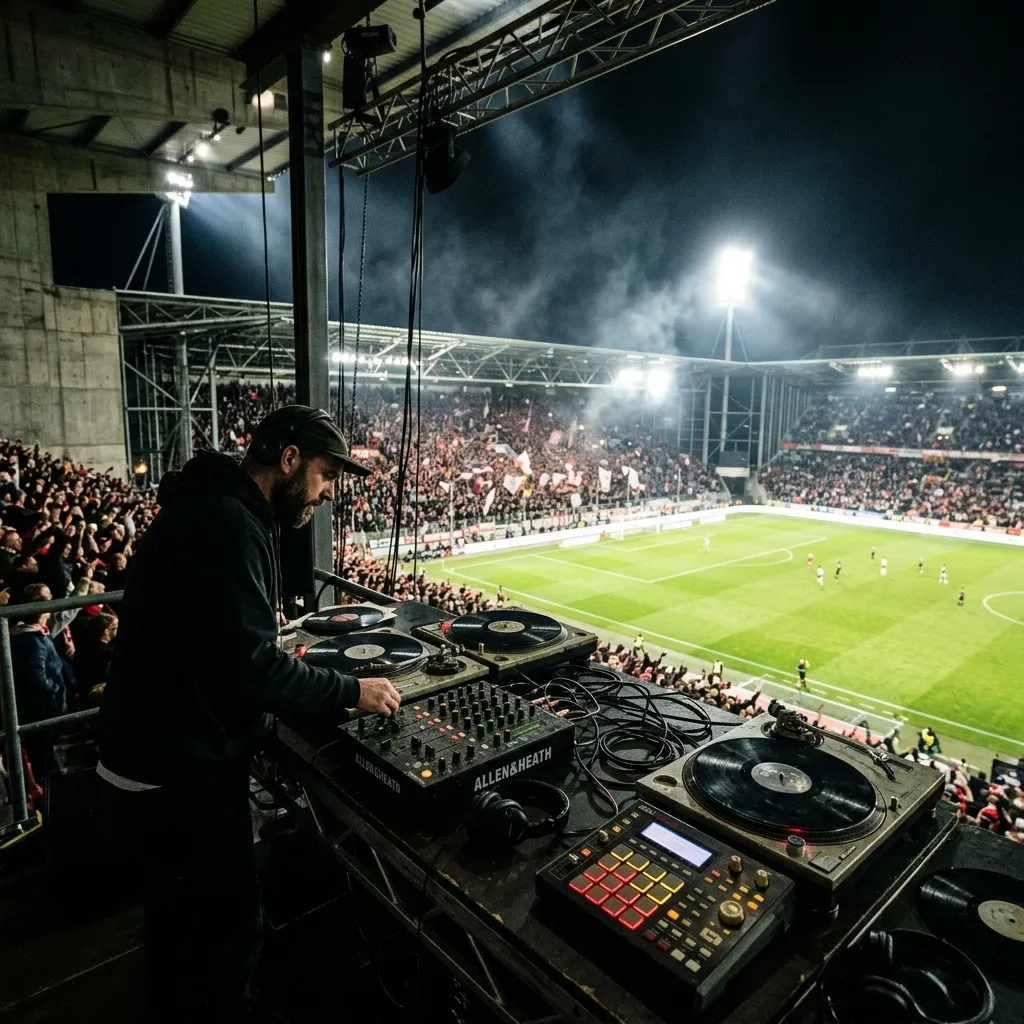
When you have 70,000 passionate, screaming football fans inside a stadium, playing a highly polished, mid-tempo trap song over the PA system completely kills the momentum. Stadium crowds don’t want polished pop-rap; they want heavy bass, aggressive chanting rhythms, and songs they recognize on a visceral, local level. The corporate anthems were failing the very demographic they were designed to excite.
Enter the Sonic IDs
Realizing that playing a generic corporate track over the stadium PA 40 times a day was killing the atmosphere, the tournament organizers launched a quieter, more localized initiative known as the “Sonic ID” project.
The concept was simple but revolutionary for a tournament of this scale: allow local producers from the 16 host cities to curate the audio branding for their specific stadiums. Instead of a centralized FIFA playlist, the in-stadium experience was handed over to the people who actually understood the sonic architecture of their respective cities.
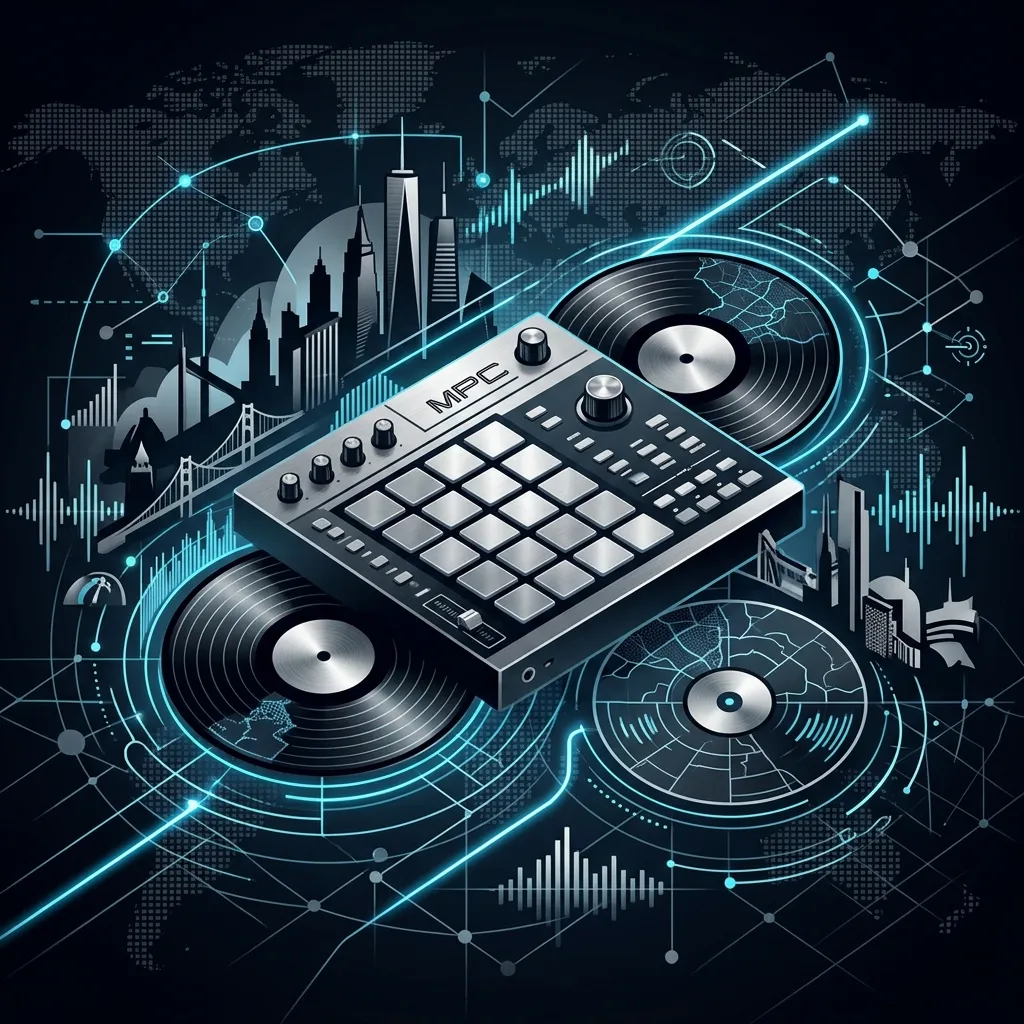 The intersection of map coordinates and MPC production: How the Sonic ID project mapped beats to geography.
The New York / New Jersey Masterclass
Nowhere was this more effective than at MetLife Stadium in New Jersey. The production duo Take a Daytrip was tasked with creating the Sonic ID for the New York/New Jersey matches.
Instead of aiming for global pop crossover, they dug deep into the foundational elements of East Coast hip-hop. They layered classic boom-bap drum breaks beneath heavy, chopped samples, and—crucially—reintroduced live DJ scratching into the stadium environment. When a goal was scored in New Jersey, the stadium didn’t erupt to a generic EDM drop; it erupted to a sound that felt like it was born on a subway platform in 1994, updated for a crowd of 80,000.
Take a Daytrip didn’t just provide a playlist; they provided a cultural anchor. They understood that the Tri-State area has a specific sonic fingerprint, heavily reliant on percussion and sample chopping, and they translated that into a massive stadium environment without losing the grit.
The Cultural Impact by the Numbers
The impact of shifting from corporate global anthems to hyper-local DJ culture is stark when you look at how the sounds were received by the actual attendees.
| Metric | FIFA Corporate Anthem (“Game Time”) | Regional Sonic IDs (e.g., NY/NJ) |
|---|---|---|
| Production Motivation | Global Streaming / TikTok Virality | In-Stadium Atmosphere & Hype |
| Sonic Characteristics | Highly polished, pop-trap, generic | Gritty, boom-bap, regional bass |
| Crowd Reaction (Live) | Passive listening, bathroom breaks | High engagement, chanting |
| Cultural Authenticity | Manufactured | Organic / Historically rooted |
| Primary Beneficiary | Major Record Labels | Local DJ/Producer Ecosystems |
The Return of the Stadium DJ
Beyond the production of the Sonic IDs, the 2026 World Cup formalized the professionalization of the Stadium DJ. In the past, the person running the music at a soccer match was a faceless employee pressing play on a Spotify playlist.
In 2026, the DJs became central figures of the matchday experience. Curators were hired based on their ability to read a diverse, international crowd while maintaining the regional flavor of the host city.
The Atlanta Experience
In Atlanta (Mercedes-Benz Stadium), the DJs leaned heavily into trap instrumentals and southern marching band aesthetics. They understood that Atlanta hip-hop is built on heavy 808s and brass sections, a sonic profile that perfectly translates to the high-energy environment of a soccer match. When a crucial penalty kick was awarded, the stadium didn’t play a generic sound effect; the DJ dropped a booming, stripped-down trap instrumental that rattled the concrete.
The Toronto Aesthetic
In Toronto, the playlists heavily featured the moody, atmospheric R&B and hip-hop that OVO built the city’s reputation on. It provided a completely different, almost cinematic vibe to the matches held up north, proving that standardizing the audio experience across 16 different cities was a fundamentally flawed idea from the start.
These DJs proved that you cannot gentrify regional culture out of the stadium. If you try to force-feed a global audience a sanitized version of hip-hop, they will reject it. But if you give the turntables to the people who built the culture in that specific city, they will turn a sterile sporting event into a block party.
The Takeaway
FIFA’s multi-million dollar official music budget generated the streaming numbers they wanted. But the actual cultural legacy of the 2026 World Cup’s sound doesn’t belong to the major labels. It belongs to the beatmakers sitting behind an MPC in a bedroom in Queens, Atlanta, and Toronto, who proved that hip-hop is at its best when it remains relentlessly local.
The Financial Realities of Independent Stadium DJing
While the narrative of the triumphant local DJ is culturally satisfying, the financial realities behind the scenes were incredibly complex. FIFA is a multi-billion dollar entity, notoriously strict about licensing, broadcast rights, and intellectual property.
When a local DJ like Take a Daytrip stepped into the stadium booth, they weren’t just plugging in an aux cord. They had to navigate a labyrinth of performance rights organizations (PROs) and sample clearances. If a DJ played an uncleared, underground boom-bap beat that was suddenly broadcast to 400 million people globally, the resulting lawsuits could bankrupt independent producers.
To mitigate this, the Sonic ID project essentially required FIFA to act as an impromptu record label. They had to execute rapid, flat-fee buyouts for the custom beats produced by the local DJs, ensuring that the stadium audio was “clean” for international broadcast. This resulted in unprecedented paydays for independent producers who were suddenly receiving six-figure checks for beats that would have otherwise lived on SoundCloud. However, it also meant signing away the masters to a corporate entity, leading to a heated debate within the production community about the true cost of exposure.
Fan Backlash: The Purists vs. The Casuals
The introduction of high-energy, hyper-local DJing also fractured the fan base inside the stadiums. Traditional soccer purists—particularly traveling fans from Europe and South America—were highly critical of the Americanized, constant audio stimulation.
In traditional global soccer culture, the “soundtrack” of a match is generated entirely by the fans themselves through coordinated chanting, drumming, and singing. The fans are the Sonic ID. When a stadium DJ began dropping heavy 808 trap beats during a lull in play, purists felt it was an artificial intrusion, an attempt to manufacture an atmosphere that should organically arise from the supporters’ sections.
Conversely, the casual North American fans, accustomed to the constant entertainment barrage of the NBA and NFL, embraced the DJ culture. They viewed the curated beats as an essential part of the modern premium event experience. This ideological clash highlighted the exact tension FIFA was trying to manage: how do you modernize and monetize the stadium experience without alienating the working-class purists who built the sport’s global foundation?
Frequently Asked Questions
What was the FIFA Sonic ID project in 2026?
The Sonic ID project was an initiative that allowed local music producers from the 16 host cities of the 2026 World Cup to create custom, regionalized audio branding and music for their specific stadiums.
Who created the Sonic ID for the New York/New Jersey stadium?
The production duo Take a Daytrip was heavily involved in shaping the sonic identity for the New York/New Jersey stadium matches, utilizing classic East Coast boom-bap and DJ scratching elements.
Why was the 2026 World Cup music strategy criticized?
Many fans and critics felt that FIFA’s official anthems were overly corporate and manufactured to go viral on TikTok, ignoring the organic, working-class roots of both soccer and hip-hop culture.
How did DJs change the stadium experience in 2026?
In 2026, stadium DJs shifted from passively playing top-40 playlists to actively curating hyper-local hip-hop sets that responded to the live crowd, similar to how a club DJ operates.
What is the difference between boom-bap and trap production?
Boom-bap, utilized in the NY/NJ stadium, relies heavily on acoustic drum breaks and chopped samples. Trap production, heavily utilized in the Atlanta stadium, is characterized by synthesized 808 sub-bass, fast hi-hats, and brass instrumentation.