The Blueprint of the Culture
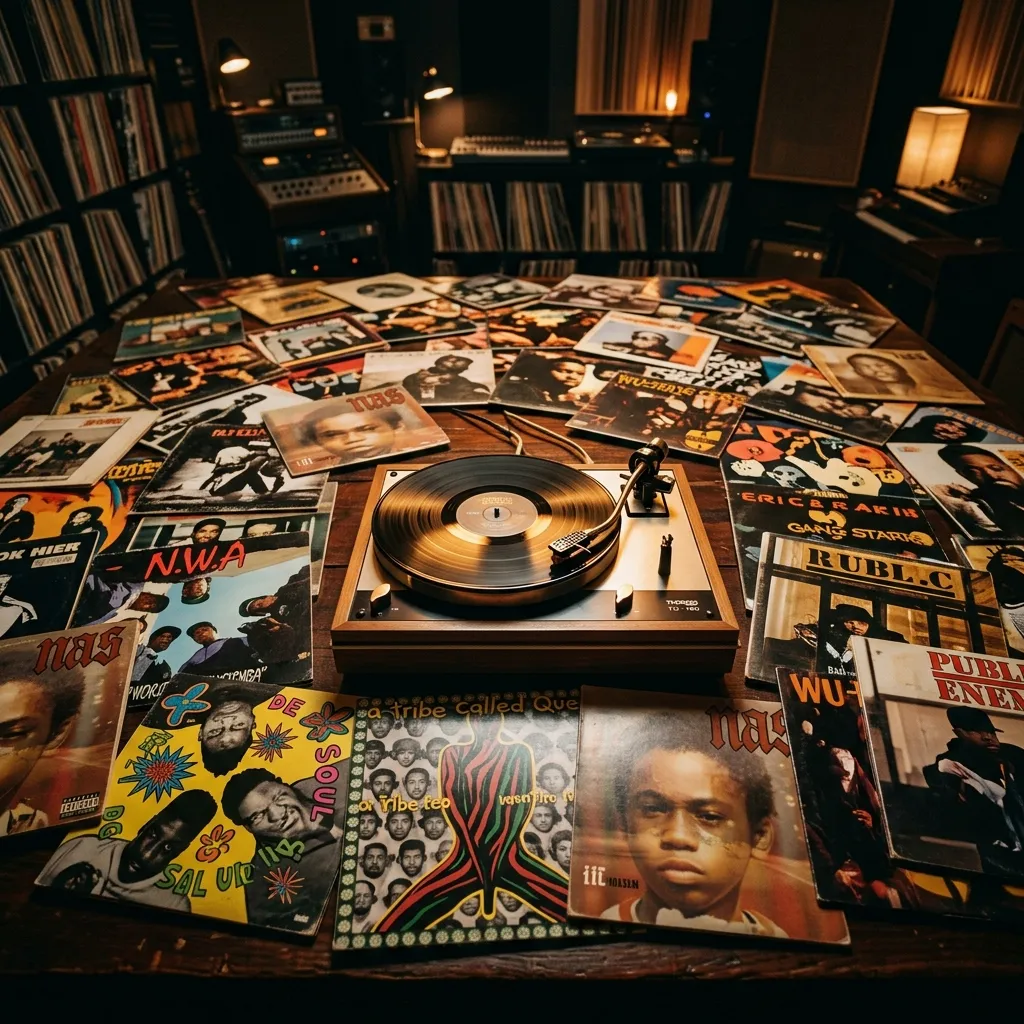
When our editorial team was sorting through a massive archive of 1990s hip-hop vinyl at a Brooklyn record exchange last month, a young producer picked up a copy of Illmatic and asked, “Does anyone actually make beats like this anymore?” The room went silent before the shop owner replied, “They don’t have to; Nas and Preemo already wrote the textbook.” That moment underscored a profound truth: certain albums are not just collections of songs; they are architectural blueprints that dictate how an entire genre is constructed for decades to come.
In 2026, the hip-hop landscape is more fragmented and sonically diverse than ever. We have drill, melodic trap, rage beats, and experimental jazz-rap coexisting on the same streaming charts. Yet, every single one of these subgenres owes its existence to a foundational core of masterpieces.
This guide ranks the 20 most influential hip-hop albums of all time. We are not ranking based on sales, streams, or even personal preference. We are ranking based strictly on influence—the degree to which an album fundamentally altered the trajectory of the culture, the production standards, and the art of MCing.
Why Influence Matters More Than Sales
In music journalism, it is easy to confuse commercial dominance with cultural significance. Influence in hip-hop is defined as the measure of how profoundly an album alters the technical, stylistic, or thematic approaches of subsequent generations of artists. An album can sell diamond (10 million copies) without changing the genre, while an underground classic can sell 500,000 copies and birth an entire subculture.
Understanding these foundational texts is essential for anyone who wants to truly appreciate where the music is going in the late 2020s.
The Eras of Influence: A Comparative Look
To understand how influence has shifted, let’s look at the defining characteristics of hip-hop’s most pivotal eras:
| Era | Defining Characteristic | Apex Influential Album | Primary Sonic Innovation |
|---|---|---|---|
| The Foundation (1980s) | Establishing the MC as a solo star | Paid in Full (Eric B. & Rakim) | Complex internal rhyme schemes |
| The Golden Age (Early 90s) | Jazz sampling and gritty realism | Illmatic (Nas) | Multi-syllabic storytelling |
| The G-Funk Era (Mid 90s) | Synthesizer melodies and deep bass | The Chronic (Dr. Dre) | Cinematic, studio-grade mastering |
| The Blog Era (Late 2000s) | Vulnerability and genre-blending | 808s & Heartbreak (Kanye West) | Autotune as an emotional instrument |
| The Modern Era (2010s+) | Dense concepts and jazz fusion | To Pimp a Butterfly (Kendrick Lamar) | Avant-garde musicality in mainstream rap |
While the Golden Age defined the rules of lyricism, the Blog Era and Modern Era dismantled those rules to allow for boundless emotional and musical experimentation.
The Definitive Top 20 Ranking
Here is the definitive 2026 ranking of the albums that shaped hip-hop, counting down to the most influential record ever pressed to wax.
20-11: The Essential Foundation
20. 50 Cent – Get Rich or Die Tryin’ (2003): Redefined the commercial mixtape hustle and proved that aggressive street rap could dominate global pop charts. 19. Outkast – Aquemini (1998): Proved to the world that the South could produce lyrically dense, musically complex masterpieces that rivaled the East Coast. 18. Snoop Dogg – Doggystyle (1993): The ultimate distillation of West Coast lifestyle rap, setting the standard for charismatic, laid-back vocal delivery. 17. A Tribe Called Quest – The Low End Theory (1991): The album that proved hip-hop and jazz were long-lost siblings, influencing the entire alternative rap movement. 16. Eminem – The Marshall Mathers LP (2000): Pushed the boundaries of horrorcore, shock value, and intricate, rapid-fire rhyme schemes to an unprecedented global audience. 15. Lil Wayne – Tha Carter III (2008): The culmination of Wayne’s legendary mixtape run, cementing the blueprint for the erratic, punchline-heavy Southern rap domination of the 2010s. 14. J Dilla – Donuts (2006): An instrumental opus that fundamentally changed how producers view micro-chopping, swing, and the emotional capacity of a sampler. 13. Lauryn Hill – The Miseducation of Lauryn Hill (1998): Erased the line between rapping and singing, laying the groundwork for the melodic rap that dominates today’s charts. 12. Tupac Shakur – All Eyez on Me (1996): Hip-hop’s first double album. It established the template for the expansive, feature-heavy, cinematic rap epic. 11. N.W.A. – Straight Outta Compton (1988): The birth of gangsta rap as a mainstream force. It introduced a raw, anti-authoritarian aggression that permanently shifted the tone of the genre.
10. Chief Keef – Finally Rich (2012)
Do not underestimate the impact of this album. It is the genesis of modern drill music. The aggressive, lo-fi production and nihilistic, repetitive vocal deliveries birthed a sound that spread from Chicago to London to Brooklyn, dominating the global underground for the next decade.
9. Eric B. & Rakim – Paid in Full (1987)
Before Rakim, most rappers yelled their lyrics in simple AABB rhyme schemes. Rakim introduced the internal rhyme, speaking softly, calmly, and rhythmically over the beat like a jazz saxophonist. Internal rhyming is the practice of placing rhyming words within the middle of a line, rather than just at the end. Every MC who prioritizes “flow” is a direct descendant of this album.
8. Kanye West – 808s & Heartbreak (2008)
This album destroyed the hyper-masculine archetype of the 2000s rapper. By singing through heavy Auto-Tune about grief and isolation over sparse, synthetic drum machines, Kanye paved the way for Drake, The Weeknd, Future, Juice WRLD, and the entire melodic “emo-rap” subgenre.
7. Kendrick Lamar – To Pimp a Butterfly (2015)
The most influential album of the 21st century. It proved that at the height of the streaming era, a mainstream rapper could release a dense, challenging, jazz-infused concept album exploring systemic racism, survivor’s guilt, and Black identity—and still win universally.
6. Public Enemy – It Takes a Nation of Millions to Hold Us Back (1988)
A sonic wall of noise, sirens, and militant Black empowerment. The Bomb Squad’s chaotic, sample-heavy production combined with Chuck D’s booming, authoritative delivery showed that hip-hop could be a powerful tool for political revolution and social critique.
5. The Notorious B.I.G. – Ready to Die (1994)
Biggie Smalls rescued East Coast hip-hop with this debut. He seamlessly blended hyper-realistic, gritty street narratives with radio-friendly, R&B-infused hooks. It became the blueprint for the “commercial street album”—a formula artists like Jay-Z and 50 Cent would later perfect.
4. Dr. Dre – The Chronic (1992)
The Chronic completely changed how hip-hop sounded. Dre moved away from dusty East Coast soul samples and introduced G-Funk: live instrumentation, whining Moog synthesizers, deep P-Funk basslines, and immaculate studio mixing. It is the reason hip-hop became the dominant sound of pop radio in the 90s.
3. Wu-Tang Clan – Enter the Wu-Tang (36 Chambers) (1993)
RZA’s grimy, lo-fi production—characterized by unquantized drums and obscure kung-fu movie samples—created an entirely new aesthetic. Furthermore, the album revolutionized the business of hip-hop by proving that a massive collective of distinct, solo-capable artists could leverage a group project to secure independent solo deals.
2. Kanye West – My Beautiful Dark Twisted Fantasy (2010)
A masterclass in maximalism. Kanye brought together disparate forces (indie rock artists, classical composers, pop stars, and underground rappers) to create a grandiose, perfectly sequenced opus. It forced the entire industry to elevate their production standards and treat rap albums as high art.
1. Nas – Illmatic (1994)
The undisputed holy grail of hip-hop. At 20 years old, Nas delivered 10 tracks of unparalleled lyrical precision, vivid street reporting, and introspective poetry. Furthermore, he enlisted a dream team of different producers (DJ Premier, Pete Rock, Q-Tip, Large Professor) for a single album—a practice that was unheard of at the time but is now the industry standard. Illmatic is the metric by which all other hip-hop albums are measured.
Best Practices for Listening to Classic Albums
To truly understand why these albums are influential, you must engage in active listening. Playing them quietly in the background while working will not reveal their genius.
Contextualize the Era
Before pressing play on a classic album, take five minutes to research what hip-hop sounded like the year before it was released. You cannot understand the impact of Rakim’s Paid in Full unless you listen to the simplistic, shouting style of rap that dominated 1986. Understanding the contrast reveals the innovation.
Listen on Proper Equipment
These albums were mixed by master engineers. You are doing a disservice to Dr. Dre or J Dilla if you are listening to their magnum opuses on cheap laptop speakers. Invest in a pair of flat-response studio monitor headphones to hear the intricate panning, hidden samples, and deep sub-bass frequencies exactly as the artist intended.
Read the Liner Notes and Sample Credits
Hip-hop is a collage art form. When you listen to Illmatic, look up the original jazz and soul records that DJ Premier and Pete Rock sampled. Understanding the source material gives you a profound appreciation for how producers flip, chop, and repurpose old music to create something entirely new.
Common Misconceptions About Hip-Hop History
Even dedicated fans harbor false narratives about how the culture evolved. Clear these misconceptions from your mind to better understand the genre.
Misconception 1: The “Golden Age” Means Sales Were Higher
People often assume the 1990s were the commercial peak of hip-hop because it is dubbed the “Golden Age.” The Reality: The Golden Age refers to artistic innovation and critical acclaim, not commerce. Hip-hop generates exponentially more money and streams today than it ever did in the 1990s. Many “Golden Age” classics barely went Gold (500,000 units) upon their initial release.
Misconception 2: Auto-Tune Ruined Lyricism
Older fans frequently claim that the introduction of pitch-correction software destroyed the art of rapping. The Reality: Auto-Tune is simply an instrument, much like a synthesizer. Artists like T-Pain, Kanye West, and Travis Scott used it to stretch the human voice into a melodic tool, expanding the emotional range of the genre. It did not replace lyricism; it created a parallel lane for melodic expression.
Misconception 3: Sampling is Just “Stealing” Music
Critics of hip-hop often dismiss sample-based production as unoriginal theft. The Reality: Sampling requires a deep understanding of music theory, rhythm, and audio engineering. Chopping a two-second horn stab from a 1972 funk record, changing its pitch, rearranging its rhythm, and layering it over a newly programmed drum break is a highly complex composition process. It is audio collage, not theft.
Frequently Asked Questions (FAQ)
Why is Jay-Z’s The Blueprint or Reasonable Doubt not in the top 10?
Jay-Z is undoubtedly one of the greatest artists of all time, and both albums are certified classics. However, Jay-Z is often viewed as the ultimate perfector of existing formulas rather than the original architect. Reasonable Doubt perfected the mafioso rap aesthetic pioneered by Kool G Rap and Raekwon, while The Blueprint popularized the soul-sample sound heavily driven by Kanye West and Just Blaze.
How did To Pimp a Butterfly influence the modern era?
Kendrick Lamar’s 2015 masterpiece broke the mold of what a commercial rap album could be. It rejected radio-friendly pop hooks in favor of dense jazz, funk, and spoken-word poetry. It proved to labels that audiences possessed the attention span for complex, thematic storytelling, paving the way for artists to take massive creative risks without fear of commercial failure.
What does “G-Funk” actually mean?
G-Funk (Gangsta Funk) is a subgenre of hip-hop pioneered by Dr. Dre in the early 1990s. It is characterized by slow, hypnotic tempos, deep P-Funk-inspired basslines, high-pitched Moog synthesizer melodies, and live instrumentation. It heavily samples 1970s funk acts like Parliament-Funkadelic and was the defining sound of West Coast hip-hop.
Why is a mixtape like 50 Cent’s early work considered so influential?
Before 50 Cent, mixtapes were primarily DJs blending existing songs or artists freestyling over other people’s beats. 50 Cent revolutionized the format by writing original, album-quality hooks and verses over popular industry beats, effectively creating free street albums. This strategy forced the entire industry to rethink how artists build buzz before a major label debut.
Can an album be highly influential if it wasn’t popular?
Absolutely. The Velvet Underground effect applies heavily to hip-hop. Albums like Madvillain’s Madvillainy (MF DOOM and Madlib) or J Dilla’s Donuts were not massive mainstream hits, but they were exhaustively studied by other producers and rappers. Their experimental, unconventional approaches trickled up to influence the biggest artists in the world years later.
Expand Your Knowledge
The history of hip-hop is vast, complex, and infinitely rewarding to explore. These 20 albums are the pillars, but they are just the beginning of the journey. If you truly want to appreciate the sonic depth of these classic records, you cannot rely on cheap earbuds.
Upgrade your listening experience and hear the intricate production details exactly as Dr. Dre and DJ Premier intended by checking out our guide to the Best Headphones for Hip-Hop Listening in 2026.