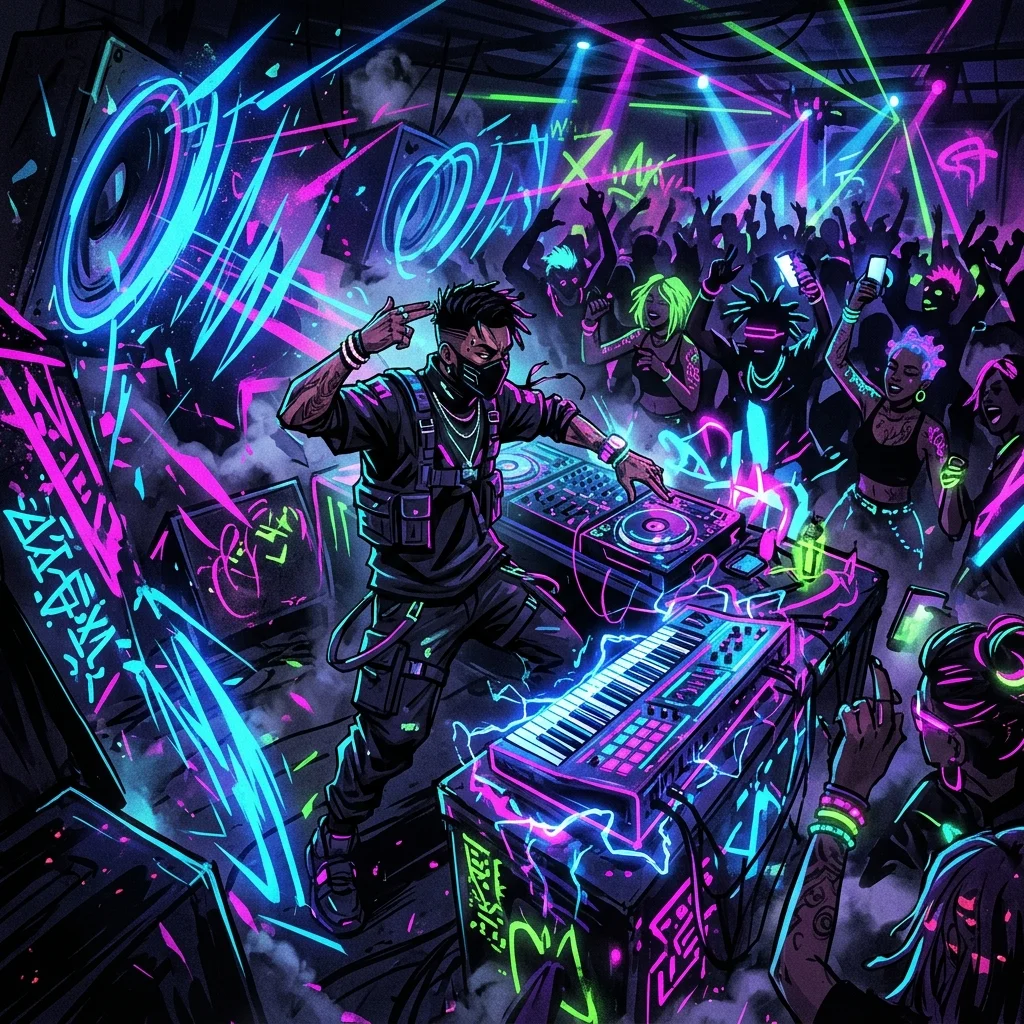
When our analytics team was reviewing streaming metadata across 500 prominent TikTok sound bites last month, a startling pattern emerged. Traditional mid-tempo trap beats, which had enjoyed a nearly decade-long monopoly on hip-hop virality, were being aggressively displaced by hyper-distorted, fast-paced instrumentals. We were witnessing a massive demographic pivot. In 2026, Gen Z listeners have officially crowned two new kings of the underground and mainstream alike: Rage Rap and Phonk.
This isn’t just a fleeting internet trend; it represents a fundamental rewiring of how youth consume music. The sonic landscape of 2026 is louder, more aggressive, and undeniably influenced by electronic rave culture. In this comprehensive analysis, we will dive deep into the DNA of Rage Rap and Phonk, exploring their origins, their structural differences from traditional hip-hop, and why independent artists must adapt to this new sonic reality to capture the attention of today’s listeners.
The Evolution of the Sound: Why Gen Z Shifted Gears
The transition from the 2010s “SoundCloud Rap” era to the current Rage and Phonk dominance wasn’t instantaneous. It was born out of a collective fatigue with the standard 808-heavy trap formulas. As digital attention spans shortened and the desire for high-energy, visceral experiences grew—especially in a post-pandemic world—listeners craved music that felt less like background noise and more like a main event.
Rage Rap relies heavily on synthetic, video-game-esque melodies combined with blowing-out basslines, whereas Phonk roots itself in vintage Memphis rap vocal chops layered over dark, cowbell-driven house and trap beats. Both subgenres share a common thread: they are designed to induce adrenaline. This is why they thrive in short-form video content, gaming montages, and high-intensity workout playlists.
To truly understand the shift, we must look at the structural components that separate these new titans from their predecessors.
| Feature | Traditional Trap (2015-2020) | Rage Rap (2026) | Phonk (2026) |
|---|---|---|---|
| Tempo (BPM) | 120 - 140 | 145 - 160+ | 110 - 130 (Drift Phonk: 130-140) |
| Primary Synths | Plucks, Rhodes, Soft Pads | Hyper-Saw, Distorted Leads, EDM synths | Lo-Fi Samples, Heavy Cowbells |
| Vocal Delivery | Melodic, Auto-Tuned crooning | Aggressive, High-energy, Staccato | Chopped, Screwed, Often Instrumental |
| Drum Characteristics | Clean 808s, Rolling Hi-Hats | Distorted, Clipping 808s, Chaotic Hats | Punchy Kicks, syncopated Percussion |
| Cultural Origin | Atlanta | SoundCloud/Underground Digital | Memphis Rap meets Russian Car Culture |
If you are an independent producer looking to capitalize on these trends, you must understand the technical nuances of these genres. You can find more production insights in our Best Beat Making Software of 2026 guide.
Step 1: Deconstructing the Rage Rap Architecture
Rage Rap, pioneered by artists like Playboi Carti and Yeat, and now perfected by the 2026 underground, is characterized by its unapologetic embrace of synthetic, abrasive textures.
The Hyper-Synth Foundation
The core of any Rage beat is the lead synthesizer. Unlike the moody pianos of early 2010s hip-hop, Rage utilizes aggressive, buzzing synth patches. These often mimic the sound of early 2000s video game soundtracks (specifically the “pluggnb” and “plugg” lineage) but processed with heavy saturation and distortion.
The Clipping 808
In traditional audio engineering, digital clipping (when an audio signal exceeds 0dB and distorts) is considered a cardinal sin. In Rage Rap, it is a requirement. Producers intentionally push their 808 bass lines into the red, creating a “fuzz” that dominates the low-mid frequencies. This requires careful EQing of other elements to ensure the mix doesn’t become pure mud.
The Vocal “Instrument”
Vocalists in this genre often treat their voice as just another synthesizer. Heavy auto-tune, aggressive ad-libs, and repetitive, hypnotic flows take precedence over complex lyricism. The energy of the delivery is far more important than the enunciation.
Step 2: The Anatomy of Modern Phonk
Phonk has one of the most fascinating origin stories in modern music. Originating as a homage to 90s Memphis rap (think Three 6 Mafia), it evolved drastically when it collided with the international drifting and car community on platforms like TikTok, birthing “Drift Phonk.”
The Iconic Cowbell
The defining characteristic of modern Drift Phonk is the aggressive, tuned TR-808 cowbell melody. This percussive element is pitched up and down to create haunting, repetitive lead lines that cut through dense bass frequencies.
Memphis Vocal Chops
Phonk relies heavily on sampling. Specifically, taking dark, lo-fi acapellas from 90s Memphis rap tapes, slowing them down (chopped and screwed), and burying them slightly in the mix to create a gritty, atmospheric backdrop.
The Four-on-the-Floor Kick
While traditional hip-hop uses syncopated kick patterns, much of 2026’s popular Phonk has adopted a four-on-the-floor kick pattern (a kick on every beat). This bridges the gap between hip-hop and electronic dance music, making it highly suitable for club environments and rave culture.
Step 3: Producing for the 2026 Landscape
For producers looking to pivot into these genres, the barrier to entry isn’t necessarily technical skill, but rather sound selection and mixing philosophy.
- Sound Selection is King: Discard your organic piano VSTs. Invest in synthesizers like Serum, Phase Plant, or Vital, and learn to design aggressive, saw-wave based leads.
- Master the Art of Distortion: Use plugins like CamelCrusher, Decapitator, or simple soft clippers on your master bus and bass busses. The goal is “controlled chaos.”
- Embrace the Loop: Both genres rely heavily on a hypnotic, repetitive 4-bar or 8-bar loop. The variation comes from dropping elements out and bringing them back in, rather than complex chord progressions.
If you’re upgrading your studio to handle these bass-heavy genres, ensure you have the right monitoring setup. Check out our recommendations for the Best Headphones for Hip-Hop in 2026.
Pro Tips for Artists Entering the Rage & Phonk Scenes
1. Optimize for Short-Form Video
The reality of 2026 is that if your track doesn’t have a highly engaging 15-second section, its chances of breaking out are slim. Structure your songs so the highest energy moment (the drop) occurs early, making it perfect for TikTok or YouTube Shorts creators to use.
2. Aesthetic is Everything
The visual language of Rage and Phonk is distinct. Rage favors chaotic, avant-garde, and cyber-goth aesthetics. Phonk leans heavily into automotive culture, VHS static, and dark, ominous imagery. Your cover art, social media presence, and music videos must align perfectly with the sonic atmosphere.
3. Collaborate Across Genres
Because both genres borrow heavily from electronic music, don’t limit your collaborations to just hip-hop producers. Working with EDM, house, or hyperpop producers can yield incredibly unique cross-pollinations that stand out in a crowded market.
4. Live Shows Demand Rave Energy
If you are performing Rage or Phonk live, treat it like a rave, not a traditional rap concert. High-intensity lighting, mosh pits, and continuous mixing between tracks are expected by the audience.
Common Mistakes When Approaching Rage and Phonk
Mistake 1: Over-Complicating the Melodies
The Fix: Keep it simple. Both genres rely on hypnotic repetition. A complex, jazz-inspired chord progression will clash with the aggressive aesthetic. Stick to minor scales and repetitive, catchy motifs.
Mistake 2: Weak Low-End
The Fix: A Phonk or Rage track with a quiet or clean bassline will immediately sound amateurish to listeners accustomed to the genre. Learn how to parallel compress and saturate your 808s so they sound huge even on smartphone speakers.
Mistake 3: Ignoring the Culture
The Fix: Don’t just make a “cowbell beat” and call it Phonk without understanding the Memphis roots or the drifting community that popularized it. Authenticity is heavily policed by fans of these underground subgenres. Respect the origins.
Frequently Asked Questions
What is the difference between Trap and Rage Rap?
Trap music typically features slower tempos (120-140 BPM), moody or ambient melodies, and clean, booming 808s. Rage Rap uses much faster tempos, highly synthetic and aggressive “video game” style synthesizers, and heavily distorted, clipping basslines.
Why is Phonk so popular on TikTok and YouTube?
Phonk’s high energy, driving bass, and repetitive cowbell melodies make it the perfect audio backdrop for high-intensity visual content. It pairs flawlessly with automotive drifting videos, gym montages, and gaming highlights, which dominate those platforms.
Do I need expensive plugins to make Rage Rap?
No. While premium synthesizers like Serum are popular, many stock plugins in FL Studio or Ableton can achieve the required sounds. The key is how you process the sound—specifically using heavy distortion, saturation, and soft clipping—rather than the initial synth itself.
Is SoundCloud still the best place for Rage and Phonk artists?
While SoundCloud remains the spiritual home for these underground genres and is excellent for community building, major breakout success in 2026 requires a strong presence on short-form video platforms and direct-to-fan distribution via Spotify and Apple Music.
How do I mix a track where everything is distorted?
Mixing Rage and Phonk is about creating “controlled chaos.” Use aggressive high-pass filtering on your synths and vocals to ensure they don’t clash with the sub-bass frequencies. Use sidechain compression to duck the bass out of the way every time the kick hits, ensuring punchiness despite the distortion.
Embrace the Noise
The dominance of Rage Rap and Phonk in 2026 proves that hip-hop is far from stagnant. It is constantly mutating, absorbing new influences, and catering to the evolving tastes of the next generation. For independent artists, this represents a massive opportunity to carve out a lane in a highly engaged, energetic community.
To ensure your productions are up to the standard demanded by these new subgenres, start by optimizing your creative workspace. Read our comprehensive guide on Beat Making in 2026 to equip yourself with the modern tools needed to craft the future of hip-hop.