The Illusion of the Machine
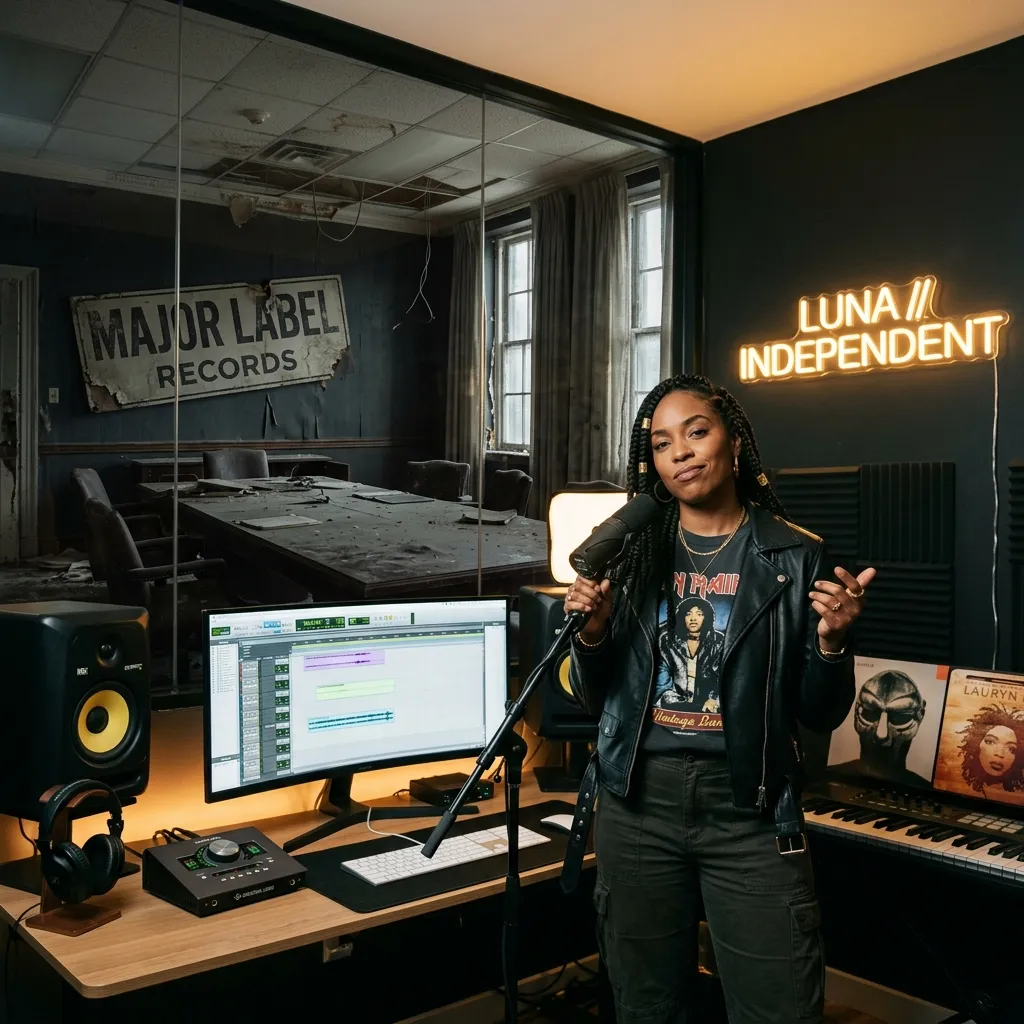
For decades, the path to hip-hop superstardom was a straight, narrow, and heavily guarded road. You grind in the underground, you get discovered by an A&R, you sign a massive contract in a glass-walled boardroom in New York or Los Angeles, and then the “machine” takes over.
In 2026, that machine is rusting from the inside out.
As the Senior Industry Analyst and Cultural Critic here at ThugNews, I speak with artists, managers, and producers every single week. The consensus is overwhelming: for the modern, digitally native hip-hop artist, signing a traditional major label record deal is no longer a career milestone—it is a financial trap.
The traditional 360-deal has become mathematically toxic, and thanks to the democratization of distribution and production technology, the major record label is rapidly becoming an obsolete middleman.
What Did Labels Actually Do?
To understand why they are dying, we have to look at what major labels historically provided that an artist couldn’t do themselves. In the 1990s and 2000s, labels controlled the three pillars of the music industry:
- Manufacturing & Distribution: They physically pressed the CDs and vinyl and shipped them to Best Buy and Tower Records.
- Capital: Studio time cost thousands of dollars a day. Mixing, mastering, and music video production required massive upfront cash.
- Gatekeeper Access: They controlled terrestrial radio programmers and MTV executives. If they didn’t push your record, no one heard it.
In 2026, every single one of these pillars has collapsed.
The Democratization of Distribution
Physical manufacturing is a niche collector’s market. Today, an independent artist in an untreated bedroom in Atlanta can upload their mastered WAV file to DistroKid, TuneCore, or UnitedMasters for $20 a year, and it will appear on Spotify, Apple Music, and TikTok globally within 48 hours. The distribution monopoly is completely dead.
The Eradication of Studio Costs
You no longer need a $2 million SSL console to make a Billboard #1 hit. A teenager with a cracked copy of FL Studio, an $80 Audio-Technica microphone, and a suite of AI-assisted mixing plugins can produce a track that rivals anything coming out of a major studio. The barrier to entry for professional audio quality is practically zero.
The Algorithm as the New Gatekeeper
Radio is a relic. MTV doesn’t play music. The new gatekeeper is the TikTok and Spotify algorithm. While major labels spend millions trying to artificially game these algorithms, independent artists with a native understanding of internet culture are going viral purely organically.
The Toxicity of the 360 Deal
If the labels no longer control distribution, production, or access, what are they actually offering?
They are offering predatory loans masked as advances.
When a young, viral artist signs a 360-deal today, they are given a massive cash advance (often $500,000 to $1 million). However, this is not a signing bonus; it is a recoupable loan. The artist must pay back every single penny of that advance, plus the costs of marketing, music videos, and tour support, from their royalties.
But here is the catch: under a standard deal, the artist might only receive 15% to 18% of the royalty pie. This means an artist has to generate millions of dollars in revenue for the label before they see a single dime of profit beyond their initial advance. Furthermore, in a 360-deal, the label takes a percentage of everything—touring, merchandise, sponsorships, and even YouTube ad revenue.
The Independent Counter-Model
Let’s look at the brutal mathematics comparing a signed artist to a fully independent artist utilizing direct-to-fan marketing platforms like Patreon, Discord, and Shopify.
| Metric | Major Label Artist (360 Deal) | Independent Artist (Direct-to-Fan) |
|---|---|---|
| Royalty Split | ~15% - 20% | 100% (minus minimal aggregator fees) |
| Master Ownership | Label owns the masters forever. | Artist retains 100% ownership. |
| Merch Revenue | Label takes 20% - 30%. | Artist keeps 100% (minus production). |
| Creative Control | Label A&R dictates singles and rollouts. | Absolute creative freedom. |
| Release Schedule | Often shelved or delayed for months. | Can release music instantly. |
An independent artist streaming a modest 10 million times a year, selling high-margin merchandise directly to a core fanbase of 5,000 dedicated supporters on Discord, is statistically likely to take home significantly more net profit than an artist streaming 100 million times under a major label contract.
The Label Pivot: Becoming Marketing Agencies
The major labels are not stupid. They see the writing on the wall. This is why we are seeing a massive shift in their business model.
Labels are increasingly abandoning the business of “artist development.” They no longer sign raw talent and mold them into stars over three albums. Instead, they operate like aggressive venture capital firms or marketing agencies. They scour TikTok data, find an independent artist who has already built a massive organic following and a viral hit, and then offer them a massive check simply to attach their logo to the artist’s existing momentum.
They are no longer building the house; they are just buying the rights to paint the front door.
Frequently Asked Questions (FAQ)
Are there any good reasons to sign with a major label in 2026?
Yes. If an artist’s goal is to become an absolute global pop superstar—playing stadiums, securing Super Bowl halftime shows, and collaborating with international pop stars—the major label machine still possesses the raw capital and global infrastructure necessary to achieve that specific tier of fame.
What is a “label services” deal?
This is the modern alternative to a record deal. Instead of signing over your masters and entering a 360-deal, an independent artist hires a label or distribution company specifically for their marketing and playlist-pitching services. The artist retains ownership and pays the label a flat fee or a smaller percentage (e.g., 15-20%) of the distribution revenue.
How do independent artists fund their own tours?
Without label tour support, independent artists rely on booking agents, strategic routing (only playing cities where their Spotify data shows high listenership), and selling VIP packages and high-margin merchandise to subsidize travel costs.
Why do some artists complain about being “shelved”?
Labels sign dozens of artists but only have the budget and staff to heavily promote a few. If your initial single doesn’t perform well, the label may refuse to release the rest of your music or fund your videos. Because they own your contract, you are “shelved”—unable to release music independently, but receiving no support from the label.
Will major labels exist in 10 years?
Yes, but their function will be entirely different. They will likely transition fully into holding companies that manage vast catalogs of legacy music copyrights and act as high-end marketing agencies for the top 1% of global pop stars.
The Final Verdict
For 99% of hip-hop artists currently grinding in the underground, the dream of the major label deal needs to die. It is an outdated metric of success from a bygone era.
Ownership is the only metric that matters in 2026. Build your community, own your master recordings, control your data, and keep your equity.
If you are an independent artist who wants to bypass the label system entirely and build a sustainable, highly profitable career on your own terms, you need a blueprint. Read our definitive guide on From SoundCloud to Stardom: How to Build an Independent Rap Career to understand the exact mechanics of independent success.