For the last decade, the K-Pop industry has operated as a high-velocity centrifuge for global fashion. Trends were born on a Monday music show broadcast in Seoul and mass-produced in global fast-fashion sweatshops by Friday. The traditional K-Pop aesthetic—characterized by rapid-fire wardrobe changes, single-use bespoke stage outfits, and hyper-consumerist luxury endorsements—was undeniably glamorous, but it was also an environmental catastrophe.
However, in 2026, a massive cultural shift has fractured the foundation of South Korean styling.
Driven by the militant, highly organized climate activism of global fandoms, major entertainment agencies were forced into a reckoning. The result is the absolute dominance of “Eco-Futurism.” If you want to understand k pop fashion trends 2026, you have to look past the rhinestones and the tennis skirts. Today, the most powerful idols on the planet are stepping onto stadium stages wearing modular combat harnesses made from recycled ocean plastics and upcycled parachute nylon.
This is an analysis of how K-Pop fashion abandoned wasteful fast-fashion glamor and embraced sustainable, dystopian streetwear.
The Catalyst: Fandom Climate Activism
To understand the sudden shift in k pop fashion trends 2026, one must understand the unprecedented power of the modern K-Pop fandom.
As we explored in our analysis of the K-Pop Fan to Consumer Pipeline, fanbases are no longer just passive consumers of media; they are highly organized political and economic blocs. In late 2024 and throughout 2025, organizations like Kpop4Planet began launching aggressive, highly visible campaigns targeting the “Big 4” entertainment agencies (HYBE, SM, JYP, YG).
Their demands were simple: stop mass-producing millions of plastic physical albums, and stop styling idols in disposable fast fashion.
When fans started bringing “Climate Emergency” banners to fan signs and organizing mass boycotts of merchandise drops that weren’t sustainably sourced, the agencies panicked. In an industry where the parasocial relationship is the primary commodity, ignoring the moral demands of the fans is financial suicide.
The agencies needed a way to make sustainability look aspirational. They needed a visual language that communicated environmental consciousness without sacrificing the high-budget, avant-garde spectacle that K-Pop is known for. The solution was Eco-Futurism.
Defining Eco-Futurism: Cyberpunk Meets the Greenhouse
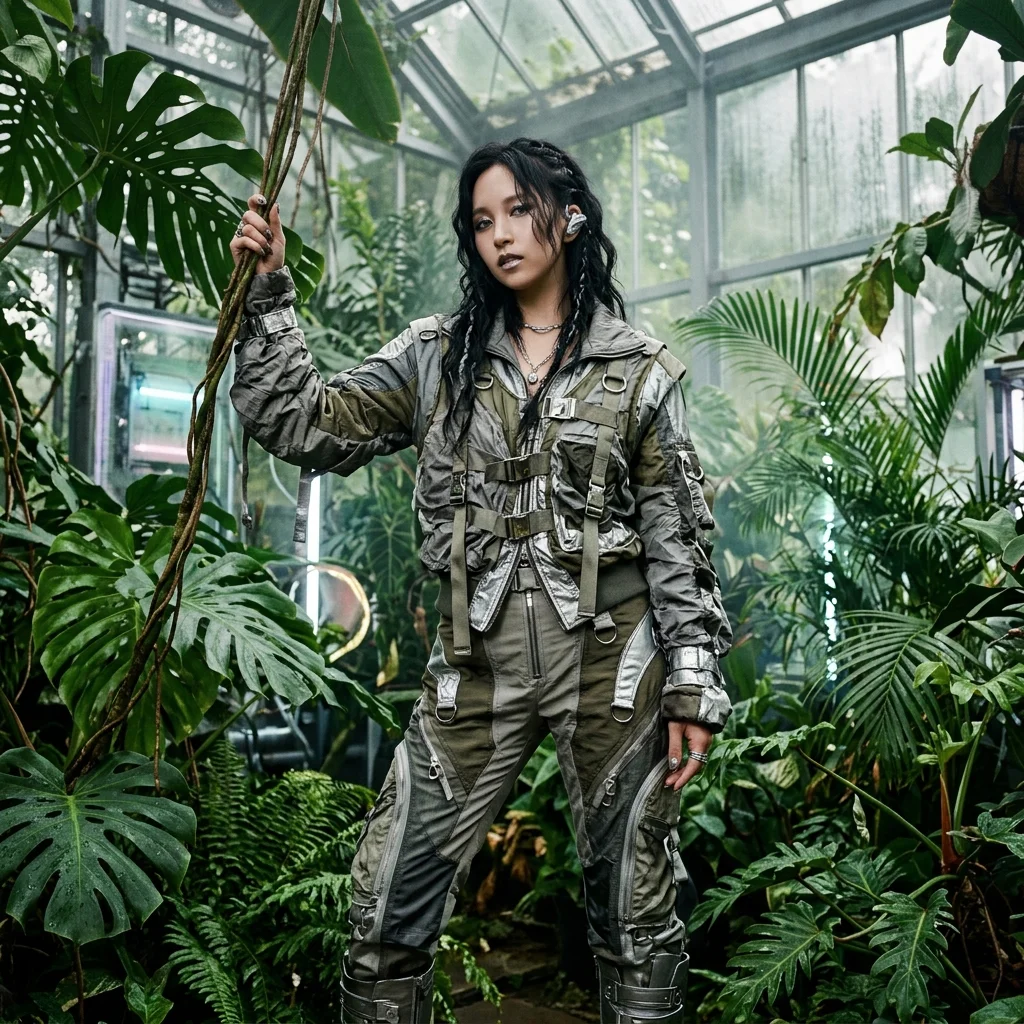
Eco-Futurism is not about looking like a bohemian hippie. It is a highly aggressive, deeply cynical aesthetic that acknowledges a world ravished by climate change while asserting survival through advanced technology. It is “Cyberpunk,” but colored in moss green and rusted earth tones rather than neon pink.
When analyzing k pop fashion trends 2026, Eco-Futurism is defined by a specific set of stylistic pillars:
1. Upcycled Modular Tech-Wear
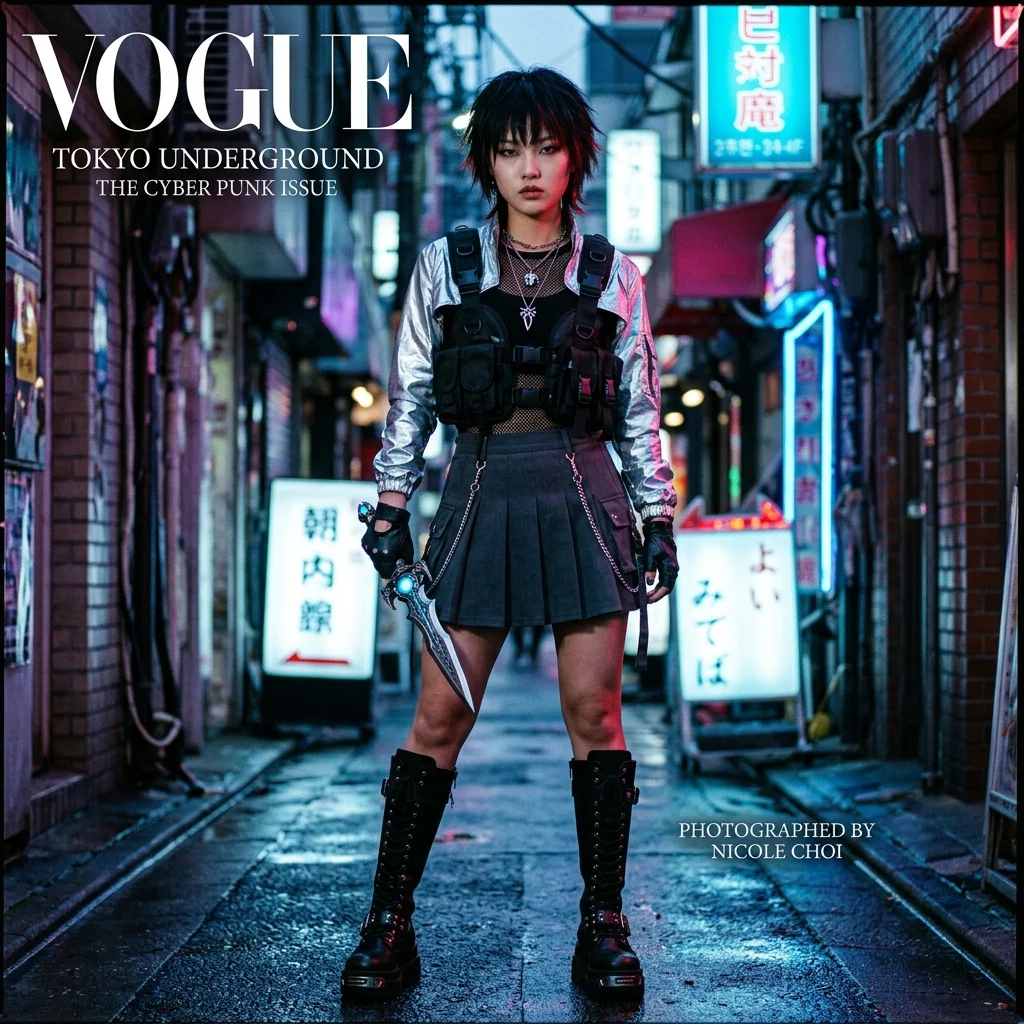
The core of the aesthetic is modularity. Stylists are no longer cutting up vintage designer shirts for single-use stages. Instead, they are utilizing heavy, modular tech-wear that can be reconfigured. Idols are wearing tactical vests covered in D-rings and carabiners, constructed entirely from upcycled parachute nylon and discarded military surplus. These pieces are meant to look heavy, practical, and protective.
2. Distressed Organic Textures
To contrast the harsh plastics of tech-wear, Eco-Futurism heavily utilizes distressed organic fabrics. Think shredded organic cotton, heavy untreated canvas, and knitwear that looks intentionally unraveling. The juxtaposition of a pristine, glowing idol face against a heavily distressed, earth-toned combat jacket creates a powerful visual narrative of survival.
3. Liquid Metallics and Cybernetics
To retain the “pop star” glamour, stylists use “liquid metallics.” Instead of traditional glitter or sequins (which are microplastics), outfits feature metallic fabrics that mimic the look of flowing mercury. When paired with heavy silver hardware—like thick chain-link chokers and ear cuffs that resemble cybernetic implants—the idols look like high-fashion androids navigating a post-apocalyptic jungle.
The Demise of the “Luxury Ambassador” Pipeline
One of the most fascinating ripple effects of the Eco-Futurist movement is its impact on the high-fashion luxury market.
For years, becoming a global brand ambassador for houses like Chanel, Dior, or Celine was the ultimate status symbol for a K-Pop idol. However, as k pop fashion trends 2026 pivot toward sustainability, fans have grown increasingly critical of idols promoting legacy luxury houses with poor environmental records.
We are witnessing a massive shift in brand alignments. Instead of flying to Paris Fashion Week to sit front row at a legacy couture show, top idols are now seeking ambassadorships with avant-garde, sustainable streetwear brands.
As noted in our deep dive on Gorpcore and High-Performance Gear, utility brands like Arc’teryx, Salomon, and independent upcycling designers in Tokyo and Seoul are the new status symbols. When a member of a massive girl group wears a custom corset made entirely from recycled Nike sneakers, it generates far more viral traction (and fan approval) than a standard diamond necklace.
The Real-World Impact on Streetwear
The K-Pop machine is a trend accelerator. What an idol wears in a music video on Monday will inevitably dictate the global streetwear market by the end of the month.
The rise of Eco-Futurism in K-Pop has directly caused a boom in the sustainable streetwear market worldwide. In our analysis of the Streetwear Culture Guide 2026, we documented how independent designers are currently struggling to meet the demand for modular tactical gear and upcycled clothing.
Fans want to emulate the Eco-Futurist look, which means they are actively seeking out thrift stores to source oversized cargo pants, buying heavy combat boots instead of limited-edition hype sneakers, and learning how to sew and distress their own garments. Ironically, by adopting an aesthetic meant to look like post-apocalyptic survival gear, the K-Pop industry has inadvertently triggered one of the most creatively fertile DIY movements in modern fashion history.
The “Demon Hunter” Catalyst
It is impossible to discuss the rise of tactical Eco-Futurism without mentioning the cultural impact of K-Pop Demon Hunters, the massive 2025 animated film.
As we covered extensively in our Ultimate K-Pop Demon Hunters Costume Guide, the character designs in that film—which blended K-Pop glamour with heavy, militaristic combat gear—served as the visual blueprint for this movement. The film proved to both fans and entertainment agencies that female idols could look incredibly powerful and aspirational in heavy tactical harnesses and combat boots, effectively killing the mandate that female idols must always perform in hyper-feminine, delicate clothing.
The film walked so that 2026’s Eco-Futurism could run.
Conclusion: A Permanent Shift
Critics of the K-Pop industry often dismiss its fashion trends as cynical cash grabs. And to be fair, there is undeniable irony in massive, billion-dollar entertainment conglomerates adopting an “anti-consumerist, post-apocalyptic” aesthetic to sell more concert tickets.
However, the shift toward Eco-Futurism feels different than the micro-trends of the past. It is not just an aesthetic choice; it is a structural response to an existential threat. The fans demanded sustainability, and the industry was forced to comply.
By making recycled materials, upcycled garments, and modular tech-wear the pinnacle of global pop-culture glamour, k pop fashion trends 2026 might actually be doing something unprecedented: using the immense, hyper-capitalist power of the idol industry to drive real, sustainable change in global fashion consumption.
FAQs
What is Eco-Futurism in fashion?
Eco-Futurism is a fashion aesthetic that blends environmental consciousness (using upcycled, recycled, and organic materials) with a futuristic, cyberpunk visual style. It often involves heavy tactical gear, distressed natural fabrics, and metallic hardware.
Why did K-Pop stop using fast fashion?
The shift was primarily driven by intense, organized climate activism from global K-Pop fandoms. Fanbases launched massive campaigns and boycotts demanding that agencies reduce their carbon footprint, eliminate plastic album waste, and stop styling idols in disposable fast fashion.
What are the key pieces of the 2026 K-Pop aesthetic?
The current aesthetic relies heavily on modular tech-wear (like nylon chest rigs and cargo pants), upcycled military surplus, distressed organic knits, and heavy combat boots, moving away from the delicate, hyper-feminine pop-star looks of previous eras.
Are K-Pop idols still luxury brand ambassadors?
Yes, but the paradigm is shifting. While legacy houses still hold power, many idols and fans are prioritizing ambassadorships with sustainable, avant-garde streetwear and high-performance utility brands over traditional European luxury houses.
How did “K-Pop Demon Hunters” influence real fashion?
The 2025 animated film popularized the “Tactical Haute Couture” look. By showcasing female idols wearing heavy combat harnesses and tactical gear, it provided the visual blueprint for the aggressive, utility-focused Eco-Futurism seen in 2026.
Keep Reading
If you want to understand how these global trends filter down into your closet, read our massive guide on Streetwear Culture in 2026. To understand how K-Pop groups are maintaining their global dominance financially, check out our breakdown of the K-Pop Economic Blueprint.