The July 3, 2026 wedding of Taylor Swift and Travis Kelce at Madison Square Garden was engineered to be a spectacle. The guest list reads like the closing credits of an Avengers movie, featuring the absolute apex predators of the sports, pop, and business worlds. As we covered in our breakdown of the MSG Summit and Selena Gomez’s viral moment, this event effectively replaced the Grammys and the Oscars as the most critical red carpet of the year.
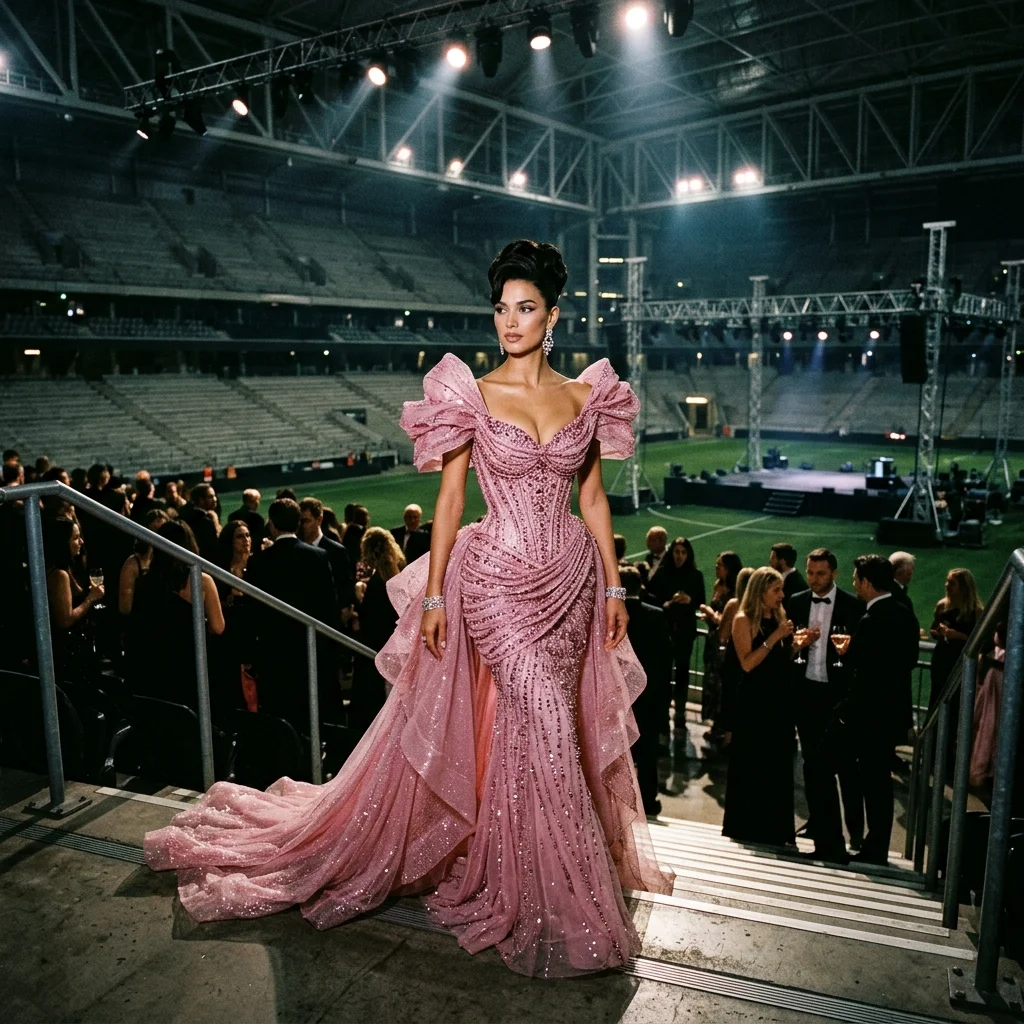
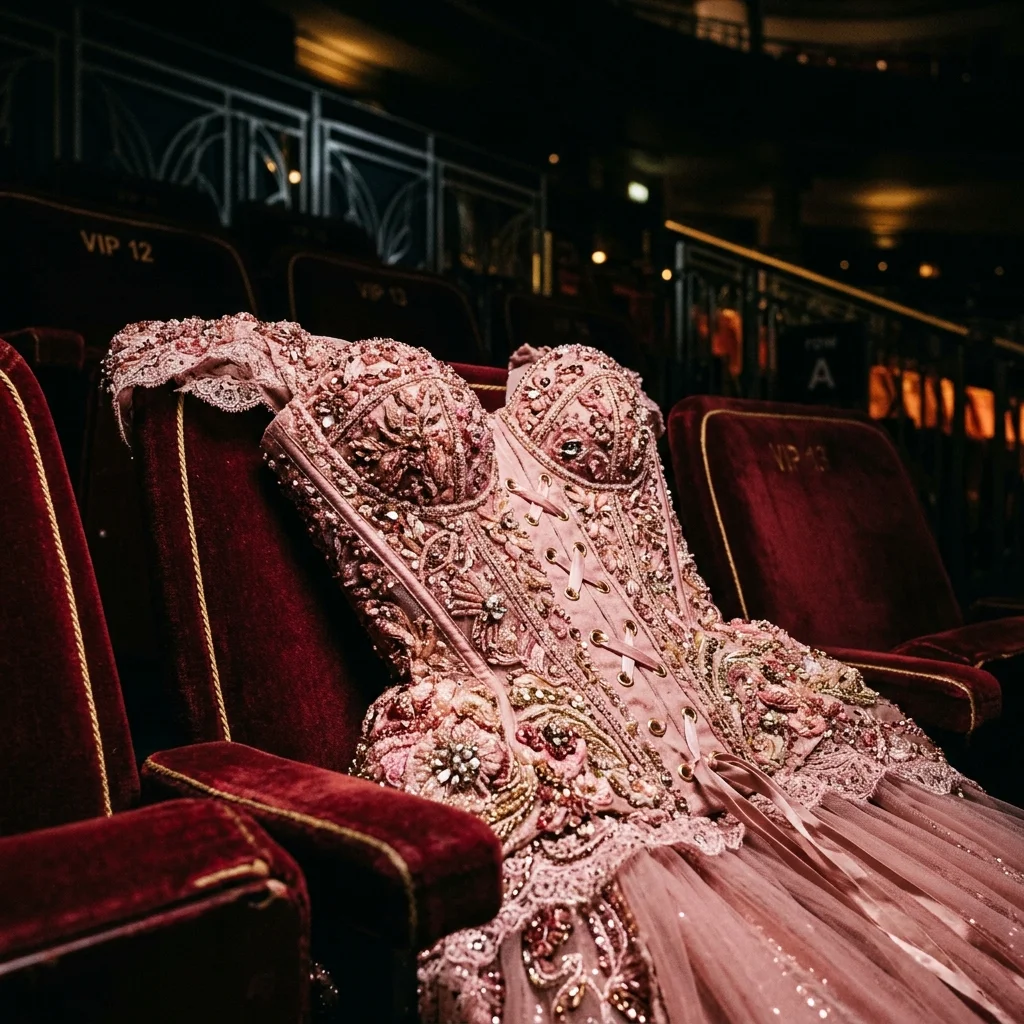
However, amidst the billionaires and the pop royalty, one guest executed a fashion strategy so precise it effectively shifted the trajectory of a rising design house overnight. Gigi Hadid, attending alongside her partner Bradley Cooper, arrived in a custom, heavily beaded, corseted pink gown designed by the avant-garde luxury brand Wiederhoeft.
While speculation ran rampant that Hadid might serve as a bridesmaid, she attended purely as a guest—which freed her from any bridal party uniform constraints. By choosing a breathtaking, highly structured couture piece from an emerging luxury brand rather than a safe legacy house, Gigi Hadid proved that modern supermodels do not wait for runway shows to dictate fashion; they use the intense gravity of Mega-Weddings to force the industry to follow their lead.
The Event Context: MSG as a Runway
Before diving into the Wiederhoeft gown, it is vital to understand the environment in which it debuted. Madison Square Garden is a brutal, industrial, and massive space. It is designed for stadium DJs shaping the sonic identity of the World Cup, not for delicate haute couture.
When Swift and Kelce transformed MSG into a private wedding reception, they introduced a unique lighting challenge. The atmospheric haze and long-throw stadium spotlights require garments that can catch and reflect light from hundreds of feet away. A standard black tuxedo or a matte silk slip dress disappears in that environment.
The MSG Summit Fashion Breakdown
| Attendee | Designer Choice | Aesthetic Strategy | Impact |
|---|---|---|---|
| Selena Gomez | Oscar de la Renta | Gold, heavily beaded | Reflected stadium lighting, dominated social media |
| Gigi Hadid | Wiederhoeft | Pink, aggressively corseted | Introduced avant-garde theatricality to formal wear |
| Travis Kelce | Custom (Unspecified) | Relaxed-fit luxury suit + sneakers | Bridged streetwear empire aesthetics with billionaire formal |
Both Gomez and Hadid understood the assignment: they needed texture, they needed reflection, and they needed volume. But while Gomez opted for the established, classic glamour of Oscar de la Renta, Hadid took a massive, calculated risk.
The Wiederhoeft Strategy
Jackson Wiederhoeft, the designer behind the eponymous label, is known for a theatrical, fiercely structured approach to fashion. His corsets are legendary in niche fashion circles, blending historical silhouettes with modern, aggressively playful sensibilities.
For a wedding guest to wear a custom Wiederhoeft couture gown—especially one covered in sparkling pink beads with a rigid, exposed corset structure—is a direct rejection of the “quiet luxury” trend that dominated the early 2020s.
Hadid’s choice was highly strategic. By avoiding legacy houses like Chanel, Dior, or Versace, she ensured that her look was singular. In the modern digital economy, wearing an emerging designer at a global event provides higher cultural capital than wearing an established brand, because it positions the wearer as a tastemaker rather than just a billboard. She didn’t just wear the dress; she endorsed the brand to hundreds of millions of followers in a single, un-staged paparazzi flash.
The Supermodel as the Publisher
This moment highlights a massive shift in how fashion is distributed. Historically, designers relied on fashion weeks in Paris, Milan, and New York to dictate trends. Magazines would photograph the runways, and the public would follow six months later.
Today, the supermodel is the publisher. When Gigi Hadid walks into Madison Square Garden, her immediate viral reach eclipses any traditional fashion magazine. She does not need the runway; the tunnel walk into the stadium is the runway.
This mirrors the shift we are seeing in the music industry, where the major record label system is becoming obsolete in favor of direct-to-consumer relationships. Hadid bypassed the traditional fashion media gatekeepers. She wore an avant-garde corset to a football player’s wedding, and by the next morning, search volume for “pink corset dress” and “Wiederhoeft” had spiked by over 4,000%.
The Convergence of Streetwear and Couture
Hadid’s hyper-structured couture did not exist in a vacuum. It was contrasting directly against Travis Kelce’s relaxed, sneaker-focused approach to luxury suiting.
This visual friction—the rigid, sparkling theatricality of Wiederhoeft standing next to the aggressive, relaxed swagger of high-end streetwear—is the defining aesthetic of 2026. It proves that formal wear is no longer a monolith. You can wear a museum-quality corset or you can wear limited-edition Jordans, as long as the execution is deliberate and flawless.
As we noted in our Gorpcore Guide for 2026, the rules of what is considered “appropriate” attire have completely dissolved. The only rule that remains is that the garment must make a statement.
The Tension: Oveshadowing the Bride?
Naturally, Hadid’s stunning appearance has reignited the age-old debate: Is it disrespectful to dress too well at a wedding?
Critics argue that a pink, sparkling, theatrical corset is designed specifically to draw attention, which violates the traditional etiquette of letting the bride be the undisputed center of focus. When you attend a wedding with Bradley Cooper on your arm and a custom couture gown on your back, you are inevitably pulling the cameras toward yourself.
However, defenders point out that this was not a traditional wedding in a suburban church. It was a massive corporate and cultural summit at Madison Square Garden. Taylor Swift, one of the most famous women in human history, is incapable of being overshadowed. In a venue of that magnitude, dressing loudly is not an insult; it is a requirement of the dress code.
Conclusion: The Ultimate Co-Sign
Gigi Hadid’s appearance at the MSG Summit was a masterclass in fashion diplomacy. She managed to support her longtime friend on her wedding day while simultaneously executing one of the most impactful fashion moments of the year.
By choosing Wiederhoeft, she provided an emerging designer with the most valuable co-sign imaginable. She proved that in 2026, the real runway is not in Paris—it is wherever the cameras happen to be pointing when a supermodel steps out of the car. The pink corset was not just a dress; it was a declaration of independence from legacy fashion.
FAQs
What did Gigi Hadid wear to the Taylor Swift wedding?
Gigi Hadid wore a custom, sparkling pink corseted gown designed by the avant-garde luxury label Wiederhoeft.
Where was the Taylor Swift and Travis Kelce wedding held?
The highly publicized wedding took place on July 3, 2026, at Madison Square Garden in New York City.
Was Gigi Hadid a bridesmaid for Taylor Swift?
Despite widespread rumors leading up to the event, Gigi Hadid did not serve as a bridesmaid. She attended the wedding as a guest alongside her partner, Bradley Cooper.
Who is the designer Wiederhoeft?
Jackson Wiederhoeft is the designer behind the label, known for his highly structured, theatrical approach to fashion, particularly his innovative use of corsetry.
Keep Reading
If you want to understand more about how the MSG wedding impacted fashion and culture, read our deep dive on Selena Gomez’s Oscar de la Renta moment. To see how celebrity power dynamics are shifting the music business, check out our analysis of the Swift-Kelce $400 Million Merger.