The Price of the Party
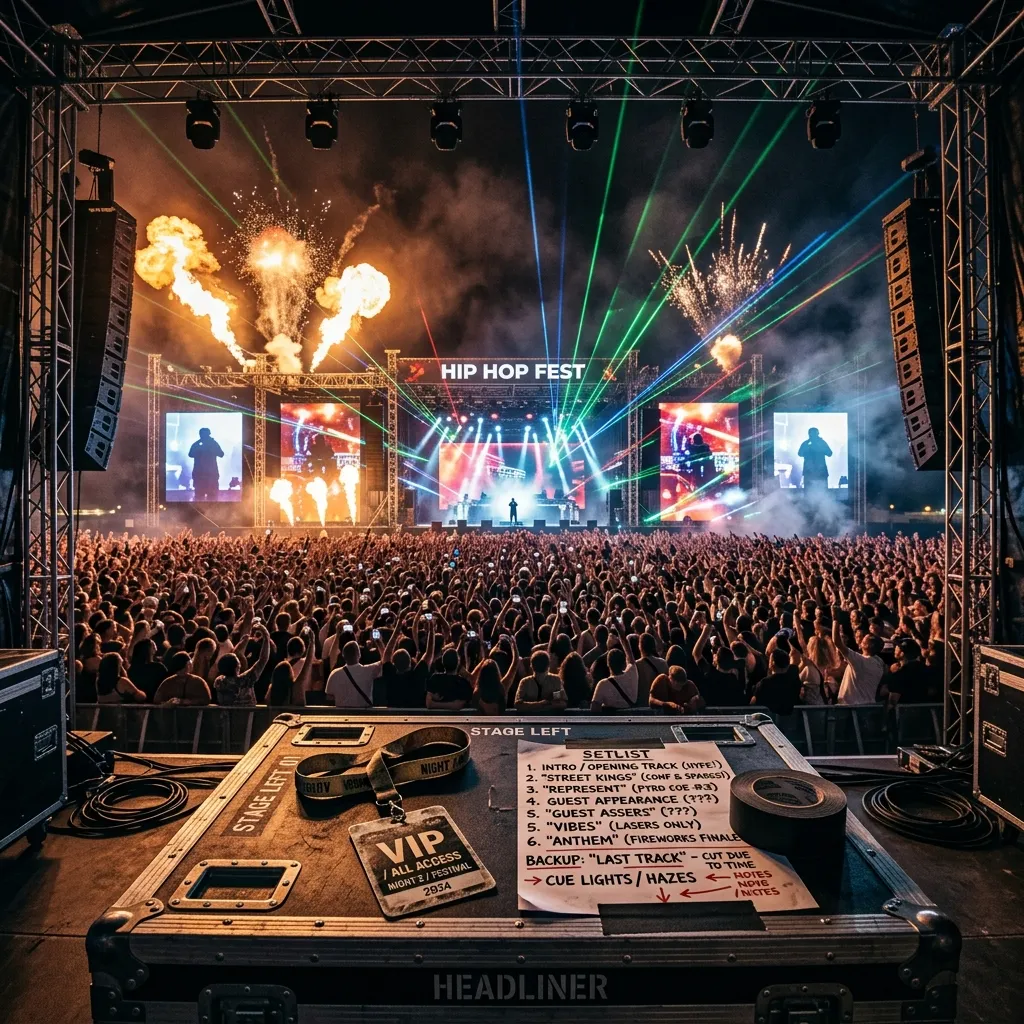
When our editorial team secured backstage access to a major mid-tier hip-hop festival in Atlanta last summer, the atmosphere in the production trailer was surprisingly tense. While 40,000 fans raged to a massive stadium-level headliner outside, the festival organizers inside were running spreadsheets. “We sold out every single VIP package,” the lead promoter told me, pointing to the glowing red numbers on his monitor. “And we are still going to lose $200,000 this weekend.”
Welcome to the brutal financial reality of the hip-hop festival market in 2026.
On the surface, the live music industry appears healthier than ever. Global concert grosses recently shattered the $23 billion mark. However, that immense wealth is not distributed evenly. The industry is currently experiencing a massive squeeze. Production costs have skyrocketed, superstar booking fees have become astronomical, and consumers are suffering from “festival fatigue.”
If you are an independent artist trying to get booked, or simply a fan wondering why ticket prices continue to climb, you must understand the “New Touring Math.” This comprehensive guide breaks down the economics of the 2026 hip-hop festival circuit, the strategic moves of giants like Live Nation, and why massive brands like Rolling Loud are radically altering their business models.
The “New Touring Math” of 2026
To understand why a sold-out festival can still lose money, you must examine the “cost stack”—the layered expenses required to operate a massive live event. Since the global supply chain disruptions of the early 2020s, the cost of staging a festival has increased by an estimated 40%.
The Cost Stack Breakdown
Here is a simplified comparison of where the money went during the “Golden Era” of festival expansion versus the financial reality of 2026:
| Expense Category | 2018 Festival Market | 2026 Festival Market |
|---|---|---|
| Superstar Booking Fees | $1M - $2M per headliner | $5M - $10M+ per headliner |
| Mid-Tier Artist Fees | Affordable, bulk bookings | Squeezed; often asked to perform for exposure |
| Production (Staging/Lights) | Standard, scalable costs | Astronomical; demanding custom LED and Pyro |
| Insurance & Security | Manageable overhead | Massive premium spikes due to past crowd incidents |
| Consumer Behavior | Attending 3-4 festivals a year | “Blue Dot Fever” (Attending only 1 massive event) |
The margin for error in 2026 is virtually zero. Because top-tier headliners demand such massive, non-negotiable fees upfront, promoters are forced to cut costs everywhere else—from the undercard lineup to the onsite amenities—just to break even.
Step 1: The Booking Fee Arms Race
The single biggest factor disrupting the festival economy is the explosion of booking fees for superstar talent.
Why Headliners Cost So Much
In the streaming era, recorded music generates very little liquid capital for major artists compared to the physical CD era. Therefore, an artist’s primary revenue stream is live performance. If a stadium-level hip-hop artist (e.g., Drake, Travis Scott, Kendrick Lamar) can sell out a 60,000-seat stadium on their own solo tour and gross $8 million in one night, a festival promoter must offer them more than $8 million to convince them to share the stage at a festival.
The Undercard Squeeze
Because 70% of a festival’s talent budget is often allocated to securing just three massive headliners, the “undercard” (the smaller, emerging artists playing the side stages early in the day) suffers drastically. Independent artists in 2026 are frequently offered incredibly low fees (or sometimes no fee at all, operating on a “pay-to-play” exposure model) because the promoter literally has no budget left. This is why you often see the exact same 15 mid-tier artists recycling through every festival lineup; they are the only ones willing to accept the suppressed rates.
Step 2: The Consumer Shift – “Blue Dot Fever”
It is not just the costs that have changed; it is the fans. In 2026, economists tracking the live music sector frequently use the term “Blue Dot Fever.”
Quality Over Quantity
As the cost of living increases globally, the average hip-hop fan can no longer afford to buy $400 tickets to three different regional festivals every summer. Instead, they become highly selective. They look at a map of upcoming events, identify the one absolute “must-see” massive flagship event (the “blue dot” on the radar), and spend their entire annual entertainment budget there. This consumer behavior is devastating for mid-tier, regional festivals. Fans are perfectly willing to pay $800 for a VIP experience at a massive, culturally defining event, but they refuse to pay $150 for a generic, poorly organized festival in their hometown.
Step 3: Rolling Loud’s Massive Consolidation
No brand exemplifies the necessary strategic shift in 2026 better than Rolling Loud. For years, Rolling Loud operated on a multi-city expansion model, hosting massive events in Miami, Los Angeles, New York, and various international cities.
The Shift to the Flagship Model
In 2026, Rolling Loud executed a major pivot: they consolidated their United States presence. Moving away from the multi-city tour model, they established a definitive, singular flagship experience in Orlando, Florida. This was a brilliant economic maneuver. Operating multiple festivals across different states requires dealing with multiple tax codes, union labor rates, and volatile local politicians. By consolidating into one massive, multi-day flagship event in a city built entirely on hospitality infrastructure (Orlando), Rolling Loud achieved “economies of scale.” They can invest all of their capital into building the greatest possible staging and booking the most expensive talent for one weekend, rather than spreading their resources thin across four different markets.
Step 4: The Live Nation Strategy
While independent promoters struggle, corporate giants like Live Nation continue to dominate by building massive competitive moats.
The Black-Culture Division
Live Nation has historically dominated rock and pop touring, but in recent years, they have recognized that hip-hop is the most lucrative cultural driver on the planet. To solidify their grip on the market, Live Nation recently established a dedicated “Black-Culture” division. This is not just a marketing ploy; it is a structural acquisition strategy. Live Nation is actively buying up or partnering with successful Black-owned, regional hip-hop and R&B festivals. By bringing these events under the Live Nation corporate umbrella, they can offset the rising production costs by utilizing Live Nation’s massive, pre-existing global supply chain for staging, security, and corporate sponsorships.
Data-Driven Risk Assessment
Corporate promoters no longer book artists based on “street buzz” or an A&R’s intuition. They use incredibly sophisticated backend data. Before making an offer to a mid-tier artist, a promoter will pull their exact Spotify geographic listener data and cross-reference it with their TikTok engagement rates in the specific zip code of the festival. If the data does not definitively prove that the artist can convert their digital followers into physical ticket buyers, they do not get booked.
Best Practices for Artists Navigating the Festival Circuit
If you are an independent artist trying to break onto the festival circuit in 2026, the old method of “submitting your mixtape” to a promoter is dead. You must approach booking as a data-driven business transaction.
Prove Your “Fan-Bring”
A promoter only cares about one metric: “Fan-Bring.” Can you bring 500 paying customers to the venue who would not have bought a ticket otherwise? If you want to get booked at a regional festival, you must first prove you can sell out a 300-capacity local club on your own. Document the sold-out show, record the audience singing your lyrics, and send that specific data to the festival buyer. Prove that you are an asset, not a liability.
Negotiate Your Production Value
If a festival offers you a low booking fee for an early-afternoon slot, negotiate for production value instead of cash. Ask the festival to provide you with a multi-camera, high-definition recording of your set, or demand full access to the VIP media tent to network with major journalists. Use the festival as a high-end content creation studio to fuel your TikTok and Instagram for the next six months.
Build Your Own Infrastructure
As discussed in our independent career guides, do not wait for a major festival to validate you. In 2026, the smartest independent collectives are renting their own warehouses or outdoor spaces, securing local permits, and throwing their own micro-festivals. If you build a successful, profitable local event, the massive corporate promoters will eventually come to you with an acquisition offer.
Common Mistakes Promoters Make
If you are an aspiring music business executive looking to throw your first event, study the failures of the festivals that went bankrupt in 2025.
Mistake 1: Relying on the “Lineup Drop”
In the past, a festival could drop a single poster with 50 names on it, and the tickets would sell out instantly. The Fix: In 2026, the “single lineup drop” is dead. The news cycle moves too fast. Successful festivals use multi-phase rollout strategies. They announce the headliners in January, release a mini-documentary about the stage design in March, and announce the underground acts via an interactive TikTok campaign in May. You must treat the festival marketing as a 6-month, continuous media campaign.
Mistake 2: Ignoring the “Junk Fee” Backlash
Consumers in 2026 are furious about hidden ticketing fees. Advertising a ticket for $150 and then adding $75 in “convenience fees” at the final checkout screen destroys consumer trust and leads to massive cart abandonment. The Fix: The industry standard has shifted to “All-In Pricing.” If the ticket costs $225 total, advertise it as $225 immediately. Transparency is the only way to build long-term brand loyalty.
Mistake 3: Overpaying for Viral Talent
A rapper might have a song with 100 million views on TikTok, leading a naive promoter to pay them a massive fee. The Fix: Viral audio does not equal physical ticket sales. Often, fans know the 15-second hook of the song but do not even know the artist’s name, let alone care enough to watch a 45-minute live set. Always verify hard ticket history (previous touring data) before offering a guarantee based on social media virality.
Frequently Asked Questions (FAQ)
What is a “Radius Clause”?
A radius clause is a strict stipulation in a festival contract that prevents an artist from performing at any other venue within a certain distance (e.g., a 100-mile radius) for a specific time period (e.g., 60 days before and after the festival). Festivals use this to ensure that if a fan wants to see that artist, they must buy a ticket to the festival, rather than just seeing them at a local club the night before.
How do festivals make money if ticket sales barely cover the talent?
For massive corporate festivals, the actual ticket sales often just cover the operational overhead and the talent booking. The actual profit margins are generated through corporate sponsorships (e.g., a massive sneaker brand paying $2 million to host a VIP lounge), extremely high-margin alcohol sales, and the selling of VIP / Platinum premium experience packages.
Why do some festivals get canceled the week before they happen?
This is known as “capital collapse.” If a festival relies on the revenue from ticket sales to pay the final 50% of the artists’ booking fees, and the ticket sales are “soft” (underperforming), the promoter literally does not have the liquid cash to pay the artists. Once the artists realize they aren’t getting paid, they pull out, and the festival collapses.
What is the difference between a promoter and a booking agent?
A booking agent works for the artist. Their job is to find shows and negotiate the highest possible fee for their client. A promoter works for the festival (or themselves). Their job is to buy the talent, secure the venue, market the show, and assume all the financial risk if the tickets do not sell.
How does the Department of Justice (DOJ) affect music festivals?
In 2026, the U.S. live music industry is heavily scrutinized by antitrust regulators looking into monopolies (specifically regarding Live Nation and Ticketmaster). This regulatory pressure forces major promoters to operate with more transparency regarding ticket pricing, fees, and how they handle independent venues, which ultimately shapes the economic landscape of the entire festival circuit.
The Future of the Live Experience
The hip-hop festival bubble has not burst, but it has drastically contracted. We are entering an era of Darwinian survival. Only the festivals that offer unparalleled, immersive experiences, transparent pricing, and culturally authentic lineups will survive the massive economic pressures of 2026.
For the artists, the goal remains the same: build a dedicated, fanatic audience that will follow you anywhere. If you are an independent artist trying to build that fanatical core without relying on massive festival bookings, learn the exact digital blueprint in our guide: From SoundCloud to Stardom: How to Build an Independent Rap Career.