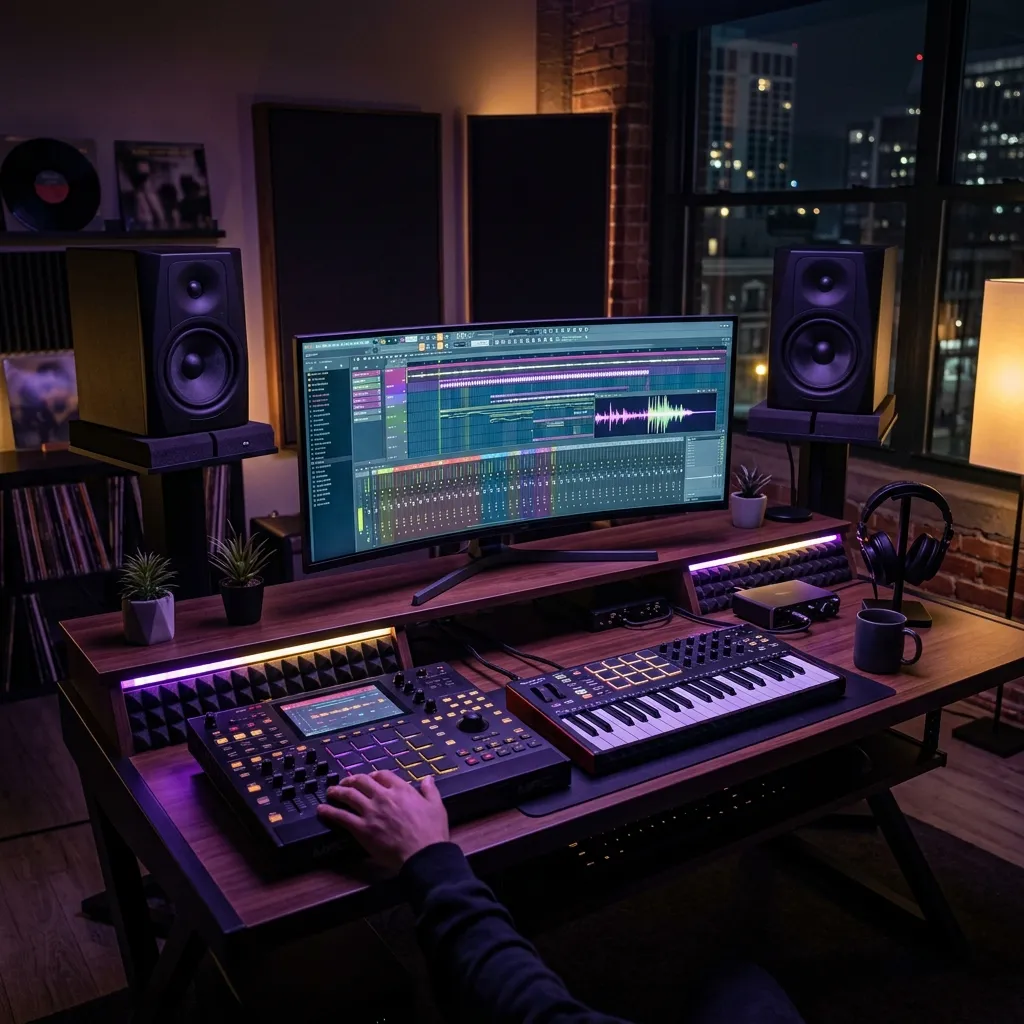
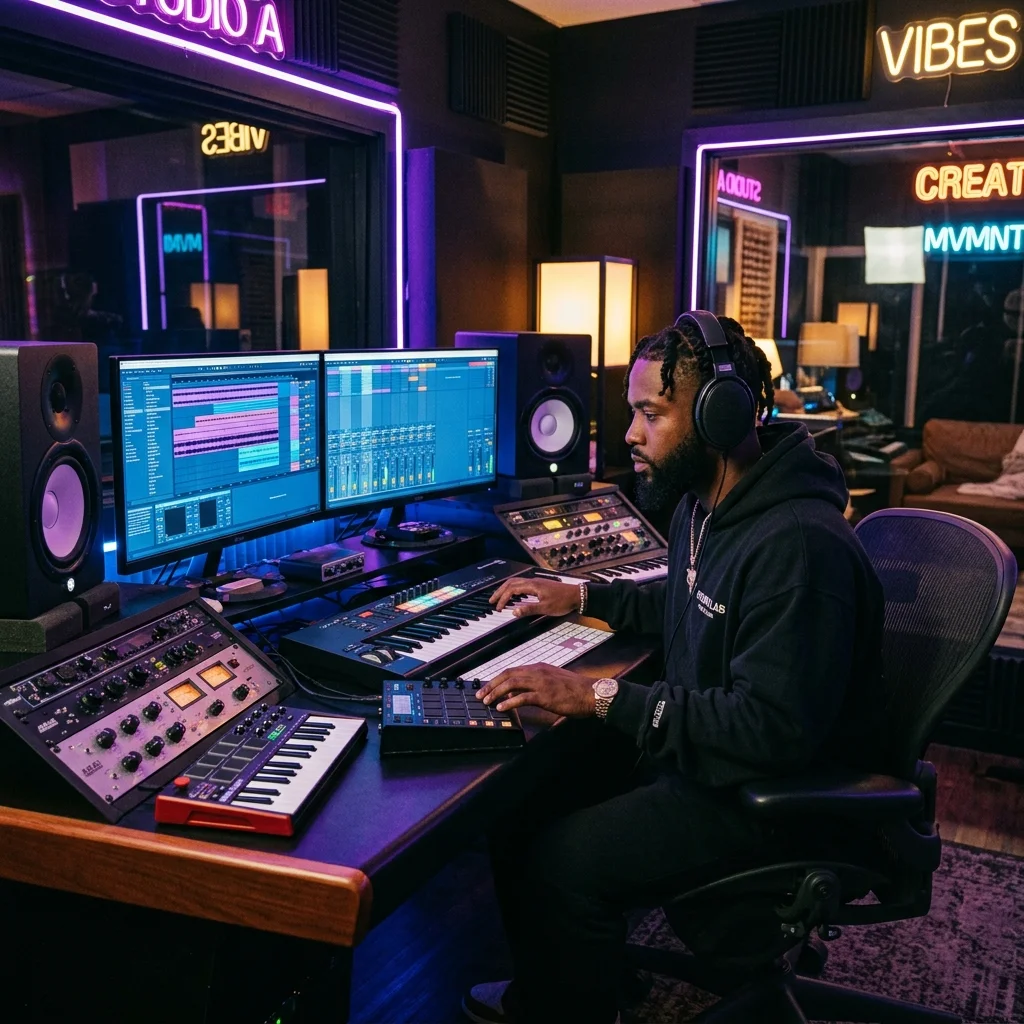
I recently spent two weeks in a high-end recording studio in Atlanta, shadowing three different multi-platinum producers working on the exact same hip-hop album. The most fascinating observation wasn’t their choice of synthesizers or the vocal chains they used—it was how wildly their workflows differed based on the software they opened. One producer was rapidly clicking high-hats into a grid at lightning speed. Another was aggressively chopping and warping a 1970s soul sample in a non-linear loop window. The third was meticulously recording live guitar and vocal takes into a traditional timeline.
In 2026, the debate over which Digital Audio Workstation (DAW) “sounds the best” is entirely dead. Every major DAW on the market utilizes identical, mathematically perfect 64-bit audio engines; the only actual difference between them is how their user interface affects your creative workflow.
Choosing the right DAW is no longer about audio fidelity; it is about finding the software environment that removes friction between your brain and the speakers. This guide breaks down the absolute best DAWs for hip-hop production in 2026, helping you choose the platform that perfectly aligns with your beat-making style.
Why Your Workflow Should Dictate Your DAW
In the early days of hip-hop, producers were bound by the physical limitations of hardware samplers like the Akai MPC or the E-mu SP-1200. Today, the software is limitless, which creates a new problem: decision paralysis. If you open a DAW that relies heavily on traditional, linear recording (like Pro Tools) when all you want to do is program a trap beat, you will immediately feel bogged down.
2026 DAW Hip-Hop Comparison Matrix
| DAW Platform | Primary Workflow Strength | Best Suited For | Key Hip-Hop Feature |
|---|---|---|---|
| FL Studio | Pattern-based programming | Trap, Drill, Fast beat-making | The Step Sequencer & Piano Roll |
| Ableton Live | Non-linear sampling & looping | Sample-heavy beats, Live sets | Session View & Audio Warping |
| Logic Pro | All-in-one traditional recording | Melodic rap, Vocal recording | Massive included sound library |
| Bitwig Studio | Modular sound design | Experimental, Electronic hip-hop | The Grid (visual modular synth) |
If you are looking to invest in the best beat-making software, you must critically analyze how you prefer to create. Are you a programmer, a sampler, or a traditional musician?
1. FL Studio: The Undisputed King of Trap and Drill
If there is a default sound of modern hip-hop, it was programmed in FL Studio. Originally known as FruityLoops, Image-Line’s software has dominated the urban production space for nearly a decade, and in 2026, it remains the absolute standard for trap and drill producers.
The Step Sequencer Advantage
The defining feature of FL Studio is its Channel Rack and Step Sequencer. A step sequencer allows producers to visually program drum patterns by simply clicking blocks on a grid, making it exponentially faster to write complex, rapid-fire hi-hat rolls than any other software on the market. If you are trying to make a beat in 15 minutes, FL Studio is the undisputed champion of speed.
The Best Piano Roll in the Industry
Ask any producer who uses multiple DAWs, and they will concede that FL Studio has the best Piano Roll. Drawing in 808 glides, quantizing MIDI notes, and shifting melodies is incredibly intuitive. The software gets out of your way, allowing producers with zero traditional music theory knowledge to write complex, catchy melodies purely by visual instinct.
2. Ableton Live: The Sampling Powerhouse
While FL Studio dominates drum programming, Ableton Live is the industry standard for producers who treat audio as a fluid, malleable material. If your production style relies heavily on flipping vintage soul records or heavily manipulating existing audio, Ableton is the only logical choice.
The Magic of Audio Warping
Audio warping is the process of stretching, compressing, and manipulating the timing of an audio file without altering its pitch. Ableton’s warping algorithms are legendary. You can drag a jazz sample recorded in 1968 without a click track, drop it into Ableton, and perfectly align it to a modern 140 BPM trap grid in under ten seconds.
Session View: The Non-Linear Playground
Unlike traditional DAWs that force you to arrange music from left to right on a timeline, Ableton features “Session View.” This is a grid of clips and loops that you can trigger in real-time. It allows hip-hop producers to build up massive layers of drums, basslines, and samples, and jam with them to figure out the arrangement before committing anything to a final timeline.
3. Logic Pro: The Mac-Exclusive All-Rounder
If you own an Apple computer, Logic Pro is arguably the greatest value proposition in the entire music industry. For a single flat fee, Apple provides a fully professional recording environment packed with enough high-quality stock sounds to score a film.
The Ultimate Stock Library
Hip-hop producers often spend hundreds of dollars on third-party VST plugins (Virtual Studio Technology). Logic Pro eliminates much of that need. Its included synthesizers (like Alchemy), drum kits, and mixing effects are genuinely world-class. You can produce, record, mix, and master a Billboard #1 record using absolutely nothing but Logic’s stock plugins.
Vocal Recording and Comping
As rap has become increasingly melodic, vocal production has become just as important as the beat itself. Logic Pro handles massive vocal sessions significantly better than FL Studio. Its “comping” feature—which allows you to record 20 different takes of a vocal hook and seamlessly swipe the best parts of each into one perfect “compilation” track—is essential for modern hip-hop vocal production.
Best Practices for Choosing Your DAW
Before you spend $200 to $600 on software, follow these essential tips.
Tip 1: Follow Your Collaborators
In 2026, music production is highly collaborative. If every producer in your local scene or internet collective uses FL Studio, you should strongly consider using FL Studio. Being able to effortlessly send project files back and forth (often called “collabing”) without having to meticulously export individual audio stems (trackouts) will drastically accelerate your networking and output.
Tip 2: Ignore the “Pro Tools” Myth for Beatmaking
Pro Tools is the absolute industry standard for recording and mixing audio in commercial studios. However, it is notoriously clunky and unintuitive for producing beats from scratch using MIDI. Do not buy Pro Tools simply because “the professionals use it” unless your primary goal is to become an audio engineer rather than a beatmaker.
Tip 3: Utilize Free Trials
Never buy a DAW blindly based on a YouTube recommendation. Ableton Live and FL Studio both offer extensive, unrestricted free trials (though FL Studio prevents you from re-opening saved projects until you buy it). Download both. Spend a weekend trying to program a simple drum beat in each. You will immediately feel which interface makes sense to your brain.
Common Mistakes When Starting Out
New producers frequently sabotage their own progress by making these software errors.
Mistake 1: DAW Hopping
The Fix: The most damaging thing a beginner can do is switch DAWs every three months because they think the software is holding them back. Pick one DAW and commit to it for at least a year. The “secret” to making great beats is mastering the software shortcuts until the interface becomes an extension of your hands, not constantly switching to the newest shiny program.
Mistake 2: Pirating Software
The Fix: Aside from the ethical issues, pirating DAWs and plugins in 2026 is the fastest way to infect your computer with crippling malware or ransomware. If you are on a strict budget, use incredibly powerful free DAWs like Tracktion Waveform or the entry-level versions of Ableton (Live Lite) which often come bundled for free when you buy a good microphone or MIDI keyboard.
Mistake 3: Thinking Software Fixes Bad Sound Selection
The Fix: A $600 DAW will not make a terrible, low-quality drum sample sound good. The secret to modern hip-hop production is sound selection. Before you blame the DAW for your beats sounding amateur, ensure you are using high-quality, modern drum kits (from platforms like Splice) rather than the default drums included in the software.
Conclusion
Choosing the best DAW for hip-hop production in 2026 is entirely a matter of self-awareness. If your goal is to program hard-hitting trap drums at maximum speed with intuitive melodies, FL Studio is your undisputed champion. If you want to heavily chop, stretch, and manipulate vintage samples while arranging loops on the fly, Ableton Live is unparalleled. If you are on a Mac and want a complete, professional recording and mixing studio with massive stock libraries, Logic Pro is the best value in the industry.
Stop worrying about which DAW the top producers use. Metro Boomin uses FL Studio, Kenny Beats uses Ableton, and countless Grammy winners use Logic. The software is just a canvas; choose the one that lets you paint the fastest.
FAQs
Which DAW is best for beginners making hip-hop?
FL Studio is generally considered the most beginner-friendly DAW for hip-hop because of its visual step sequencer, which allows new producers to quickly build drum patterns without understanding music theory or complex routing.
Do I need a Mac to produce music in 2026?
Absolutely not. While Logic Pro is Mac-exclusive, FL Studio and Ableton Live (the two most popular beat-making DAWs) run flawlessly on both Windows and macOS. A powerful Windows PC will handle heavy production sessions just as well as an Apple Silicon Mac.
Can I record vocals in FL Studio?
Yes, FL Studio is fully capable of recording and editing vocals. However, many producers find the audio routing and vocal editing workflow (comping) to be much more intuitive and robust in Logic Pro, Ableton, or Pro Tools.
Is Ableton only for EDM producers?
No. While Ableton was originally built with electronic dance music and live DJs in mind, its incredible audio warping and sampling capabilities have made it a favorite among hip-hop producers, particularly those who rely heavily on chopping vintage samples.
What is the difference between a DAW and a beatmaker?
A DAW (Digital Audio Workstation) is the overarching software environment used to record, edit, mix, and produce music. “Beatmaker” usually refers to the person creating the instrumental, or occasionally refers to simpler, app-based software (like GarageBand for iOS) that lacks the deep mixing and routing capabilities of a full DAW.
Keep Reading
Once you have chosen your software, you need to optimize your hardware. Check out our guide to the Best Microphones for Rappers in 2026 and ensure you are hearing your mixes accurately by reviewing our top picks for the Best Headphones for Hip-Hop.