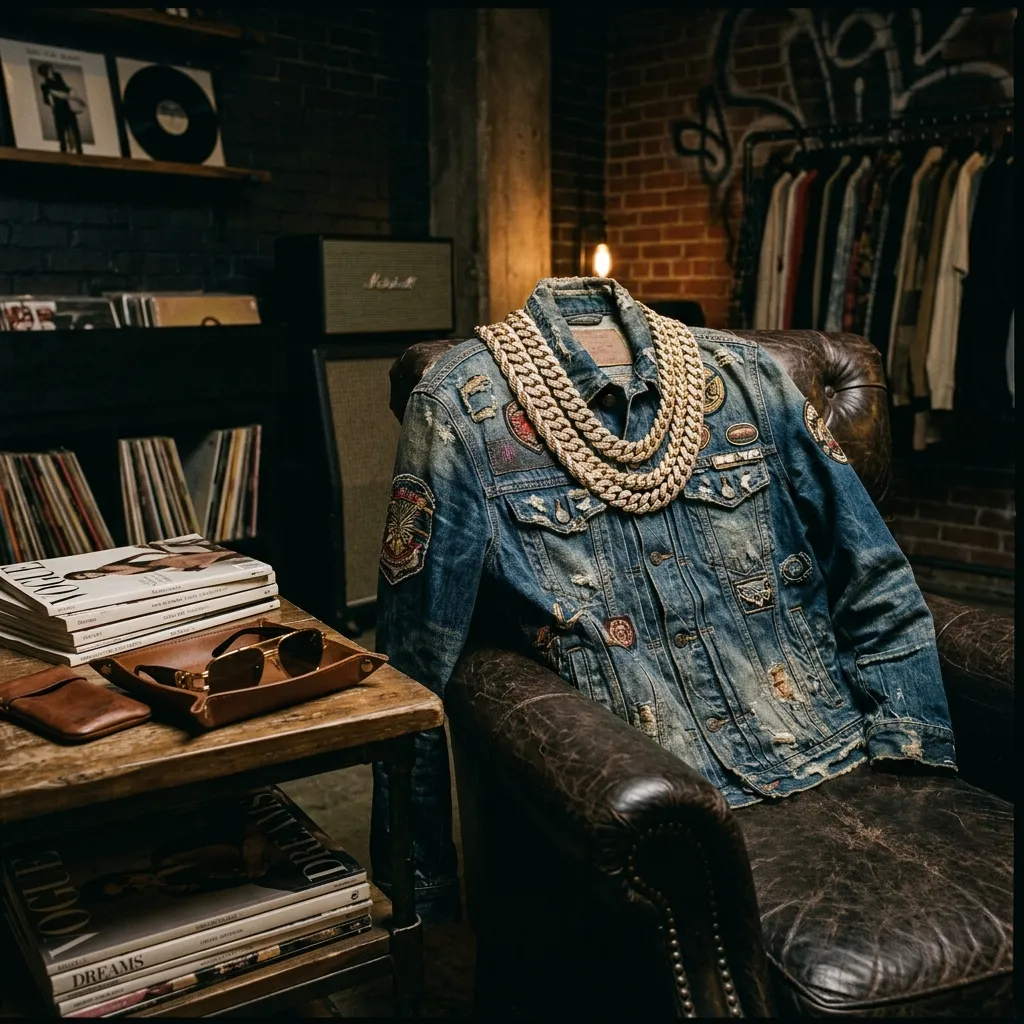
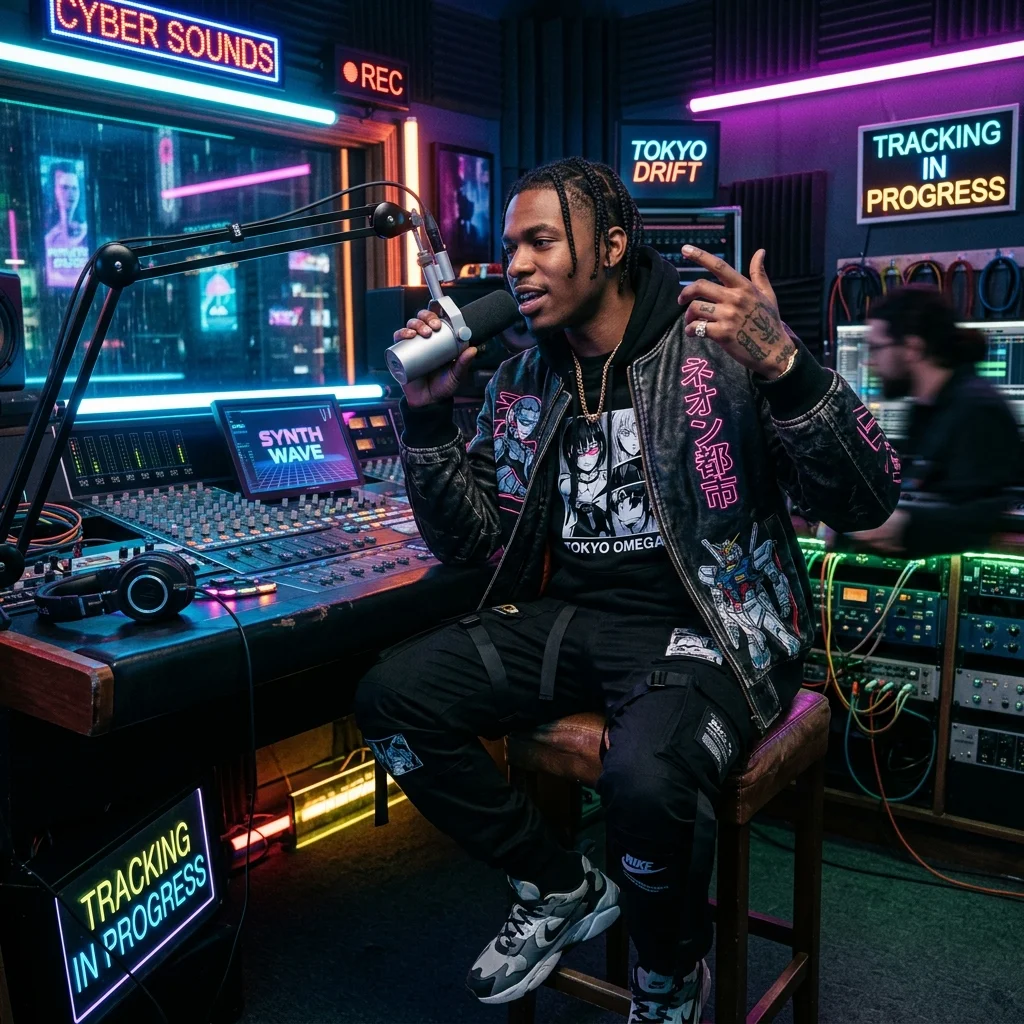
Standing outside a premium streetwear pop-up in SoHo last month, the visual language of modern hip-hop was impossible to ignore. Gone were the overt references to Scarface or the romanticized mafia aesthetics that dominated the 1990s and 2000s. Instead, the line of fans wrapped around the block were clad in intricate Akira-inspired technical jackets, Loewe x Studio Ghibli collaborations, and custom denim embroidered with the Hidden Leaf Village insignia.
For decades, the cinematic ideal of hip-hop success was modeled after Tony Montana—a ruthless, self-made kingpin rising from nothing to conquer the world. Today, the cultural touchstone has fundamentally shifted across the Pacific. From Megan Thee Stallion cosplaying as Todoroki on stage to Lil Uzi Vert’s Sasuke-themed branding, Japanese animation has transitioned from a niche, underground reference to the dominant visual and thematic language of rap music.
The anime influence on modern rap hip-hop culture is no longer just a subcultural overlap; it is a multi-million-dollar aesthetic driving album sales, luxury fashion collaborations, and the fundamental way artists communicate their personal “hero’s journey” to a global audience.
The Generational Shift: From The Godfather to Toonami
To understand why anime replaced mobster cinema in the rap consciousness, we must look at generational access. In the 1990s, artists like Jay-Z, Raekwon, and Nas drew inspiration from mafia films like The Godfather, Goodfellas, and Casino. Those films depicted marginalized outsiders building illicit empires to achieve the American Dream—a narrative that resonated deeply with the crack-era realities of urban America. The suits, the cigars, the calculated violence—it all mapped perfectly onto the mafioso rap subgenre.
However, the generation of rappers defining the sound in 2026—born in the late 90s and early 2000s—did not grow up idolizing Al Pacino or Marlon Brando. They grew up watching Cartoon Network’s Toonami block after school. Shows like Dragon Ball Z, Naruto, Bleach, and Cowboy Bebop provided a completely different vocabulary for success, struggle, and power.
While mobster cinema offered a blueprint for ruthless financial acquisition, shonen anime offered a blueprint for sheer, undeniable inner strength and resilience in the face of impossible odds. This transition in media diets fundamentally rewired how rappers visualize their own success and struggles.
The Aesthetic Evolution: 1995 vs. 2026
| The Era | Primary Visual Influence | Core Narrative Theme | Fashion Aesthetic | Key Artists |
|---|---|---|---|---|
| 1990s - 2000s | Mobster Cinema (Scarface, Goodfellas) | Empire building, illicit wealth, territorial control. | Tailored suits, oversized luxury brands, fedoras, heavy gold chains. | Jay-Z, Wu-Tang Clan, The Notorious B.I.G., Nas |
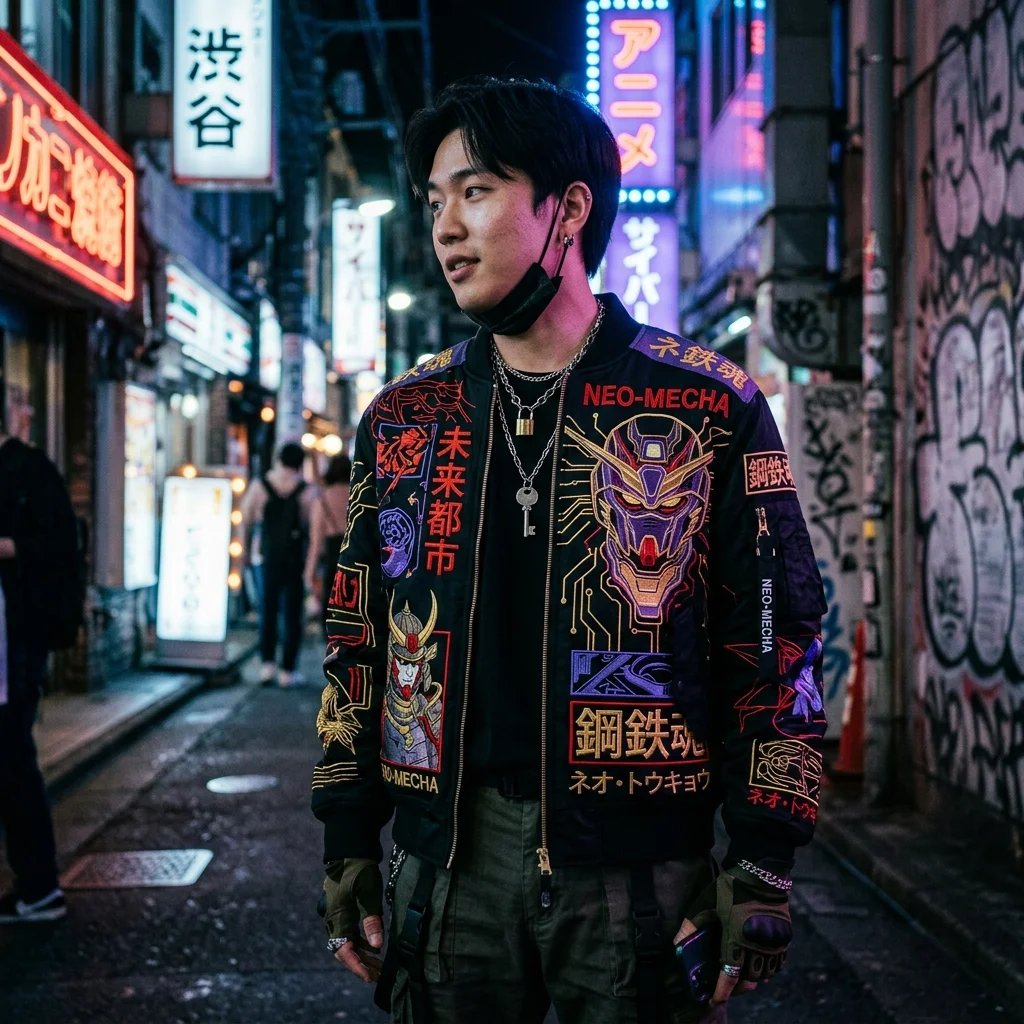
| 2010s - Present | Japanese Animation (DBZ, Naruto, Akira) | The Hero’s Journey, leveling up, inner demons, isolation. | Itasha-inspired bright colors, techwear, subtle cosplay, mecha-inspired graphics. | Lil Uzi Vert, Megan Thee Stallion, Denzel Curry, Ye |
The Hero’s Journey: Why Shonen Resonates with Hip-Hop
The overlap between anime and hip-hop goes far deeper than visual aesthetics; it is rooted in a shared thematic ethos. The “shonen” genre of anime—targeted primarily at young men—relies heavily on the trope of an underdog protagonist who is initially dismissed by society, only to unlock immense hidden power through relentless training and emotional suffering.
This is the exact narrative structure of a rap career. The journey from recording mixtapes in a bedroom to selling out arenas perfectly mirrors the anime protagonist’s arc from an untalented novice to the strongest fighter in the universe.
When a modern rapper drops a bar about going “Super Saiyan,” they aren’t just making a pop culture reference. They are using a widely understood cultural shorthand for reaching a new level of wealth, status, or lyrical ability that their rivals cannot match. The struggles of characters like Naruto Uzumaki—an orphan shunned by his village who grinds to become its leader—map seamlessly onto the hip-hop ethos of starting from the bottom and achieving greatness against systemic odds.
Furthermore, anime frequently deals with the concept of “inner demons,” both literally and metaphorically. Characters often have to tame or harness a dark, destructive entity residing within them. For artists dealing with the psychological weight of poverty, trauma, and sudden fame, these visual metaphors offer a much more nuanced way to express vulnerability than the stoic, hyper-masculine posture of the 90s mobster trope.
Case Studies in Cross-Pollination
The influence has evolved past subtle lyrical nods and into overt, career-defining branding.
Megan Thee Stallion has built a significant portion of her brand around her unabashed love for anime. By actively cosplaying characters from My Hero Academia and Jujutsu Kaisen in high-profile photoshoots and performances, she effectively monetized the intersection of “Blerd” (Black nerd) culture and mainstream hip-hop glamour. Her partnership with streaming service Crunchyroll wasn’t just a marketing stunt; it was a validation of the cultural synergy between the two art forms.
Lil Uzi Vert operates almost entirely within an anime-inspired aesthetic. From music videos directly referencing the art style of Scott Pilgrim and various anime properties to sporting hairstyles inspired by Pain from Naruto, Uzi treats Japanese animation as the primary mood board for their entire public persona.
Even legacy artists like Kanye West have deep ties to the culture, famously citing Akira as his biggest creative inspiration—a fact heavily documented during the rollout of the Stronger music video, which recreated iconic scenes from the 1988 cyberpunk masterpiece shot for shot.
The Financial Pipeline: How Anime Took Over Streetwear
The transition from lyrical references to physical products has created a massive financial pipeline. The streetwear culture guide of 2026 is incomplete without acknowledging that anime collaborations are among the most lucrative drops in the fashion industry.
The turning point occurred when high fashion began treating animation with the same reverence it historically reserved for fine art. When brands like Supreme collaborated with Akira, or when luxury house Loewe released its Spirited Away and Howl’s Moving Castle collections, they legitimized the aesthetic for the high-end rap demographic.
“Itasha” culture—the Japanese practice of decorating cars with anime characters—has heavily influenced modern hip-hop car customization, replacing the clean, monochromatic luxury fleets of the 2000s with vibrant, hyper-customized visual statements. You are now just as likely to see a Lamborghini Aventador wrapped in Neon Genesis Evangelion artwork as you are a matte black Rolls-Royce.
Today, an artist is just as likely to flex a $2,000 limited-edition Evangelion jacket as they are a traditional diamond chain. The aesthetic allows artists to signal their wealth while simultaneously signaling their authenticity to the “nerd culture” that they legitimately grew up participating in.
The Lo-Fi Phenomenon and Atmospheric Production
Beyond lyrics and fashion, anime has fundamentally altered the sonic landscape of modern hip-hop production. The massive, omnipresent “Lo-Fi Hip-Hop” subgenre—characterized by dusty drum breaks, melancholic piano loops, and vinyl crackle—is intrinsically tied to anime visuals.
Almost every major lo-fi stream or playlist on YouTube utilizes looping animations from 90s anime (often Studio Ghibli films or Cowboy Bebop) to set the mood. This has created a permanent psychological link between the melancholic, introspective beats of modern underground rap and the quiet, atmospheric moments of Japanese animation.
For producers, sampling anime soundtracks or incorporating dialogue snippets from dramatic anime scenes has become as standard as sampling 1970s soul records was in the 1990s. The emotional weight of an anime monologue often serves as the perfect intro to a vulnerable, introspective track about mental health or isolation—topics that modern rappers are far more willing to discuss than their mobster-obsessed predecessors. If you want to understand how type beats are ruining or evolving production, you must look at how anime soundtracks form the foundation of the modern sound.
The Tension: Authenticity vs. Commercial Exploitation
While the anime influence is deeply authentic for artists who genuinely grew up with the medium, there is a growing tension regarding commercial exploitation. As anime becomes the default “cool” aesthetic, some industry veterans argue it is being co-opted by artists and major labels who simply want to tap into the massive, dedicated anime fanbase without having a real connection to the culture.
Just as the major record labels commodified the “gangster” image in the 90s, forcing artists to adopt criminal personas to sell records, there is a fear that the 2026 industry is pushing artists to adopt “anime” personas purely for algorithmic engagement. When a multi-million-dollar pop-rap act suddenly pivots to wearing Demon Slayer merch in a music video, the line between authentic cultural appreciation and calculated marketing becomes dangerously blurred.
Furthermore, purists within the anime community often push back against the mainstreaming of their subculture, arguing that luxury brands and rap superstars are gentrifying a medium that was historically a sanctuary for social outcasts. They argue that the emotional depth and philosophical complexity of the source material are often stripped away in favor of a superficial, “hypebeast” aesthetic.
Conclusion: The New Blueprint
The influence of anime on modern rap and hip-hop culture is the ultimate testament to the globalization of media. The kids who ran home to watch Toonami in the early 2000s are now the architects of global pop culture, and they brought their heroes with them to the top of the Billboard charts.
The shift from Scarface to Akira represents more than just a change in wardrobe or lyrical references; it represents a shift in how the genre defines power. Where the previous generation found strength in the cold, calculated dominance of the mafia don, the current generation finds strength in the emotional resilience, vibrant aesthetics, and limitless potential of the anime protagonist.
As long as the “hero’s journey” remains the core narrative of hip-hop, the visual and thematic language of Japanese animation will continue to serve as the culture’s primary canvas.
FAQs
Why do so many rappers reference anime in their lyrics?
Rappers reference anime because they grew up watching it on programming blocks like Toonami in the 90s and 2000s. Thematic elements of anime, particularly the “shonen” genre, align perfectly with hip-hop’s core narrative of an underdog overcoming immense obstacles to achieve greatness.
When did anime start influencing hip-hop fashion?
While underground artists referenced anime earlier, the fashion crossover truly went mainstream in the late 2010s when major streetwear brands like Supreme began officially collaborating with legendary anime properties like Akira, validating the aesthetic for high-end urban fashion.
Is the anime aesthetic replacing traditional luxury brands in hip-hop?
It is not replacing luxury brands, but rather merging with them. In 2026, the ultimate status symbol is often a high-fashion collaboration with an anime property (e.g., Loewe x Studio Ghibli), which allows an artist to display wealth while signaling authentic cultural interests.
What is the connection between lo-fi hip-hop and anime?
Lo-fi hip-hop relies heavily on nostalgic, melancholic aesthetics, which pair perfectly with the quiet, atmospheric scenes found in 1990s Japanese animation. The visual pairing of lo-fi beats with looping anime gifs on YouTube permanently intertwined the two cultures.
Keep Reading
To understand how global aesthetics continue to shape the music industry, check out our deep dive into the Sonic Shift: Why 2026 K-Pop Sounds Like Atlanta Trap and our analysis of the Rise of Regional Hip-Hop.